Share this
by MoeGo on Apr 6, 2026, 9:00:00 AM
They fail because the business becomes harder to operate than expected.
On the surface, dog daycare looks simple:
- Find a space
- Bring in dogs
- Hire staff
But once you’re running 40, 60, or 100 dogs a day across staff and schedules, the reality shifts quickly:
- You’re managing capacity, not just pets
- You’re protecting margins, not just filling spots
- You’re running operations, not just providing care
The difference between a stable daycare and a chaotic one isn’t demand. It’s whether the business is built on a real operational plan.
The Market Is Growing — But Profitability Is Not Guaranteed
Demand for pet care continues to rise. More households own dogs, and owners expect higher-quality care.
But for operators in the $80K–$800K/month range (T2), the challenge isn’t getting customers. It’s running a business that scales cleanly.
Common realities:
- Labor is your largest cost and hardest variable to control
- No-shows and weak rebooking quietly erode revenue
- Pricing is often set based on competitors, not margins
- Multi-location or high-volume operations introduce inconsistency
Dog daycare is easy to start. It’s difficult to run profitably at scale.
Where Most Dog Daycare Business Plans Break Down
Most business plans look complete on paper. But they miss the operational layer that determines whether the business actually works.
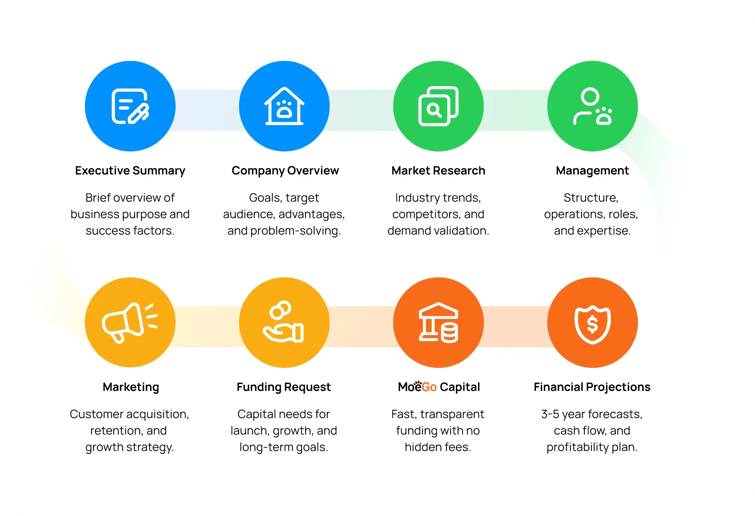
1. Pricing Without Margin Awareness
Setting prices based on competitors instead of:
- staffing ratios
- utilization targets
- real operating costs
→ Leads to full schedules with weak profitability
2. No Capacity Model
Many operators don’t define:
- maximum dogs per day
- staff-to-dog ratios
- utilization targets
→ Results in either overcrowding or underutilization
3. No Retention System
Revenue depends on repeat visits, but:
- rebooking is manual
- follow-ups are inconsistent
→ Demand becomes unpredictable
4. Admin Overload
Scheduling, reminders, reporting, and client communication happen across:
- spreadsheets
- texts
- disconnected tools
→ 10–20 hours/week lost to admin instead of growth
Dog Daycare Business Plan: Quick Answers
How much does it cost to start a dog daycare?
Typical startup costs range from $50,000 to $500,000+, depending on:
- leasehold improvements
- facility size
- licensing and permits
- staffing and equipment
How many dogs do I need to break even?
Break-even depends on pricing and costs, but most operators need:
- 60–70% utilization to cover fixed costs
- Example:
- Capacity: 50 dogs/day
- Break-even: ~30–35 dogs/day
What should I charge for dog daycare?
Typical range: $30–$60/day, but pricing should be based on:
- labor cost per dog
- target margin
- local demand
Not competitor pricing alone.
Is a dog daycare business profitable?
Yes, but only when:
- capacity is consistently filled
- no-show loss is controlled
- retention is strong
- operations are efficient
Profitability is an operations outcome, not a market guarantee.
The Operator’s Business Plan: What Actually Drives Profit
A strong business plan isn’t a document. It’s a model that holds up under daily operations.
1. Capacity & Revenue Model (The Core of Your Business)
Everything starts here.
Define:
- Maximum dogs per day
- Staff-to-dog ratio (e.g., 1:10–15)
- Daily pricing
- Target utilization rate
Example:
- Capacity: 60 dogs/day
- Avg price: $40
- Target utilization: 70%
→ Daily revenue ≈ $1,680
→ Monthly revenue ≈ $50K
This is the foundation of your entire financial plan.
2. Pricing Strategy (Protecting Margin, Not Just Filling Spots)
Strong operators don’t just “set prices.” They design revenue systems.
Key components:
- Day rates (baseline revenue)
- Packages (improve cash flow)
- Memberships (predictable recurring revenue)
- Cancellation policies (protect margin)
Without structure:
- revenue fluctuates
- profit erodes
With structure:
- revenue becomes predictable
- growth becomes controllable
3. Retention & Lifetime Value (Where Profit Actually Comes From)
Most revenue is not from new customers.
It comes from:
- repeat visits
- routine bookings
- long-term clients
What strong operations include:
- automated rebooking flows
- reminders that reduce no-shows
- consistent client communication
Without retention systems:
- you constantly “start over” each month
4. Operational System (Where Most Plans Fail)
This is where strategy either holds — or breaks.
As operations scale:
- scheduling becomes complex
- staff coordination increases
- communication multiplies
- reporting becomes fragmented
Without a system, growth creates chaos.
How MoeGo Turns a Business Plan Into a Working Operation
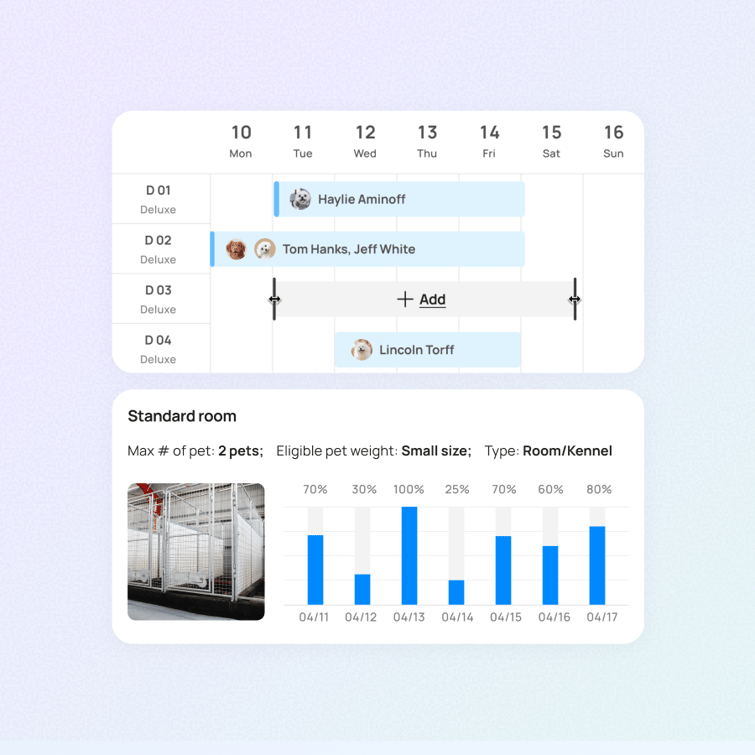
Feature: Automated Scheduling & Capacity Control
How It Works
Centralized booking system with defined capacity, staff availability, and booking rules
Operational Impact
- Eliminates double bookings
- Standardizes scheduling across locations
- Reduces manual coordination
Business Outcome
- Higher utilization
- More predictable daily revenue
- Reduced administrative workload
Feature: Automated Reminders & No-Show Protection
How It Works
SMS and email reminders sent automatically before appointments
Operational Impact
- Reduces missed appointments
- Removes need for manual follow-ups
Business Outcome
- Recovers 10–25% of lost revenue
- Stabilizes daily capacity

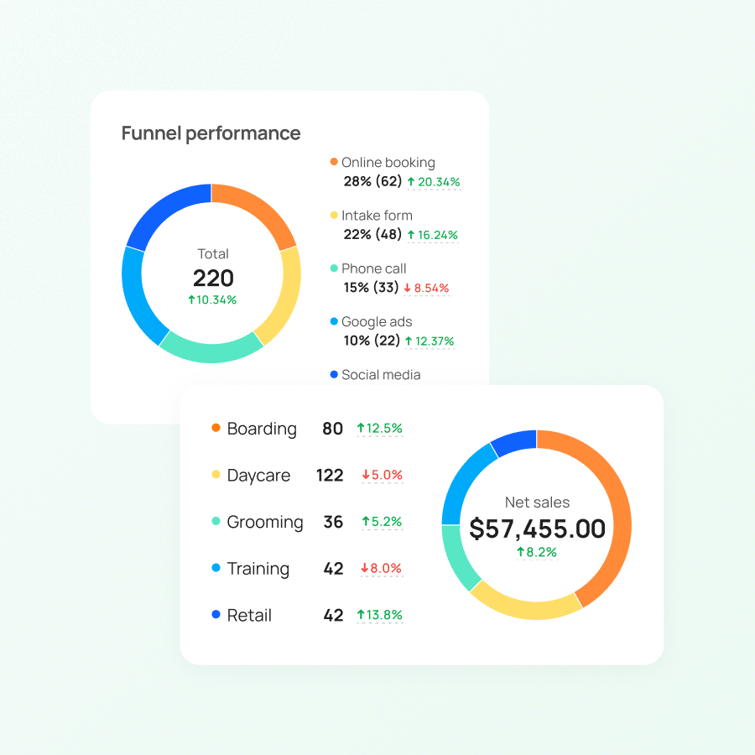
Feature: Centralized Reporting & Performance Visibility
How It Works
Real-time dashboard tracking bookings, revenue, and performance across operations
Operational Impact
- Eliminates manual report building
- Provides daily visibility into performance
Business Outcome
- Saves 10–20 hours/week in admin time
- Enables faster, data-driven decisions
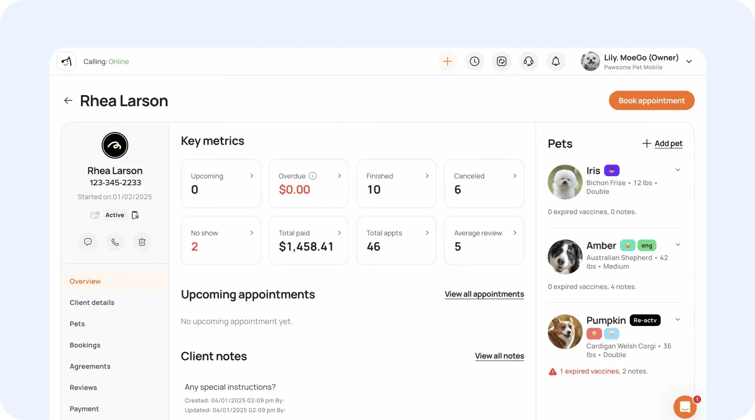
Feature: Unified Client & Operations Platform
How It Works
Scheduling, payments, CRM, and communication in one system
Operational Impact
- Removes duplicate data entry
- Reduces system fragmentation
Business Outcome
- Lower operational friction
- Scalable infrastructure as you grow
Dog Daycare Unit Economics Snapshot
Typical Benchmarks (Industry-Informed):
- Average daily rate: $30–$60
- Break-even utilization: 60–70%
- Staff ratio: 1:10–15 dogs
- No-show revenue loss (without systems): 10–25%
These numbers aren’t guarantees — but they define what “healthy” operations typically look like.
Building a Business That Holds as You Scale
At a certain point, growth creates a new problem:
- More dogs
- More staff
- More complexity
Without structure:
- inconsistency increases
- visibility decreases
- profitability weakens
With the right operational system:
- every location runs consistently
- performance is visible in real time
- growth becomes manageable
Conclusion: A Business Plan Is Only as Strong as Your Operations
A dog daycare business doesn’t become profitable because demand exists.
It becomes profitable when:
- capacity is controlled
- pricing protects margin
- retention is consistent
- operations are systemized
The difference isn’t effort.
It’s structure.
And the operators who build that structure early are the ones who scale — without losing control.

Just starting or adding to your business?
We have flexible plans meant for all stages.


Holiday Grooming Add-Ons: How to Build a Seasonal Menu That Sells Itself

How KLŌS Fine Pet Salon Turned Milton, Georgia's Most Discerning Zip Code Into Its Biggest Advantage

How Top Pet Boarding & Daycare Facilities Win the Holidays: The 6-Month Head Start