Share this
by MoeGo on Jun 12, 2026, 9:30:08 AM
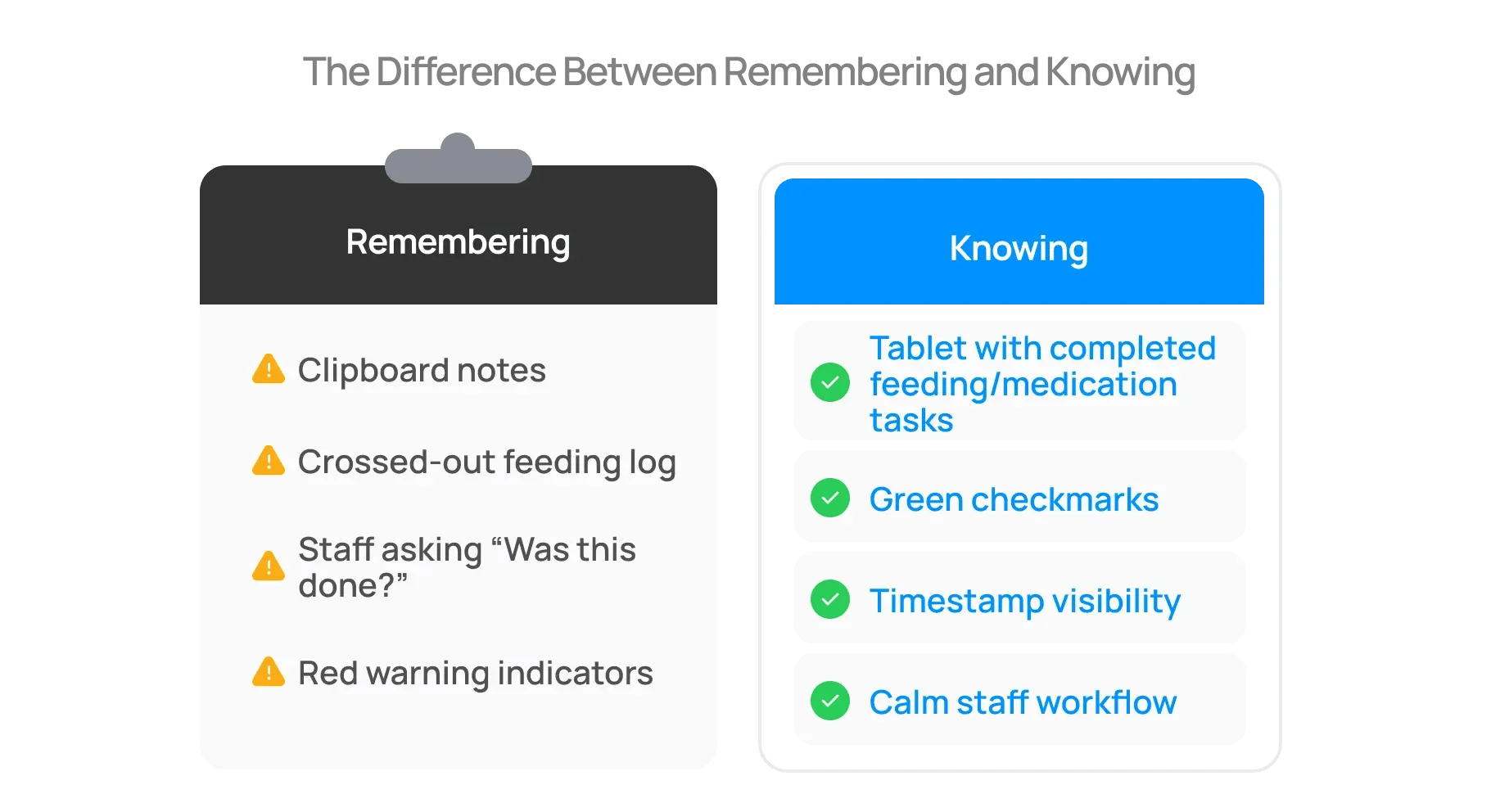
A dog needs medication twice a day. The instructions are written down. The team is aware. Everything seems clear.
But later in the day, someone asks: “Was it already given?” Now there’s hesitation: Someone checks the notes. Someone asks a teammate. No one is completely sure.
This is one of the most stressful situations in a pet boarding or daycare business, not because the instructions weren’t given, but because there’s no clear way to confirm what actually happened.
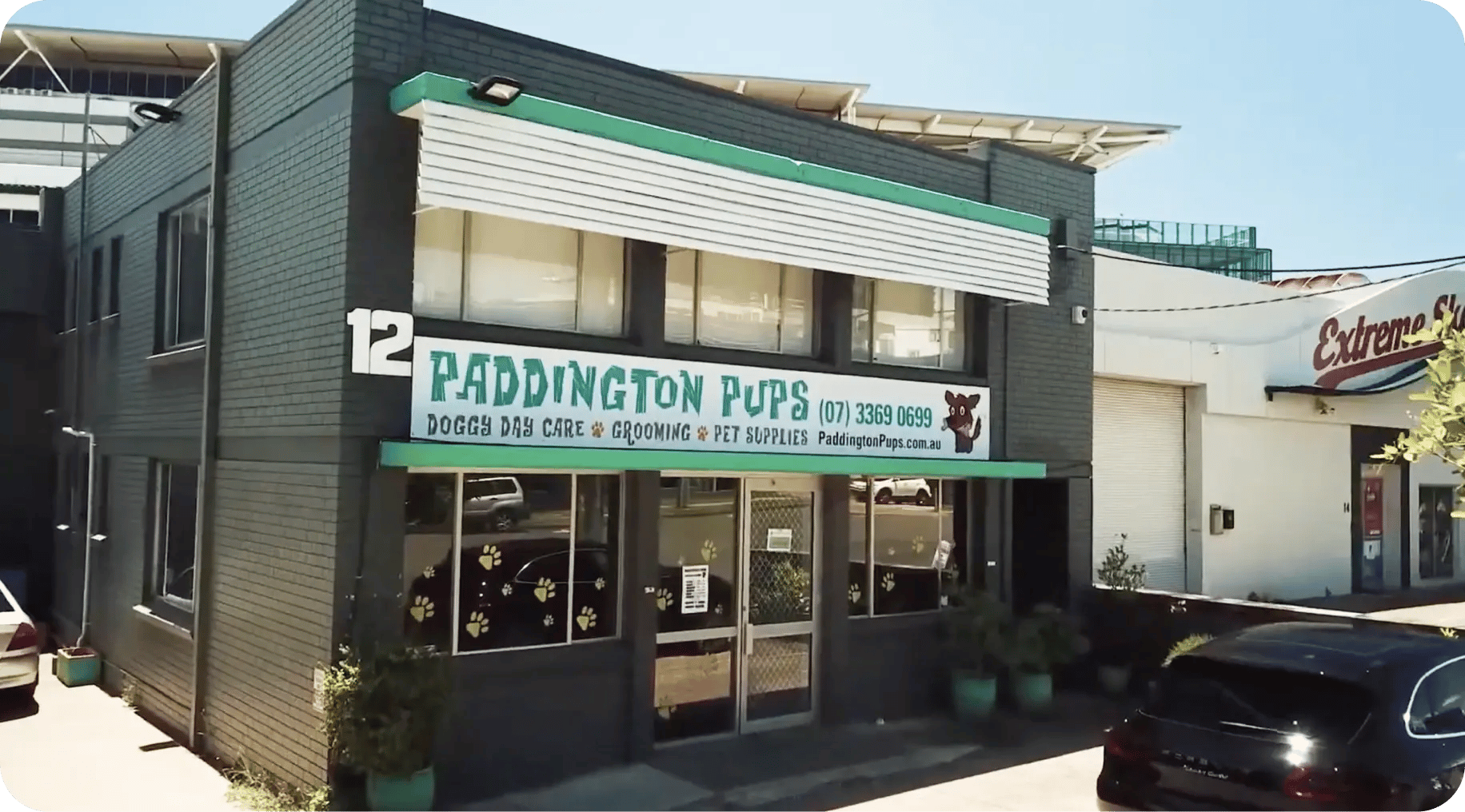
At Paddington Pups, this kind of uncertainty used to show up in everyday operations. Their team was managing 150+ dogs daily, across grooming, boarding, and daycare services, using separate systems, along with pen-and-paper notes for additional details. Instructions had to be passed manually between teams, and as the business grew, it became harder to ensure everyone was working from the same, up-to-date information.
Nothing was obviously “missing.” But at that scale, without a single, reliable system to track and confirm what had been done: small uncertainties quickly became operational risk.
And in pet care, that uncertainty matters.
How do pet boarding businesses track feeding and medication?
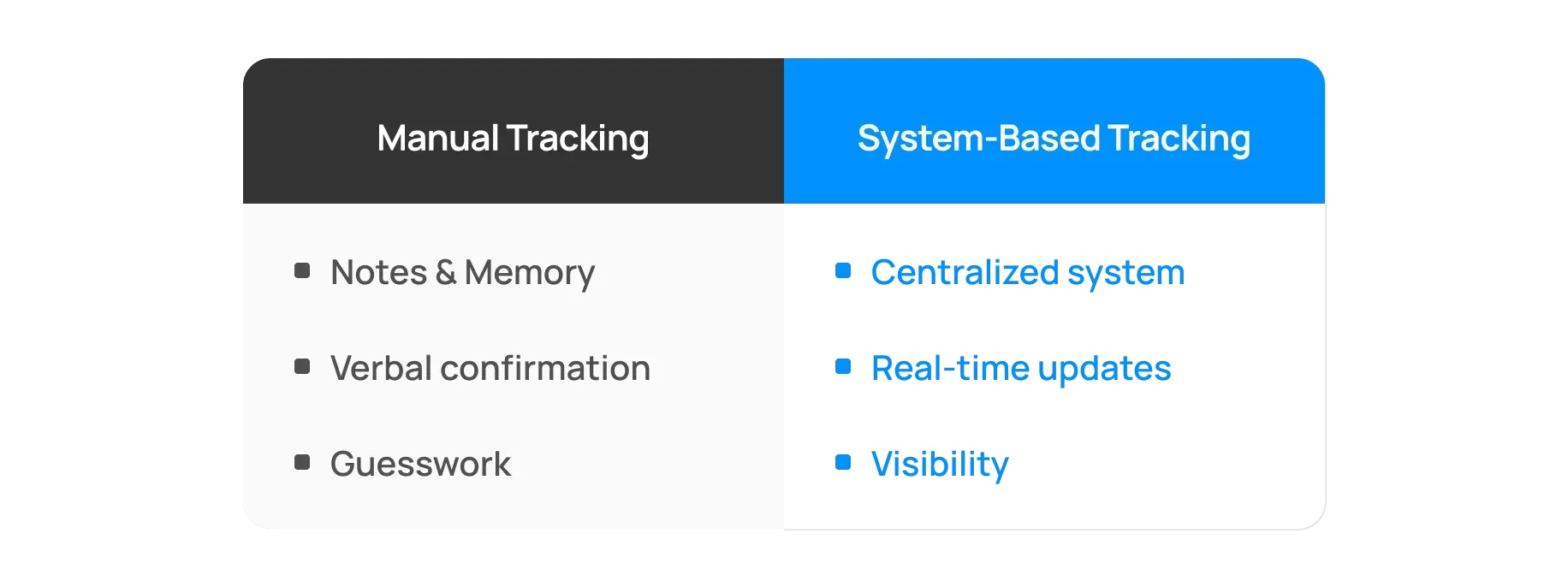
Reliable pet boarding businesses don’t rely on memory, handwritten notes, or verbal confirmation to track feeding and medication.
Instead, they use structured systems that:
- Centralize instructions in one place
- Track completion in real time
- Make updates visible across all staff
Because the real challenge isn’t writing instructions down. It’s making sure they are followed with consistently across people, shifts, and services.
Why tracking feeding and medication is harder than it seems
On the surface, tracking feeding or medication sounds simple:
- write down the instruction
- follow it at the right time
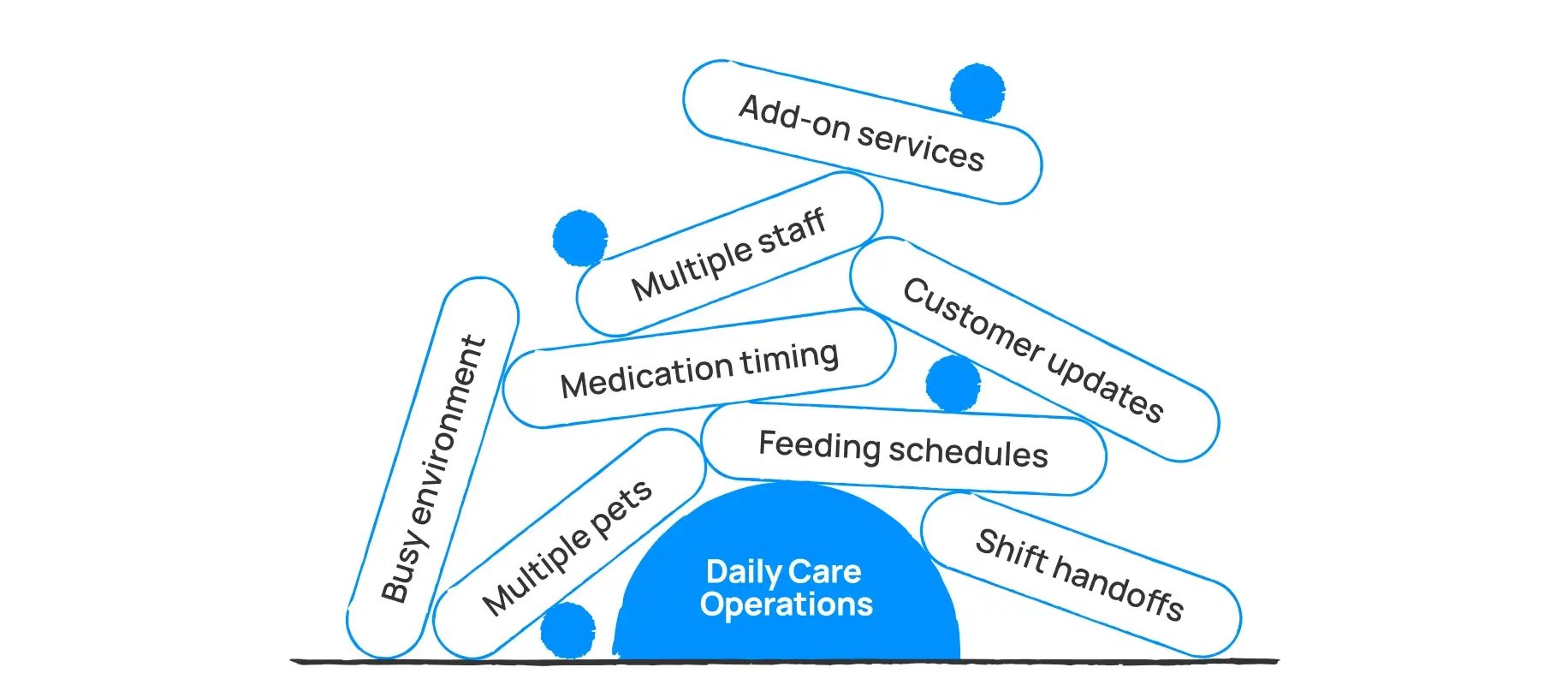
But in reality, pet care operations are far more complex. At any given time, a team may be managing:
- dozens of pets with different feeding schedules
- medication with different timing and dosage
- multiple staff working across shifts
- constant updates from customers
Now layer on top of that:
- busy environments
- handoffs between team members
- information coming from multiple sources
The result is: A system where instructions exist, but execution isn’t guaranteed.
Why feeding and medication mistakes happen
Most mistakes in feeding and medication tracking don’t come from lack of effort.
They come from how the system is set up.
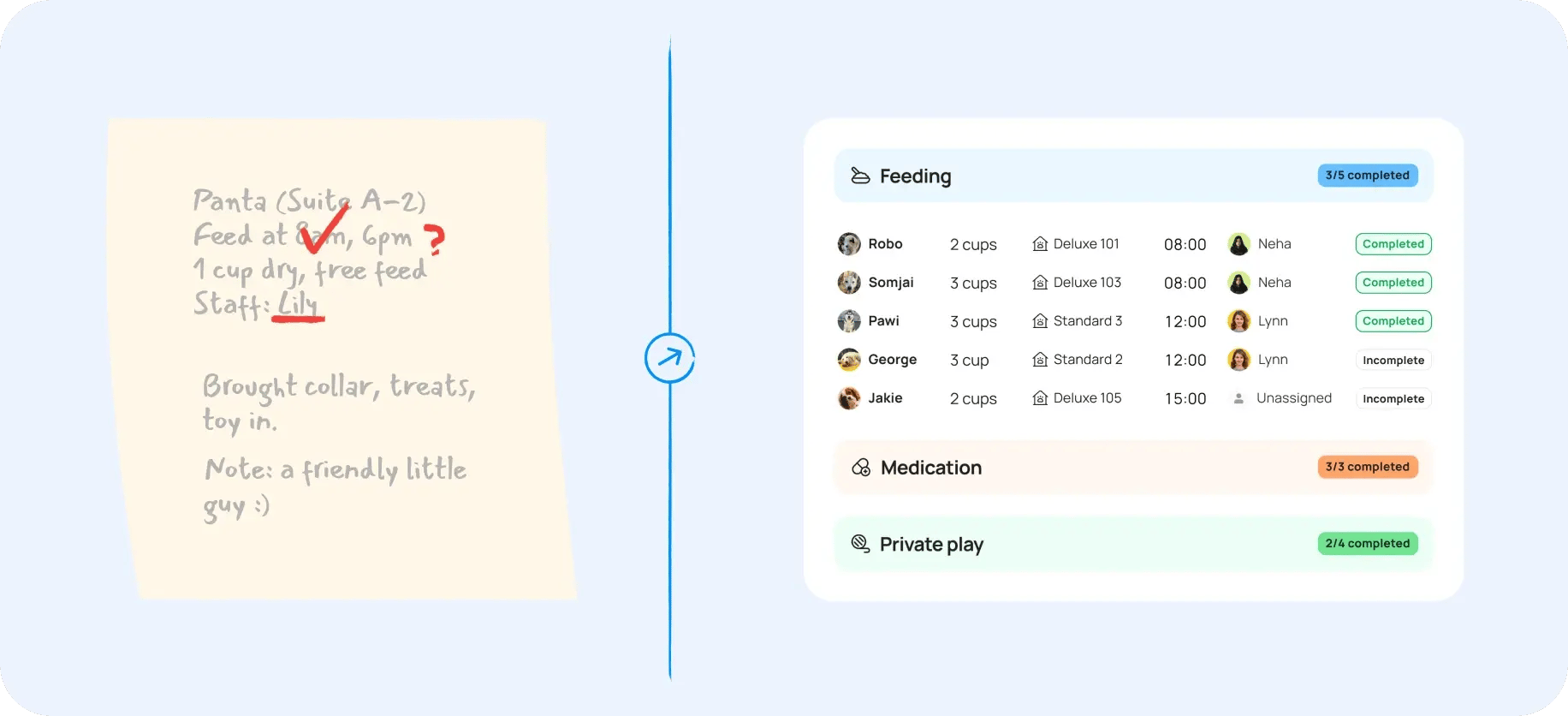
1. Instructions exist but aren’t visible at the right time
Instructions might be written down somewhere, but not surfaced when the task is actually being performed.
- notes at the front desk
- details buried in a profile
- instructions passed verbally
If staff have to search for information or remember it, it creates risk. If instructions aren’t visible at the moment of execution, they’re easy to miss.
2. Updates aren’t tracked in real time
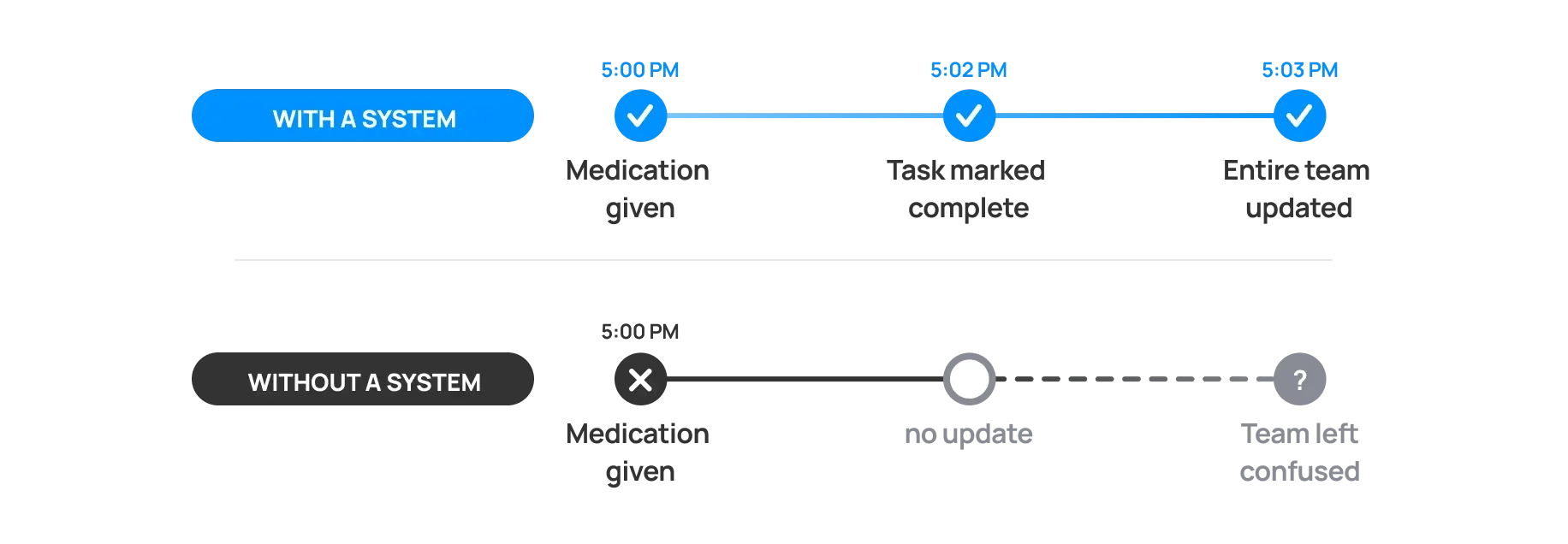
One of the most common failure points:
- medication is given—but not recorded immediately
- feeding is completed—but not updated
- another staff member isn’t aware
This leads to:
- duplicate feeding
- missed medication
- uncertainty across the team
Without real-time tracking, the team is always working with outdated information.
3. Information lives in multiple places
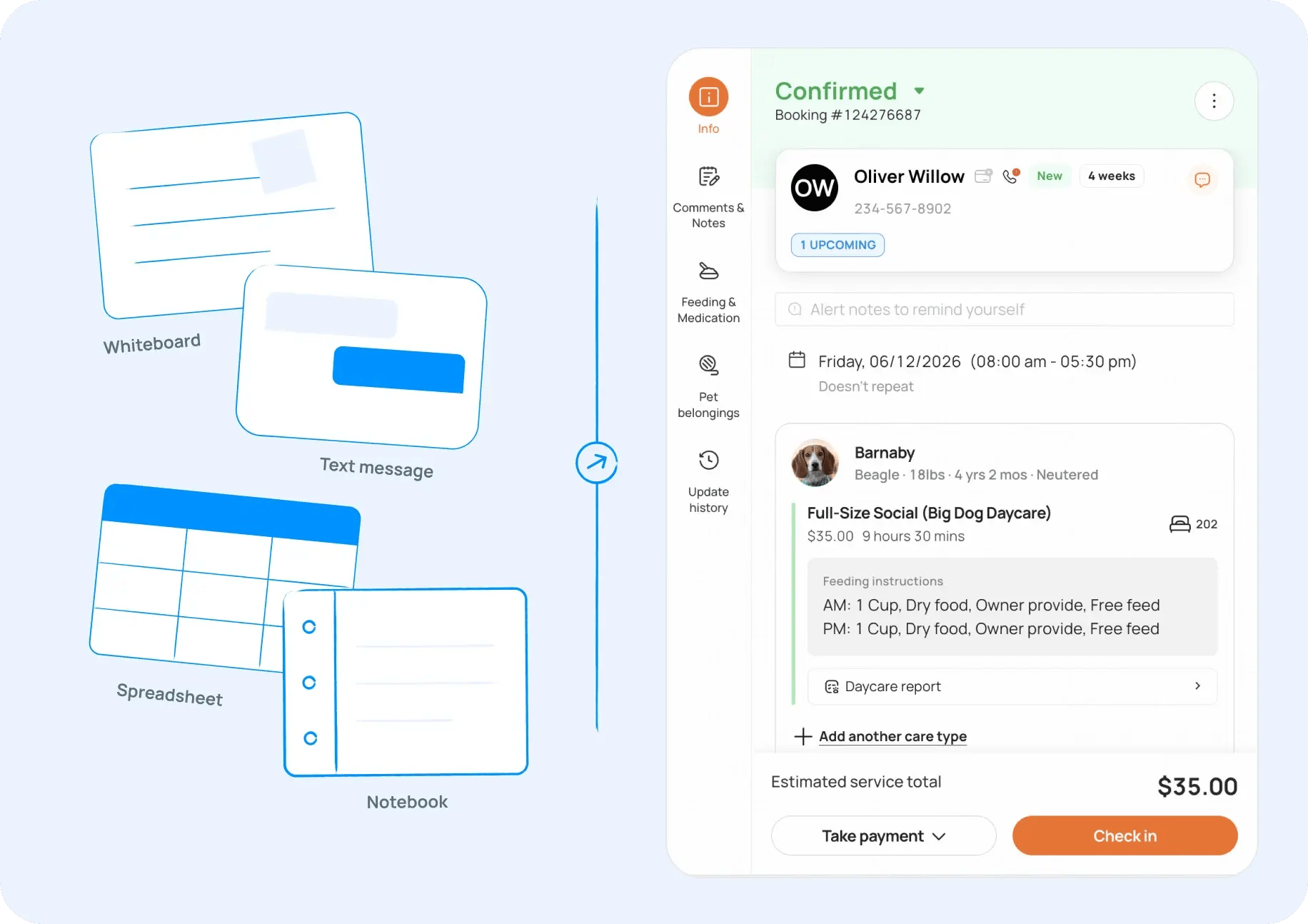
In many businesses, feeding and medication instructions are spread across:
- notebooks
- whiteboards
- text messages
- software (sometimes more than one)
When information is fragmented:
- staff don’t know which version is correct
- updates don’t carry across
- consistency breaks down
Multiple systems create multiple versions of truth.
4. Execution relies on memory and verbal confirmation
In busy environments, staff often rely on:
- “I think it was already done.”
- “Someone told me earlier.”
- “I remember seeing it.”
This works, until it doesn’t. And as the business grows, the margin for error gets smaller. If your system depends on memory, mistakes are not rare. They’re inevitable.

What a reliable tracking system looks like
Well-run pet boarding and daycare businesses don’t just record instructions—they build systems that ensure those instructions are followed.
A reliable system includes:
- Centralized pet profiles: All feeding and medication instructions stored in one place
- Clear schedules and timing: What needs to be done, and when
- Real-time status tracking: What has been completed, updated instantly
- Shared visibility across staff: Everyone sees the same, up-to-date information
- Consistent workflows: No variation in how tasks are handled
- Automated task tracking for daily care: Feeding schedules, medication, and care routines are automatically turned into structured tasks
The goal is not just to document instructions, but to make execution consistent and verifiable.
What systems actually prevent feeding and medication errors
To reduce errors at scale, a system needs to do more than store information. It needs to control how that information flows through the business.
That means:
- One source of truth for all pet information
- Real-time updates as tasks are completed
- Clear workflows that guide execution
- Visibility across shifts and teams
- Centralized communication logs
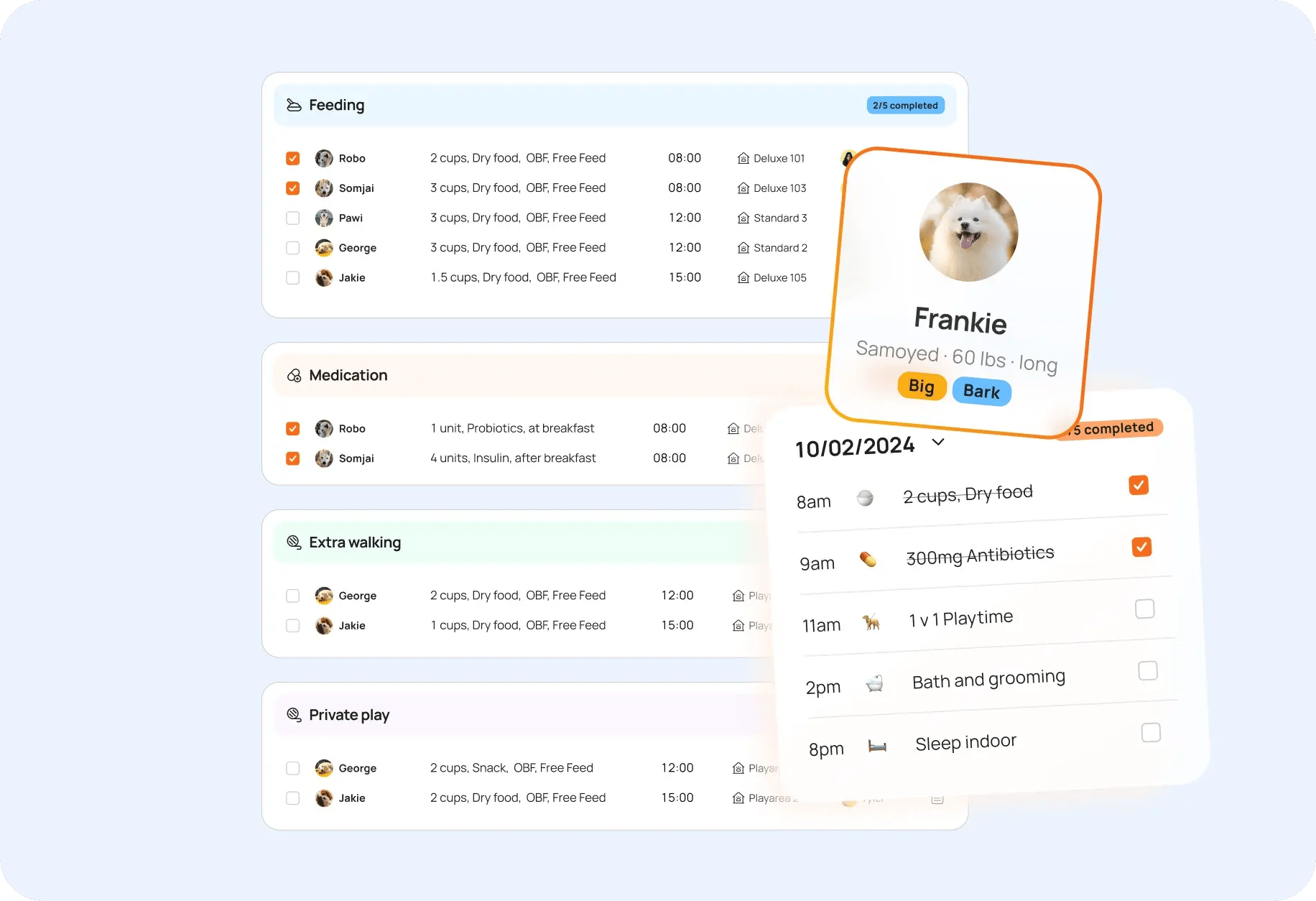
In practice, this often means moving from static instructions to task-based execution. Instead of simply recording what should be done, the system actively generates and tracks tasks:
- feeding and medication tasks are created automatically from reservations and pet profiles
- staff can see exactly what needs to be completed in real time
- managers can track progress and ensure nothing is missed
This kind of system typically includes:
- live task status and completion tracking
- alerts for overdue or missed tasks
- dashboards showing what has and hasn’t been done
When care instructions become trackable tasks, execution becomes visible, and mistakes become far less likely.
It also creates visibility at the management level.
- managers can see what’s completed and what’s not
- performance and accountability become clearer
- issues can be addressed before they escalate
Visibility isn’t just about tracking work. It’s about giving teams the clarity to operate with confidence.
The real shift: from managing people to designing systems
You don’t solve feeding and medication mistakes by telling your team to “be more careful.” You solve them by changing how the business operates.
At the core of this shift is moving from ad hoc processes to structured workflows. Instead of relying on individuals to remember what to do:
- tasks are generated automatically
- steps are clearly defined
- execution follows a consistent path
Structured workflows reduce variation, and consistency is what prevents mistakes at scale.
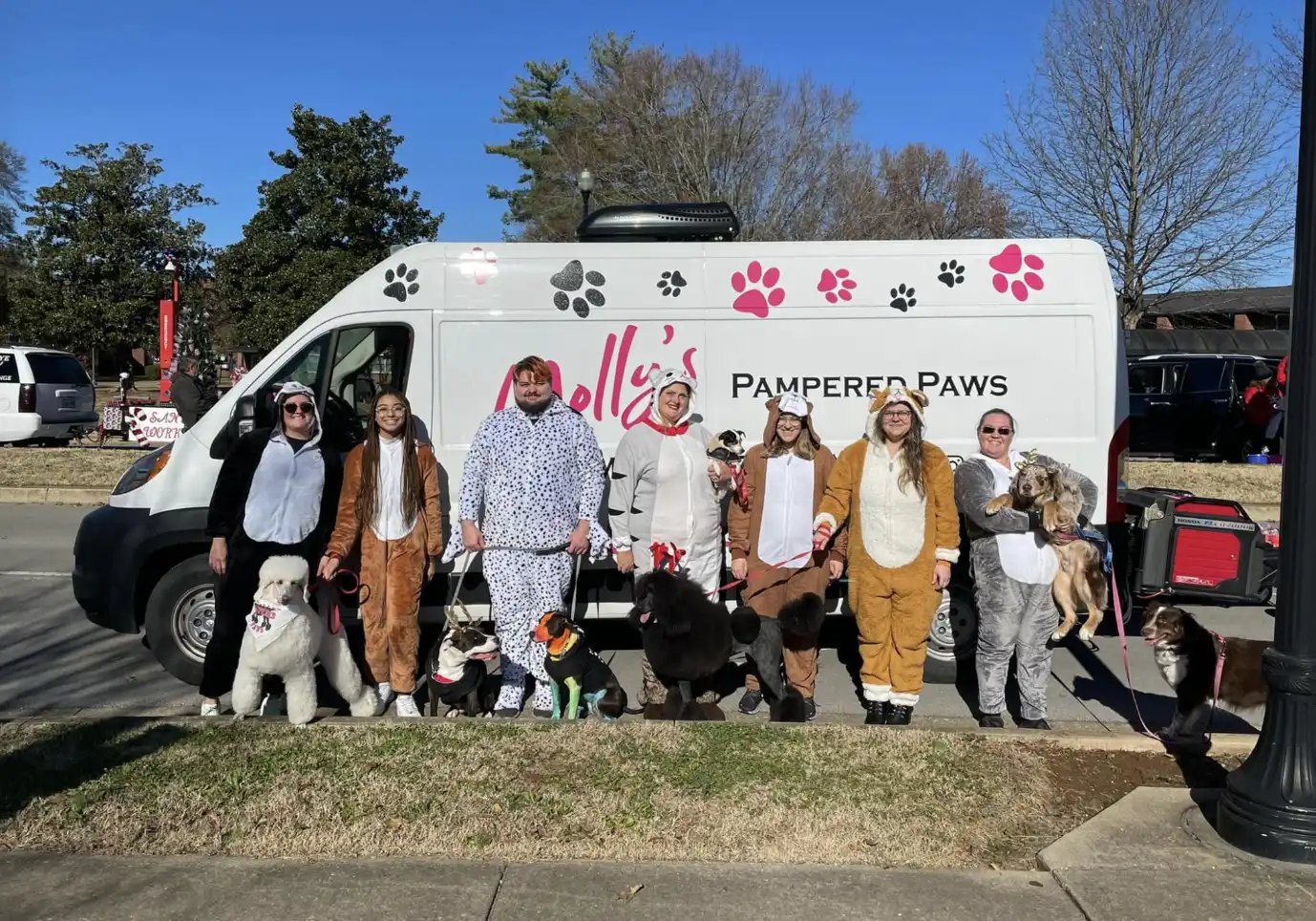

How Molly’s Pampered Paws scaled multiple services and locations with a unified system
As Molly’s Pampered Paws expanded from grooming into boarding and daycare across three locations, operational complexity quickly increased. By consolidating everything into a single system, they were able to unify operations, maintain visibility across locations, and scale without losing control over daily execution.
How modern pet care businesses are solving this
This is where operational systems become critical. Platforms like MoeGo allow pet care businesses to manage feeding, medication, scheduling, and communication within a single, connected system.
Instead of relying on:
- handwritten notes
- verbal communication
- switching between tools
Teams can:
- access centralized pet profiles
- track feeding and medication tasks in real time
- view communication history tied to each pet
- monitor staff activity and performance
- ensure instructions carry through from intake to execution
In addition, these systems help improve transparency with pet parents:
- automated daily activity reports
- photo and video updates
- customizable report cards
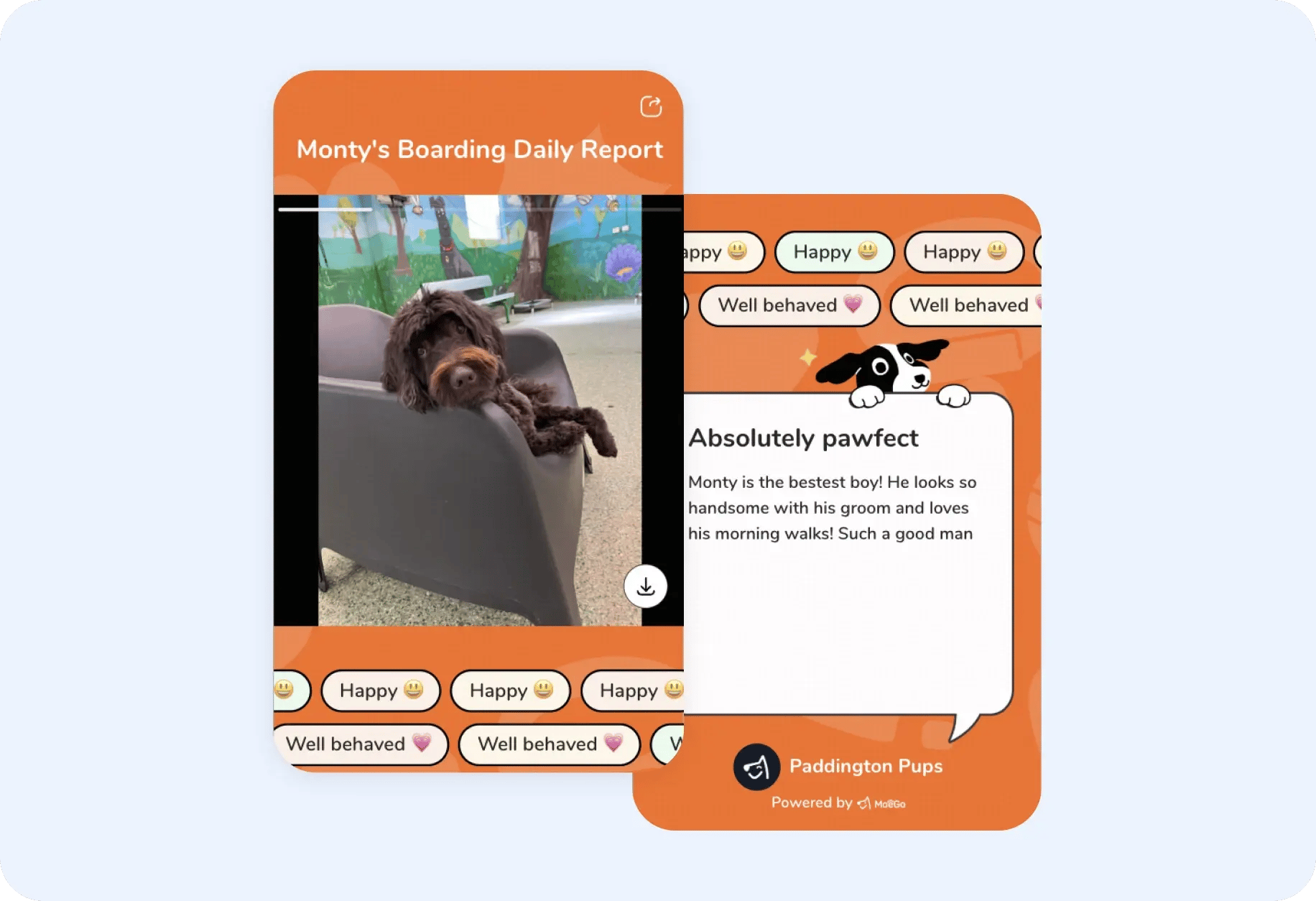

How Paddington Pups shifted from manual coordination to system-driven operations
By moving to a more structured, system-driven workflow, Paddington Pups eliminated the need to pass information manually, ensuring that instructions, tasks, and updates flowed consistently from intake to execution across the entire business for their 150+ dogs daily.
Frequently Asked Questions
How do I make sure medication is not missed?
By using a system that tracks tasks in real time and makes completion visible to all staff.
How do staff confirm feeding is completed?
Through structured workflows where tasks are marked complete and updated instantly—not through memory or verbal confirmation.
What’s the best way to track pet instructions?
Using a centralized system where all instructions, updates, and communication are stored and accessible in one place.
Can software really prevent feeding and medication mistakes?
Software doesn’t eliminate human error, but it creates structure, visibility, and consistency, which significantly reduces the likelihood of mistakes.
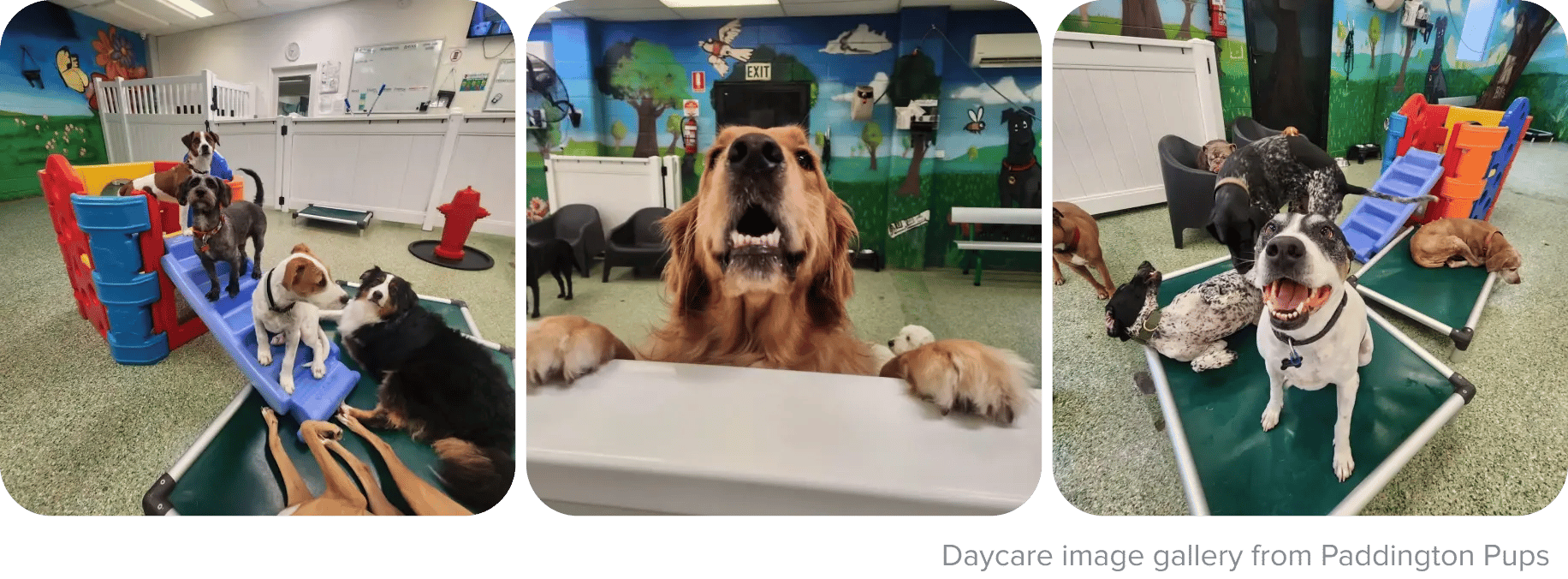
Just starting or adding to your business?
We have flexible plans meant for all stages.

Dog Bite Protocol for Daycare and Boarding: The 2027 Guide

Best Flooring for Dog Daycare and Boarding Facilities: The 2027 Guide