Share this
by MoeGo on May 16, 2026, 9:00:00 AM
Most daycare owners don’t have a demand problem. They have a consistency problem.
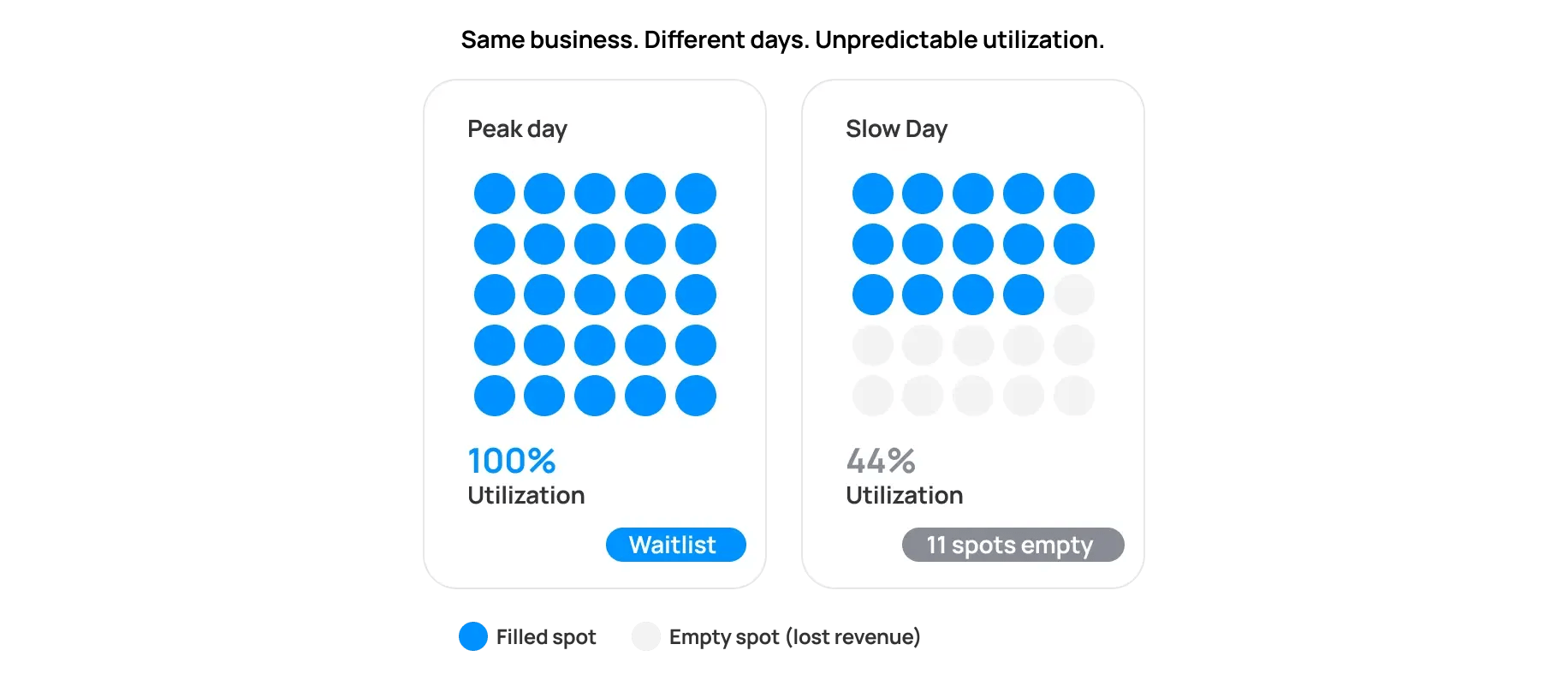
Some days, you’re turning clients away.
Other days, you’re looking at half-empty rooms, idle staff, and revenue you’ll never get back.
Nothing about your business actually changed—same team, same capacity, same pricing. But demand swings anyway.
That inconsistency creates real operational pressure:
- Staffing becomes guesswork
- Schedules break down
- Revenue feels unpredictable month to month
Over time, it starts to feel like you’re reacting to your business instead of controlling it.
The root issue isn’t how many clients you have. It’s that their behavior is unstructured and unpredictable.
Pay-per-visit daycare trains customers to book based on their schedule, not yours. Which means your capacity gets filled unevenly, no matter how many clients you bring in.
Empty spots aren’t a marketing failure. They’re a system design problem. The operators who solve this don’t just try to “get more bookings.” They change how demand shows up in their business.
This is where memberships start to matter, not as a pricing tactic, but as a way to stabilize usage, shape booking behavior, and turn capacity into something predictable.
The Real Problem: Capacity Is Perishable
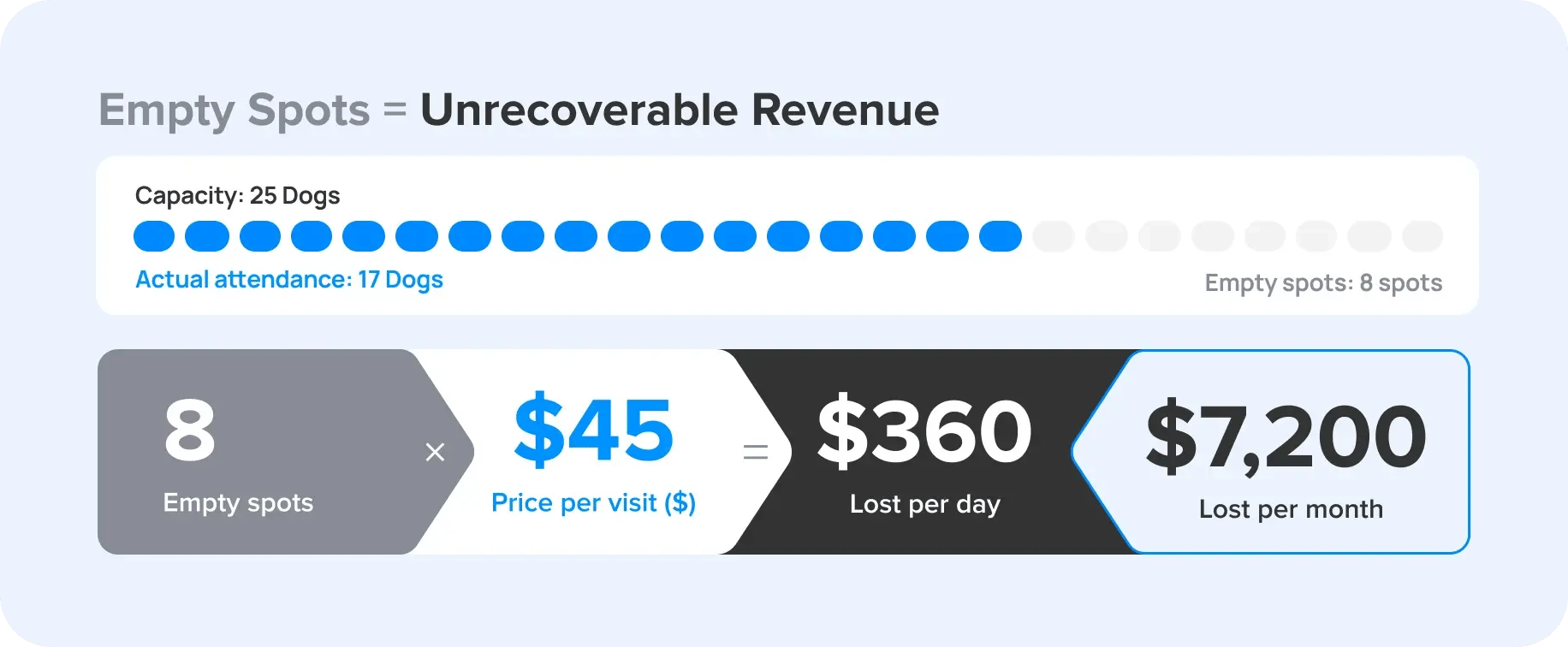
Every empty daycare spot today is revenue you can’t recover tomorrow.
Unlike retail or e-commerce, you can’t store unused capacity. If a spot goes unfilled, it’s gone. At the same time, your costs don’t change:
- Staff is scheduled
- Rent is fixed
- Overhead is constant
This creates a structural problem: Revenue fluctuates, but costs don’t.
So even if your business is “busy overall,” inconsistent utilization quietly erodes your margins.
Why Daycare Demand Is Inherently Unpredictable
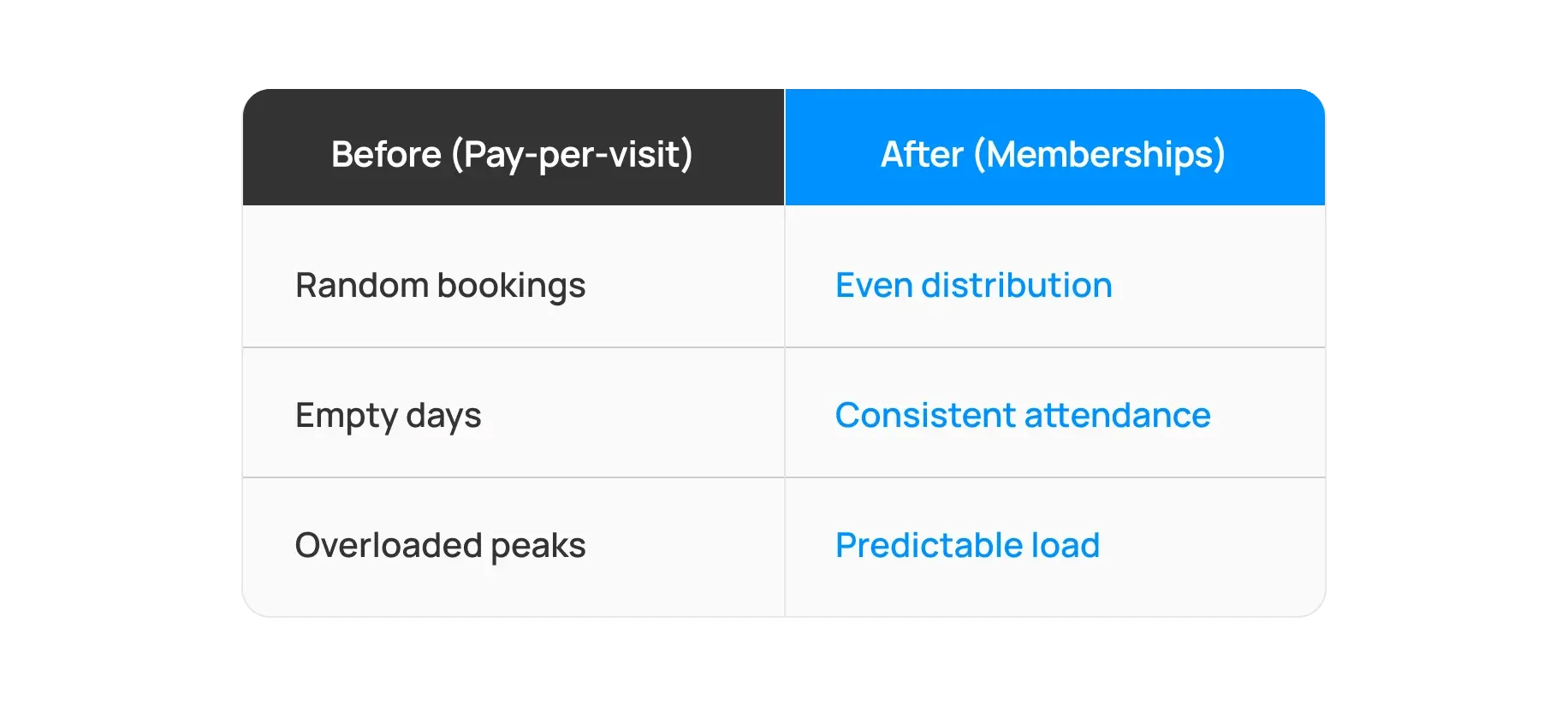
Most daycare businesses operate on a pay-per-visit model. On the surface, it feels flexible, but operationally, it creates instability.
What happens in practice:
- Clients book last-minute based on their own schedules
- No commitment means no predictable attendance
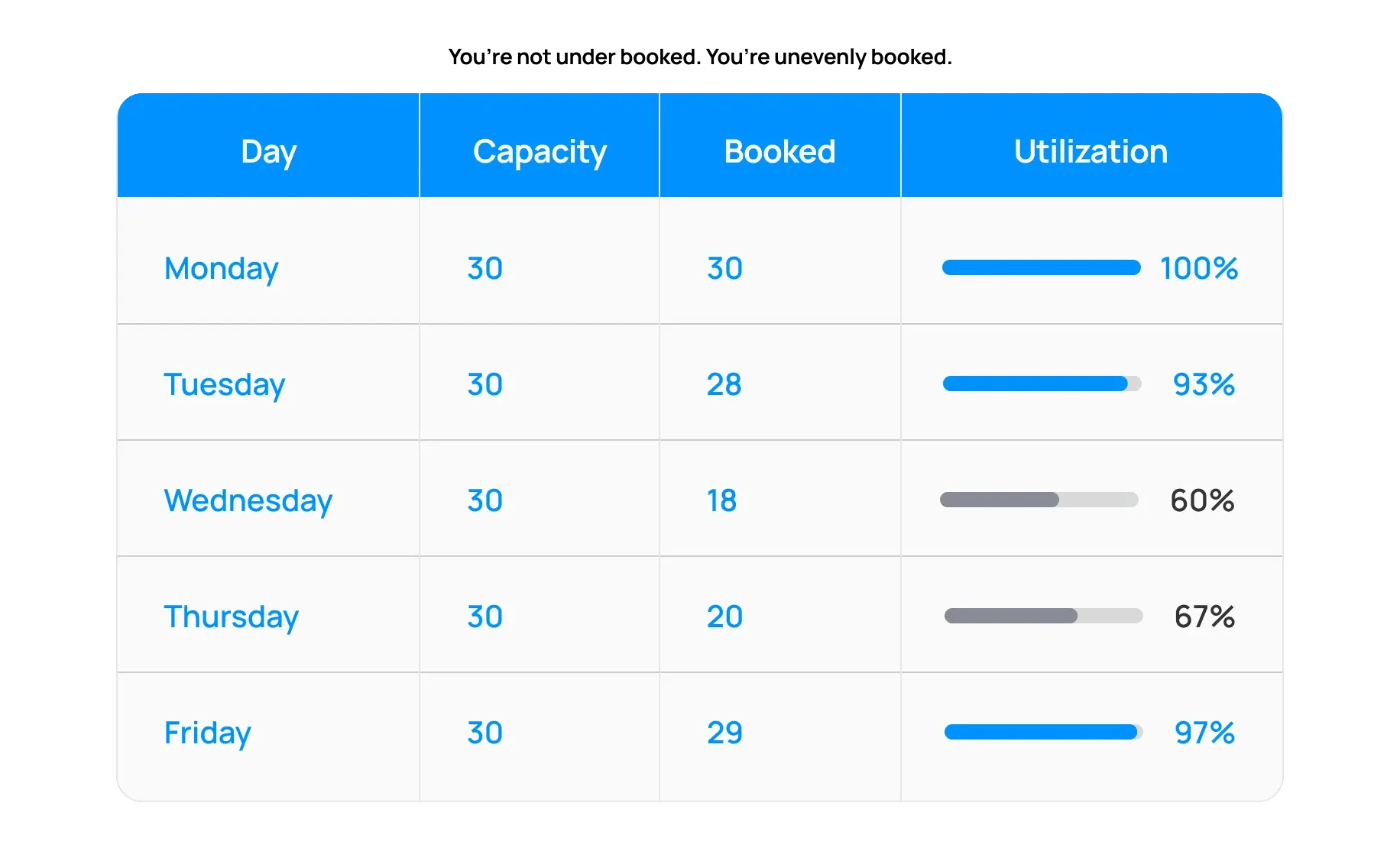
- Peak days (e.g., Mon/Tues) get overloaded
- Midweek or off-peak days remain underutilized
You end up with:
- Overbooking pressure on busy days
- Empty capacity on slow days
- No clear view of future demand
This leads to constant trade-offs:
- Do you staff for peaks or averages?
- Do you risk turning clients away or overstaffing?
Without a system to shape demand, you’re always reacting.
What Memberships Actually Change (Not Just Revenue)
Most discussions around memberships focus on recurring revenue. But the more important shift is behavioral.
Memberships introduce three critical changes:
- Commitment: Clients are no longer deciding visit-by-visit. They’ve already committed to usage.
- Habit Formation: Members tend to establish routines (e.g., every Monday and Wednesday).
- Predictability: Usage becomes more consistent over time instead of random.
What MoeGo Data Shows:
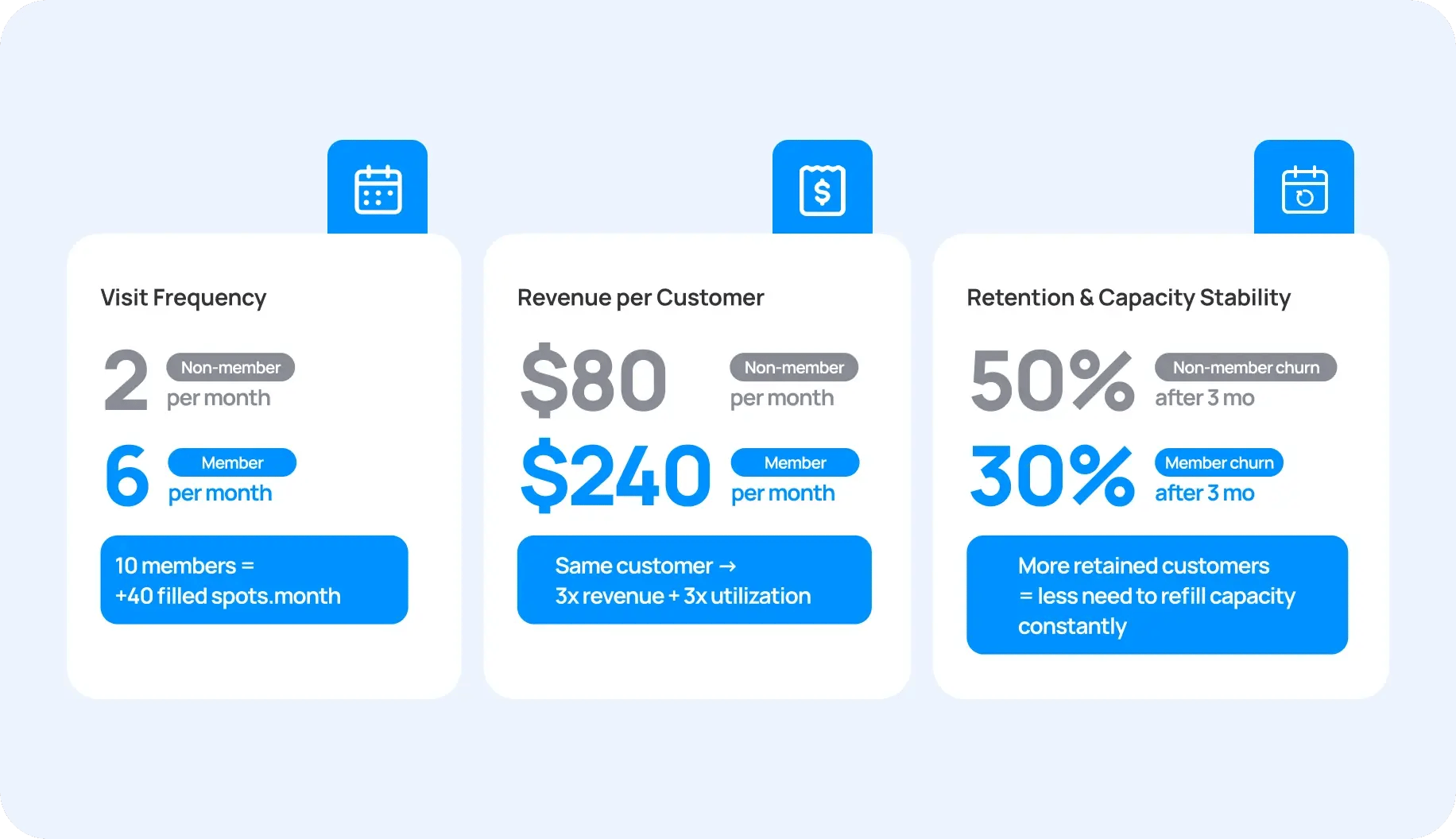
- Members visit 2–3x more frequently than non-members
- Visit frequency increases over time (e.g., from ~4 visits/month to 6–8+ visits/month in later cohorts)
- Retention is significantly higher (member cohorts retain 20–40% better over time)
- Revenue per member compounds, with long-term members generating 2–4x more lifetime value
What This Means:
- Memberships don’t just increase revenue—they increase visit consistency, which stabilizes utilization.
- More importantly: they increase revenue per available spot per day, not just per customer.
How Memberships Improve Capacity & Utilization
Demand Smoothing = Filling Slow Days
When clients become members, they stop booking randomly and start building routines.
Instead of:
- “I’ll book when I need it”
It becomes:
- “My dog goes every Tuesday and Thursday”
Operational impact:
- Baseline demand across the week
- Fewer empty spots on traditionally slow days
Higher Utilization per Customer
Your data shows that members:
- Visit more often
- Increase usage over time
This means each customer fills more of your available capacity.
Operational impact:
- Same number of customers → more filled slots → higher revenue per capacity unit
Better Forecasting & Staffing
With recurring usage patterns, you gain visibility into:
- Expected attendance by day
- Peak vs off-peak demand
Operational impact:
- Staff scheduling becomes proactive instead of reactive
- Reduced overstaffing and understaffing
Reduced Dead Inventory
Without memberships:
- Unsold capacity disappears daily
With memberships:
- A portion of capacity is effectively pre-committed
Operational impact:
- Higher baseline utilization
- Less reliance on last-minute bookings
The Risk: When Memberships Break Your Capacity
Memberships are powerful, but poorly structured ones can create new problems.
Common mistakes:
Unlimited plans without controls
- Everyone books peak days
- Overcrowding and staff burnout
No booking rules
- Members cluster into the same time slots
No capacity visibility
- You oversell without realizing it.
- Memberships don’t fix utilization by default. They need structure.
How to Structure Memberships for Maximum Utilization
Set Visit Expectations (Not Just Price)
Instead of unlimited plans, use structured tiers:
- 8 visits/month
- 12 visits/month
This distributes usage more evenly.
Control Demand with Booking Rules
Introduce constraints that shape behavior:
- Peak-day restrictions
- Advance booking windows
- Cancellation policies
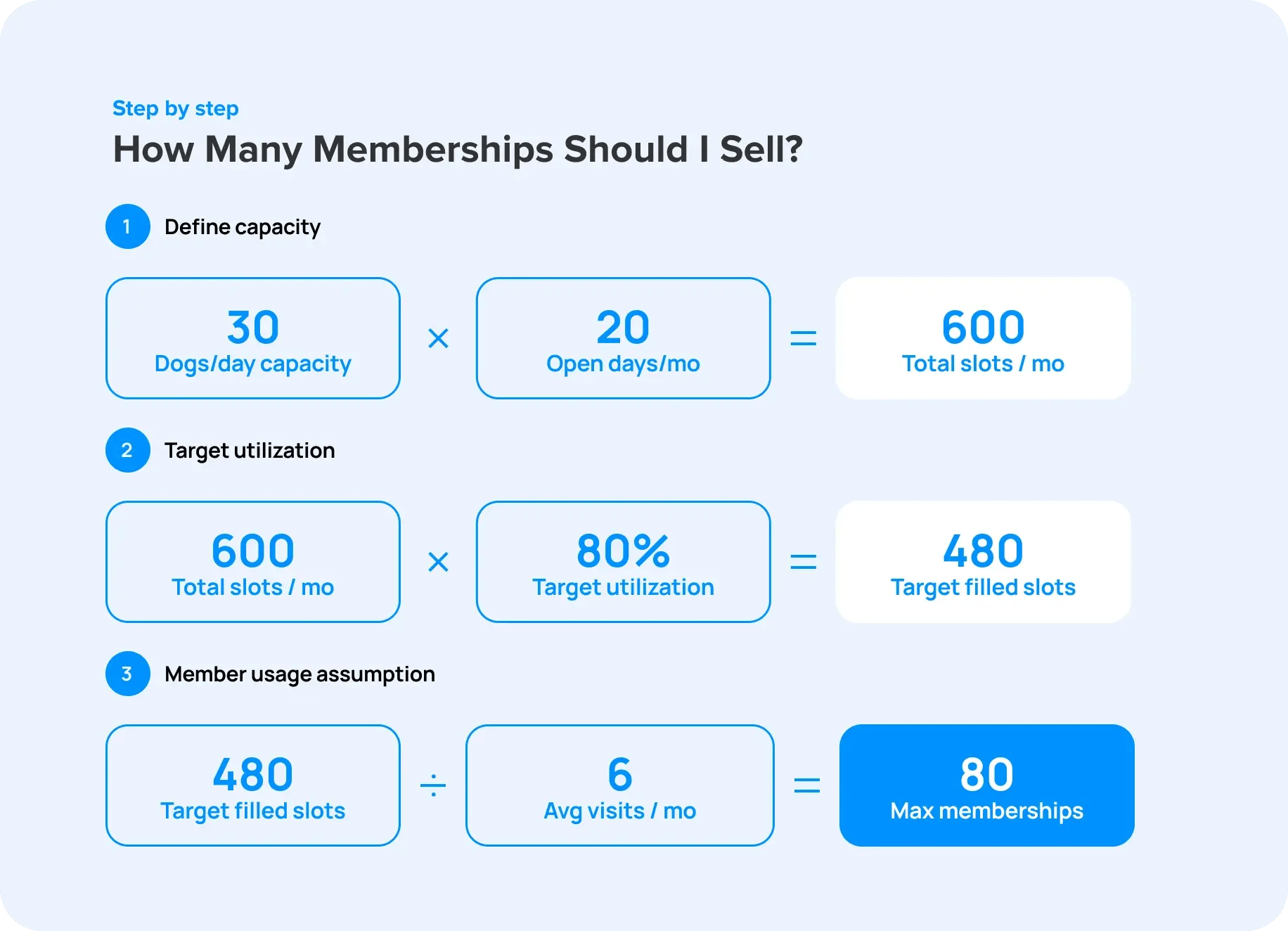
Cap Memberships Based on Capacity
Use a simple framework:
- Daily capacity × target utilization rate
- Allocate a portion to members vs non-members
Adjust Based on Real Data
Track key metrics:
- Visit frequency
- No-show rates
- Peak vs off-peak usage
Then refine your structure over time.
How MoeGo Supports Capacity Optimization
Smart Scheduling & Capacity Controls
How It Works
Set capacity limits by day, service, or staff, and control booking rules for members vs non-members in real time.
Operational Impact
Prevents overbooking while distributing demand more evenly across the week.
Business Outcome
Higher utilization, more stable daily revenue, and less operational chaos.


How Paddington Pups Went From “Counting Bookings One by One” to Instant Capacity Visibility
Paddington Pups replaced manual capacity tracking with a real-time view of bookings and availability, allowing their team to prevent overbooking and make faster, more confident scheduling decisions.
Membership & Package Tracking
How It Works
Automatically tracks visit usage, limits, and billing cycles.
Operational Impact
Eliminates manual tracking and provides visibility into customer behavior.
Business Outcome
Optimized plan design and increased visits per customer.

Prepaid Packages: How We Dog Care Builds Stability in a Thin-Margin Business
Reporting & Utilization Insights
How It Works
Provides visibility into booking density, attendance, and trends.
Operational Impact
Identifies underutilized days and capacity gaps.
Business Outcome
Data-driven decisions that improve labor efficiency and revenue predictability.


How Red Dog Maximize Capacity with Real-Time Visibility
Red Dog uses MoeGo’s Enterprise Hub to get real-time visibility into bookings and utilization across locations, allowing them to quickly spot gaps, adjust staffing, and maximize revenue per available spot, without manual reporting.
What This Means for Your Business
Across the data:
- Members visit more frequently
- Retention is higher
- Revenue compounds over time
But the deeper impact is operational: Memberships increase revenue per available slot, not just total revenue. They turn demand from something unpredictable into something you can shape and control.
Frequently Asked Questions
How do I fill empty daycare spots consistently?
The most reliable way is to shift from reactive bookings to committed usage. Memberships create routine attendance (e.g., set days per week), which builds a baseline of demand and reduces empty spots on slow days.
Do daycare memberships actually improve utilization?
Yes, when structured correctly. MoeGo data shows members visit 2–3x more frequently and usage increases over time, which directly improves slots filled per day and stabilizes weekly demand.
Will memberships cause overbooking on peak days?
They can if you don’t add controls. Use capacity limits, peak-day restrictions, and booking windows to distribute demand. The goal is to shape when members book, not just how often.
How many memberships should I sell?
Start with your daily capacity × target utilization rate (e.g., 70–85%). Allocate a portion of that capacity to members and leave room for non-member bookings. Adjust based on real usage data.
Are unlimited daycare memberships a bad idea?
Unlimited plans often create peak-day clustering and strain staff. Most operators get better results with tiered plans (e.g., 8 or 12 visits/month) that encourage even usage across the week.
How do memberships affect staffing?
They improve forecasting. With recurring usage patterns, you can schedule staff based on expected attendance instead of last-minute bookings, reducing overstaffing and understaffing.
What metrics should I track to optimize utilization?
Focus on:
- Visit frequency (per member vs non-member)
- Peak vs off-peak fill rates
- No-show and late-cancel rates
- Revenue per available spot per day
These tell you whether your capacity is being used efficiently.
Do memberships increase revenue or just shift it?
They do both: they stabilize revenue timing and increase total revenue per customer. Higher visit frequency and retention lead to 2–4x higher lifetime value, while also improving daily slot utilization.
How do I prevent members from all booking the same days?
Use booking rules: restrict peak days, limit concurrent bookings, and set advance windows. This spreads demand and protects service quality.
What’s the first step to implementing memberships for utilization?
Define your capacity and target utilization, then launch a limited, tiered membership with clear booking rules. Monitor usage for 30–60 days and iterate based on data.

Just starting or adding to your business?
We have flexible plans meant for all stages.


Holiday Grooming Add-Ons: How to Build a Seasonal Menu That Sells Itself

How KLŌS Fine Pet Salon Turned Milton, Georgia's Most Discerning Zip Code Into Its Biggest Advantage