Share this
by MoeGo on Sep 30, 2026, 12:02:41 PM
You started your grooming, boarding, or daycare business because you love animals not because you wanted to spend your evenings answering DMs, chasing down no-shows, and manually confirming tomorrow's appointments one text at a time.
But that's where a lot of pet business owners end up. The phone doesn't stop. Clients only want to book with you. Growth feels more like chaos: more calls, more scheduling headaches, more nights doing books instead of relaxing. And the idea of taking a real vacation? For most owners, that feels impossible.
If that sounds familiar, you're not doing anything wrong. You're running your business the way most owners do, until something forces a change.
In the kickoff session of MoeGo's Pet Business Leadership Playbook webinar series, we sat down with Ronalyn Wentz, Founder of Pets and Profits and an Online Business Manager (OBM) who works exclusively with pet care businesses. Ronalyn shared the exact systems she used to go from working 8–10 hours a day to taking a full 2-week vacation while her business kept running, with her daily involvement dropping to just 1–2 hours.
Here's what pet business owners can learn from her approach, and what's actually possible once the right systems are in place.

Key Takeaways
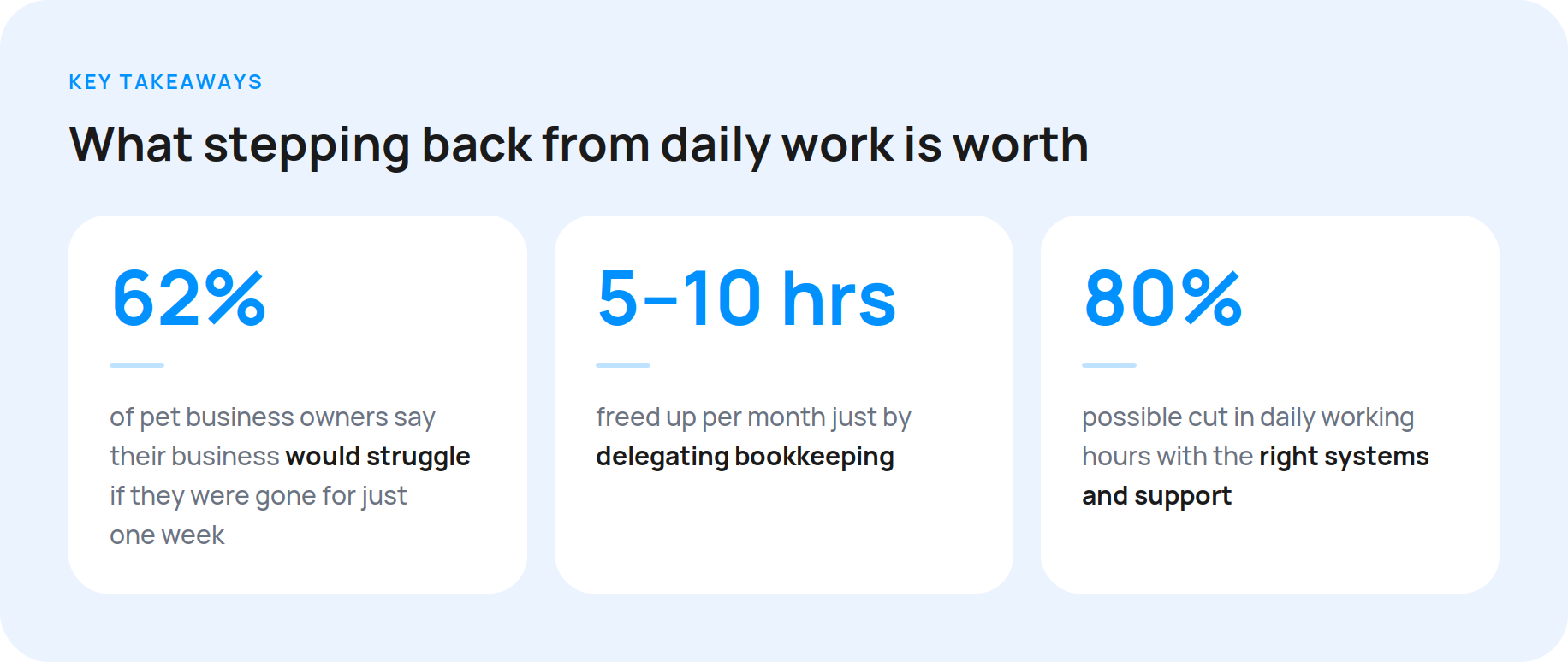
- 62% of pet business owners say their business would struggle if they were gone for just one week.
- Delegating bookkeeping alone can free up 5–10 hours a month.
- With the right systems and support, it's possible to cut daily working hours by as much as 80%.
- Owners who feel stuck are usually stuck doing tasks that should be eliminated, simplified, automated, or delegated — in that order.
- Every good SOP (standard operating procedure) answers five questions: who, what, where, how, and why.
Why So Many Pet Business Owners Feel Stuck
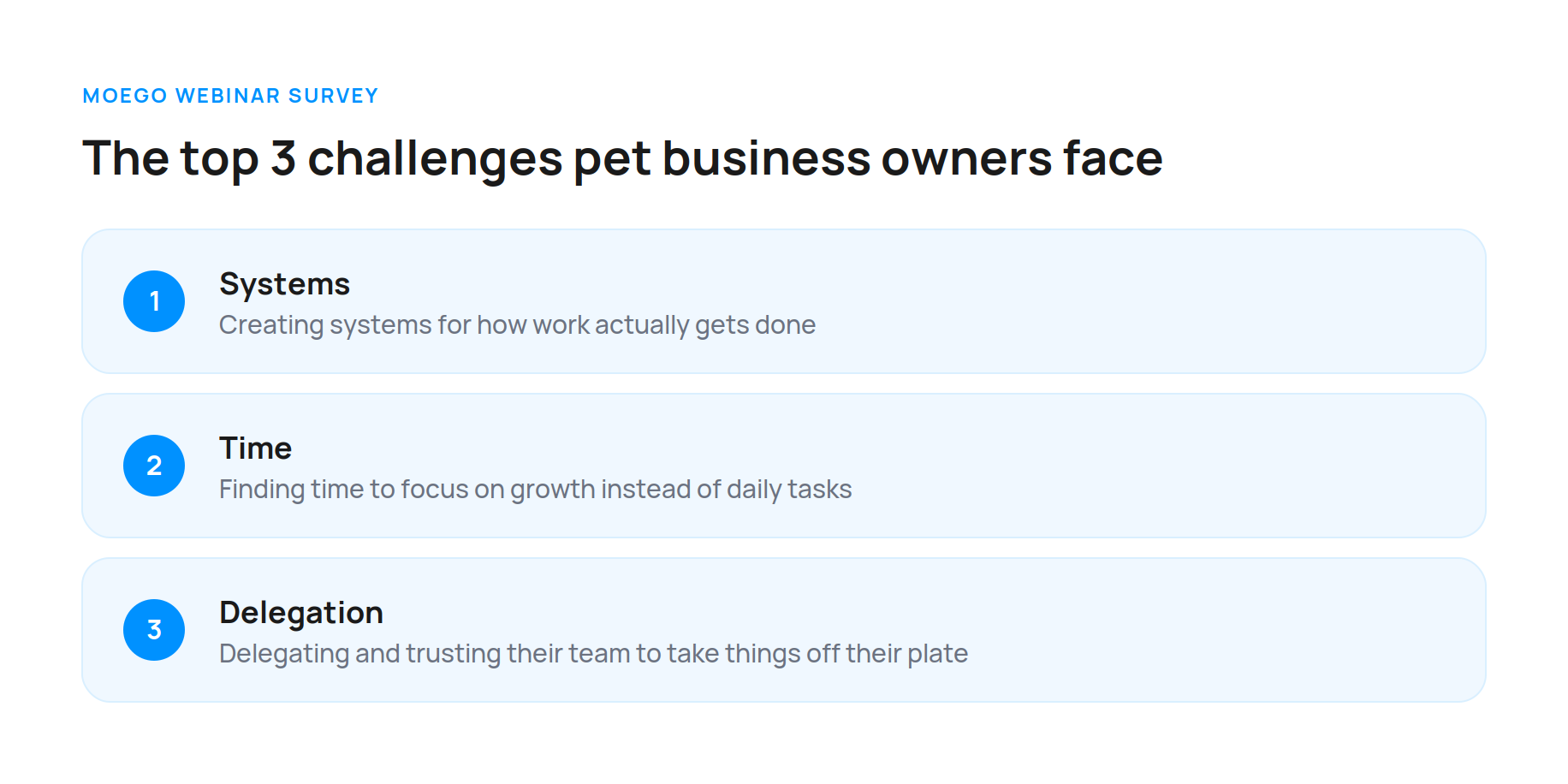
Before the webinar, MoeGo surveyed attendees about their biggest challenges. The top three, by far, were:
During a live poll, 62% of attendees admitted their business would struggle if they took even one week off. When asked how many roles they personally fill, most owners said nearly all of them: groomer or pet care provider, customer service rep, bookkeeper, scheduler, marketer, HR department, and CEO, all at once.
This shows up in painfully familiar ways:
- You're the one fielding every phone call, even during appointments, because no one else can answer scheduling questions
- No-shows and late cancellations quietly eat into your revenue every week
- Payment follow-up feels like a part-time job on top of your actual job
- More clients doesn't feel like more success. It feels like more to juggle
- Even a day off means being glued to your phone
Ronalyn's take: This isn't a personal failing. It's what happens when a business grows without systems to support it.
The Mindset Shift: From "What Do I Need to Do Today?" to "What Does My Business Need From Me?"
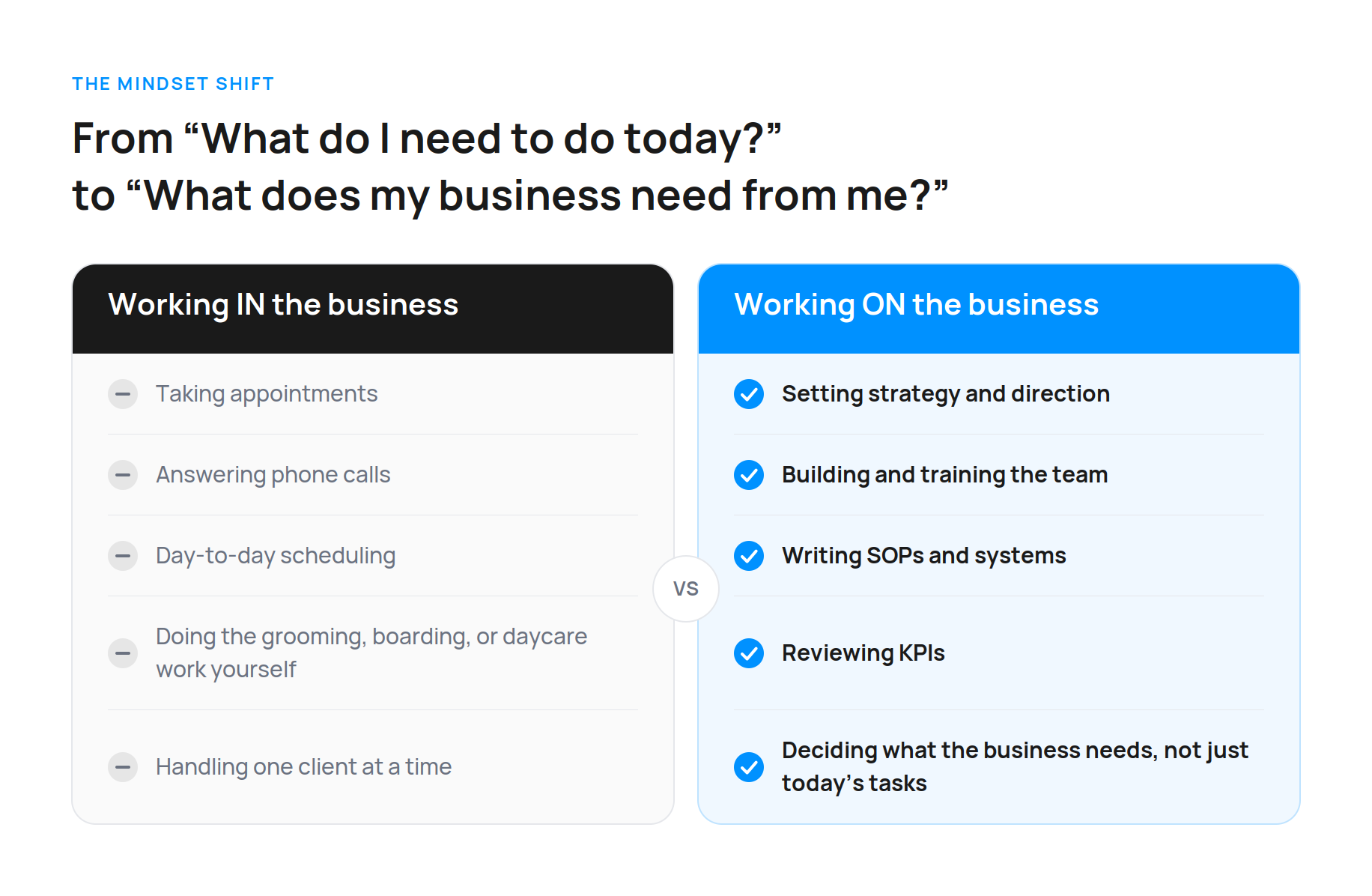
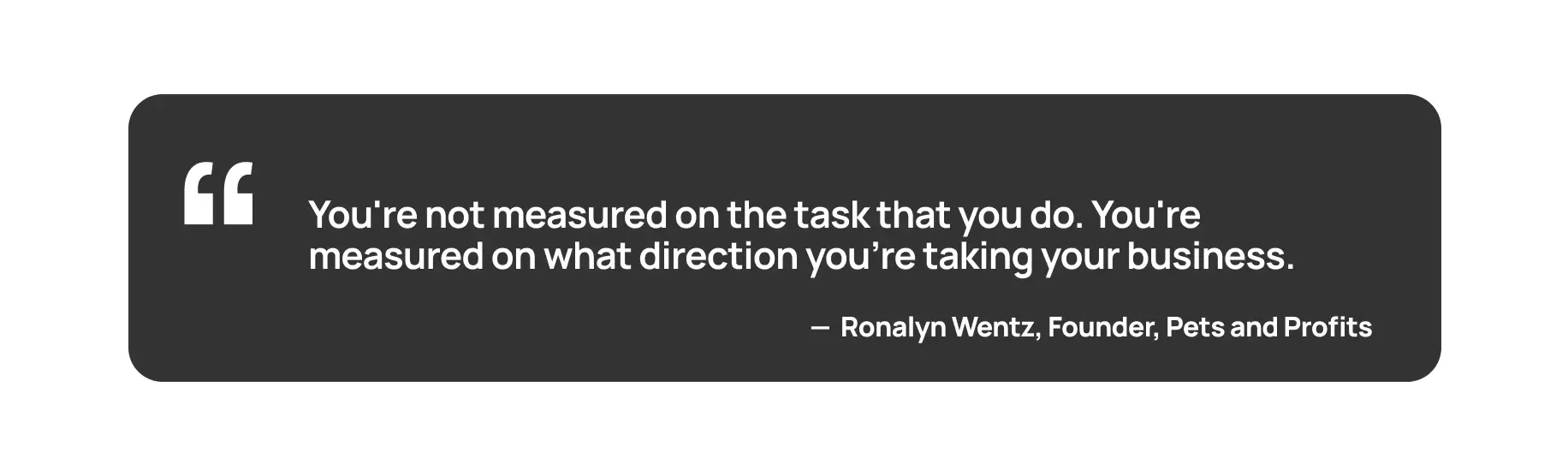
Ronalyn pointed to one simple but powerful reframe that separates business owners from CEOs: "Instead of 'what do I need to do today?' you need to start asking 'what does my business need from me?' ... You're not measured on the task that you do. You're measured on what direction you're taking your business."
This connects to a classic small-business concept: working in the business vs. working on the business.
- Working in the business looks like: taking appointments, answering phones, doing the grooming or boarding work yourself, handling day-to-day scheduling.
- Working on the business looks like: setting strategy, building your team, writing SOPs, creating systems, and reviewing your numbers (KPIs) to see what's actually working.
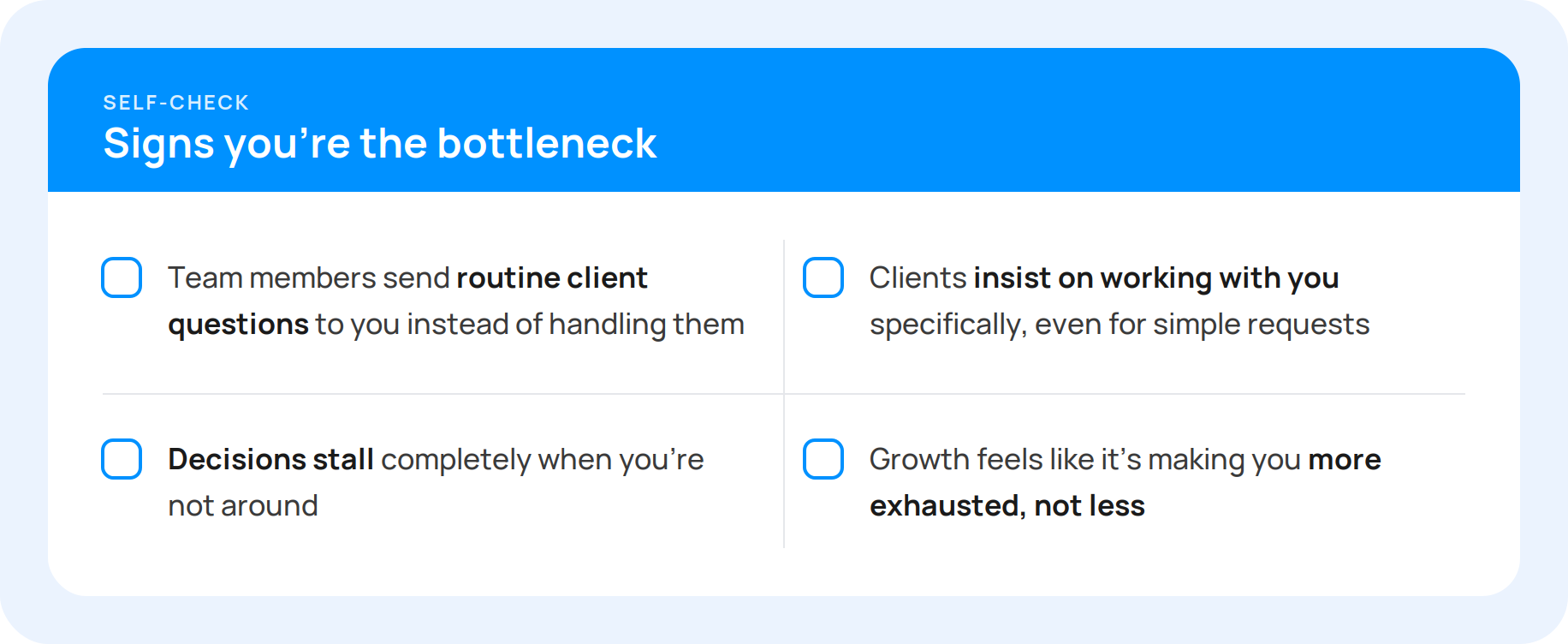
Signs You're the Bottleneck
According to Ronalyn, these are the warning signs that growth is being held back by the owner:
- Team members send routine client questions to you instead of handling them
- Clients insist on working with you specifically, even for simple requests
- Decisions stall completely when you're not around
- Growth feels like it's making you more exhausted, not less
If any of these sound familiar, it's not a sign to work harder. It's a sign to start building systems.
Track Numbers, Not Just "Busy"
Ronalyn also pointed out that most owners run their business on a feeling of busyness rather than actual data. Instead, CEOs track concrete KPIs like:
- Capacity: how full is your schedule, really?
- Staff utilization: are your team members' hours being used well?
- Financial profitability: not just revenue, but what you're actually keeping
- Admin load: how much time is going to non-billable work?
Feeling busy isn't the same as growing. These numbers tell you the difference.
A Simple Framework for Getting Your Time Back
Ronalyn shared a 4-step filter to run every recurring task through. It's a practical way to figure out what to do with the things eating up your day.
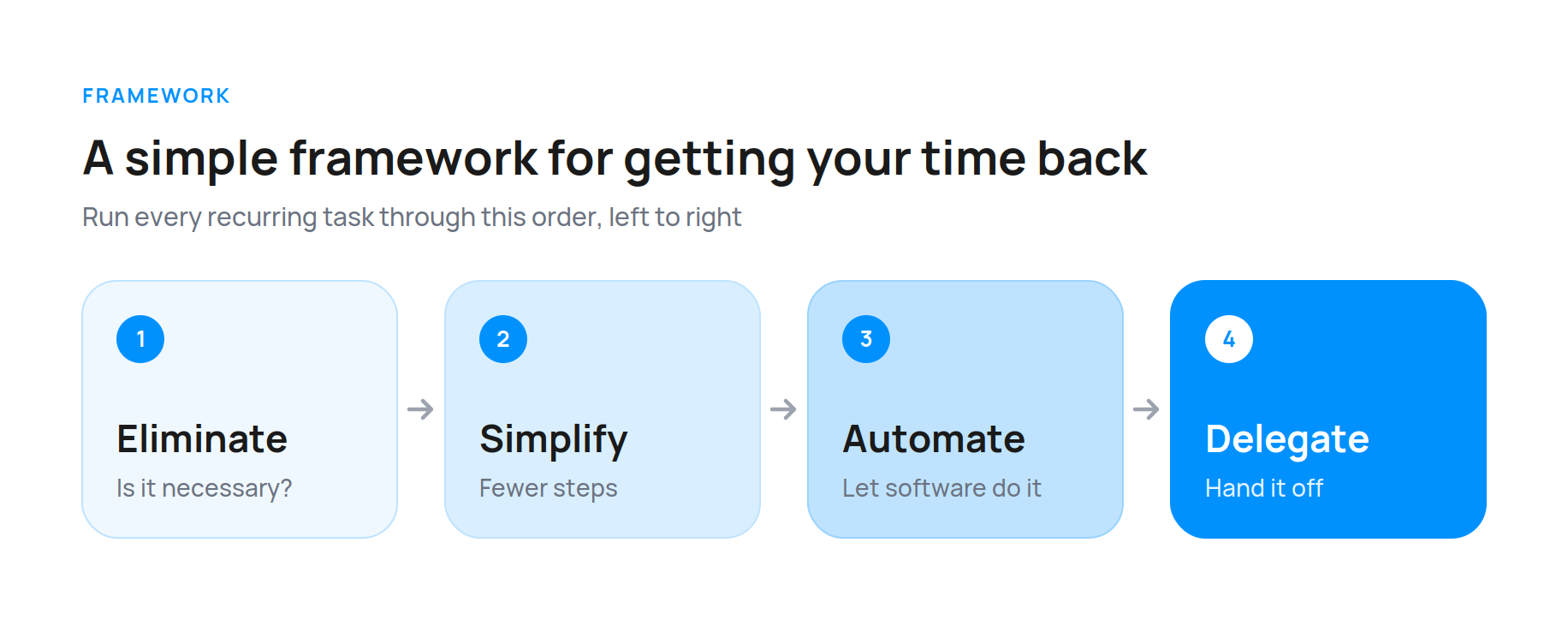
- Eliminate: Does this task even need to happen? Some things can simply be dropped.
- Simplify: Can it be done in fewer steps? (Example: liking a social media comment instead of writing a full reply.)
- Automate: Can software do this instead of a person? This is usually where the biggest, fastest wins are. In the webinar, Ivy walked through exactly this with live examples from MoeGo:
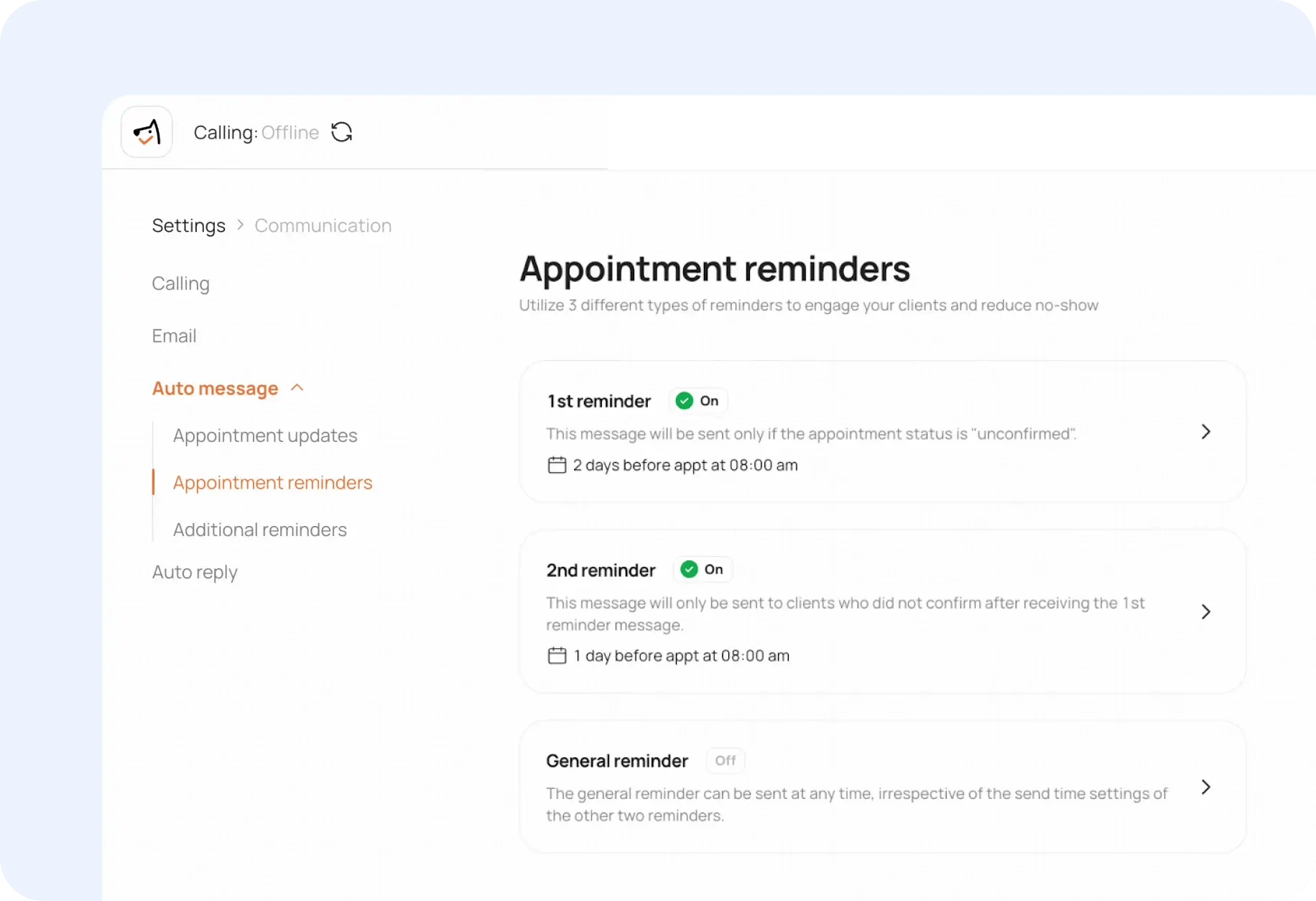
- Auto-Reminders: multi-step text and email reminders sent automatically, cutting down on no-shows without anyone having to make a call
-
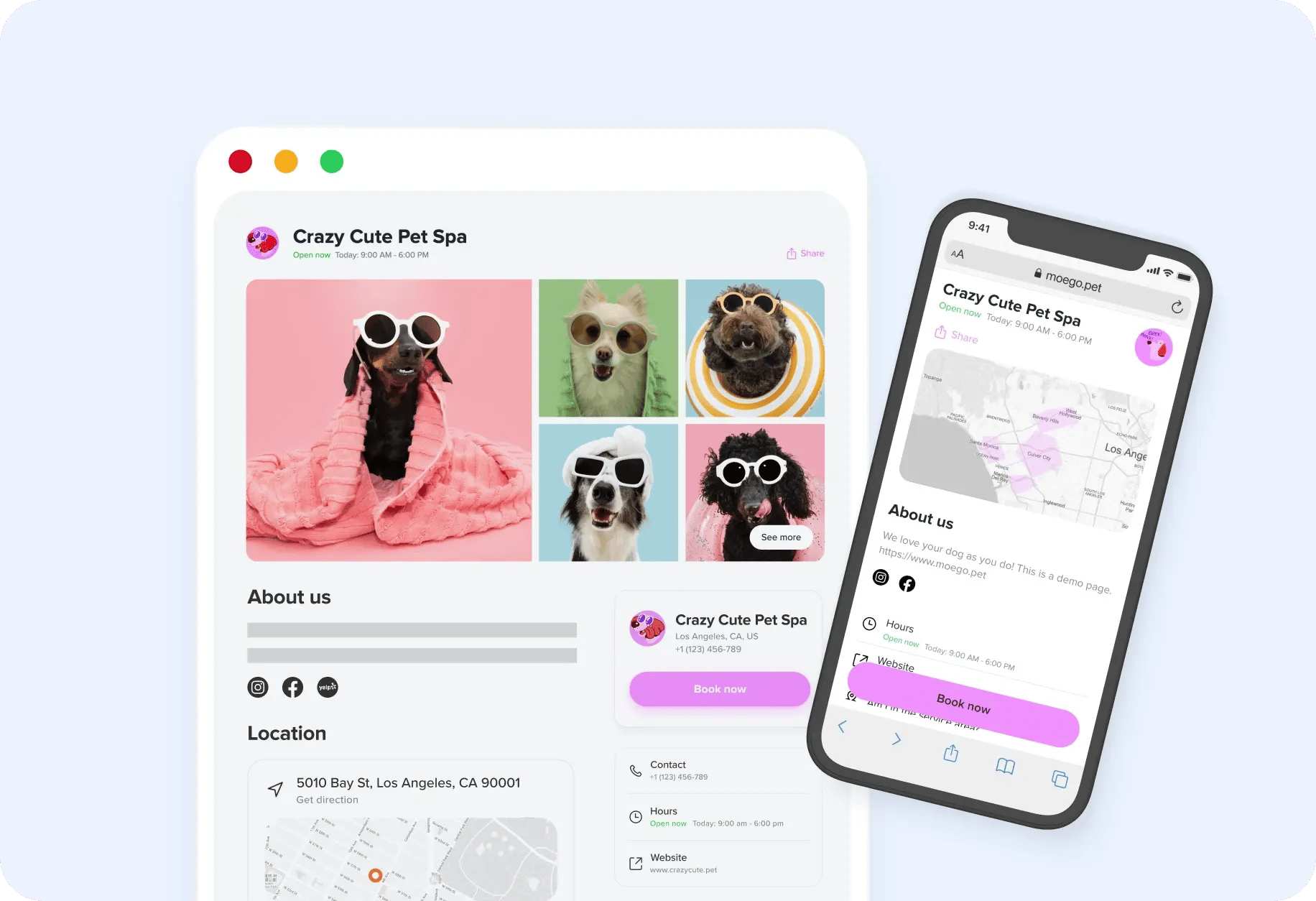
- 24/7 Online Booking: clients can request appointments any time, so requests don't pile up as missed calls or after-hours messages
-
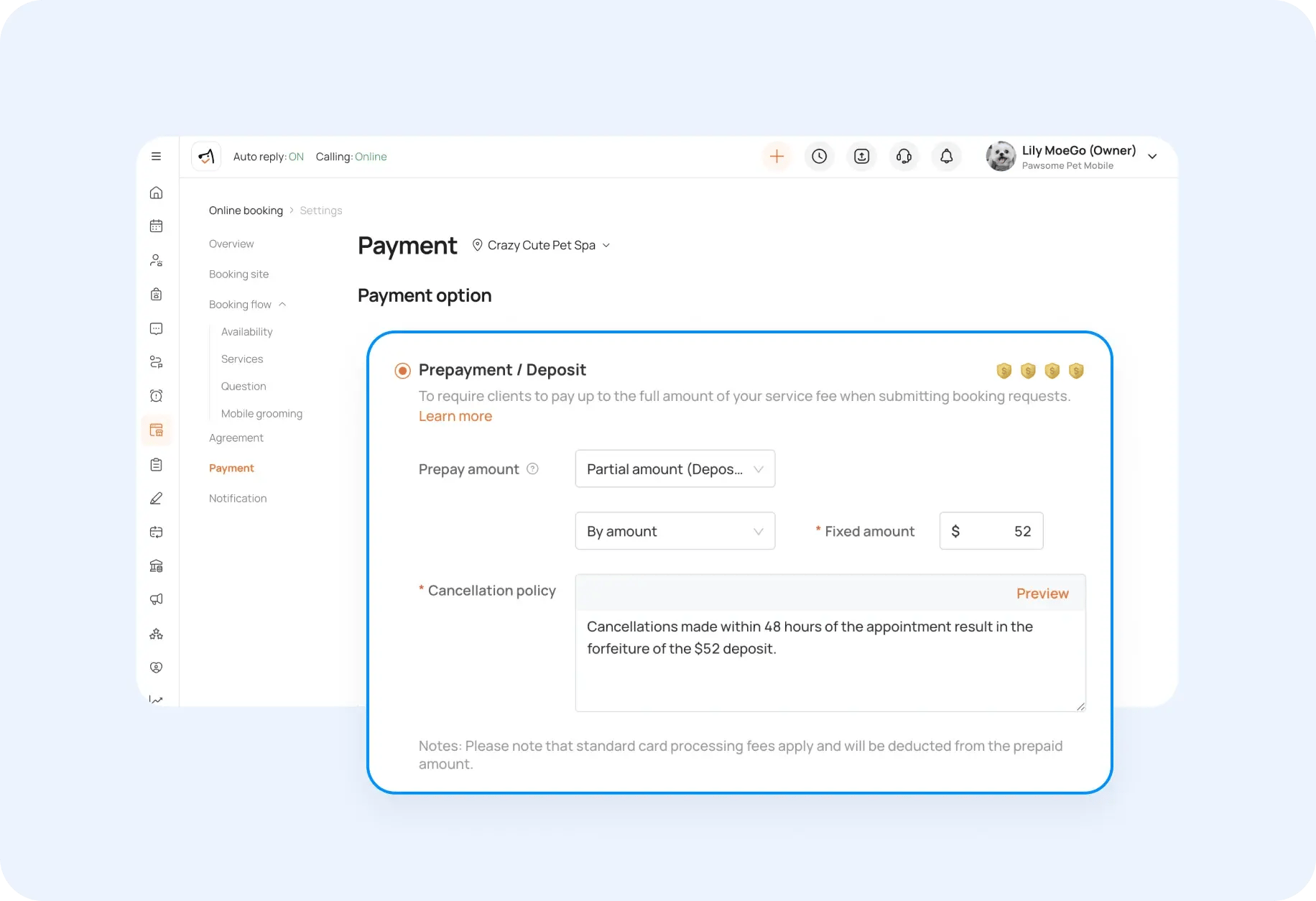
- Card on File: deposits are collected automatically, protecting revenue from last-minute cancellations and no-shows
-
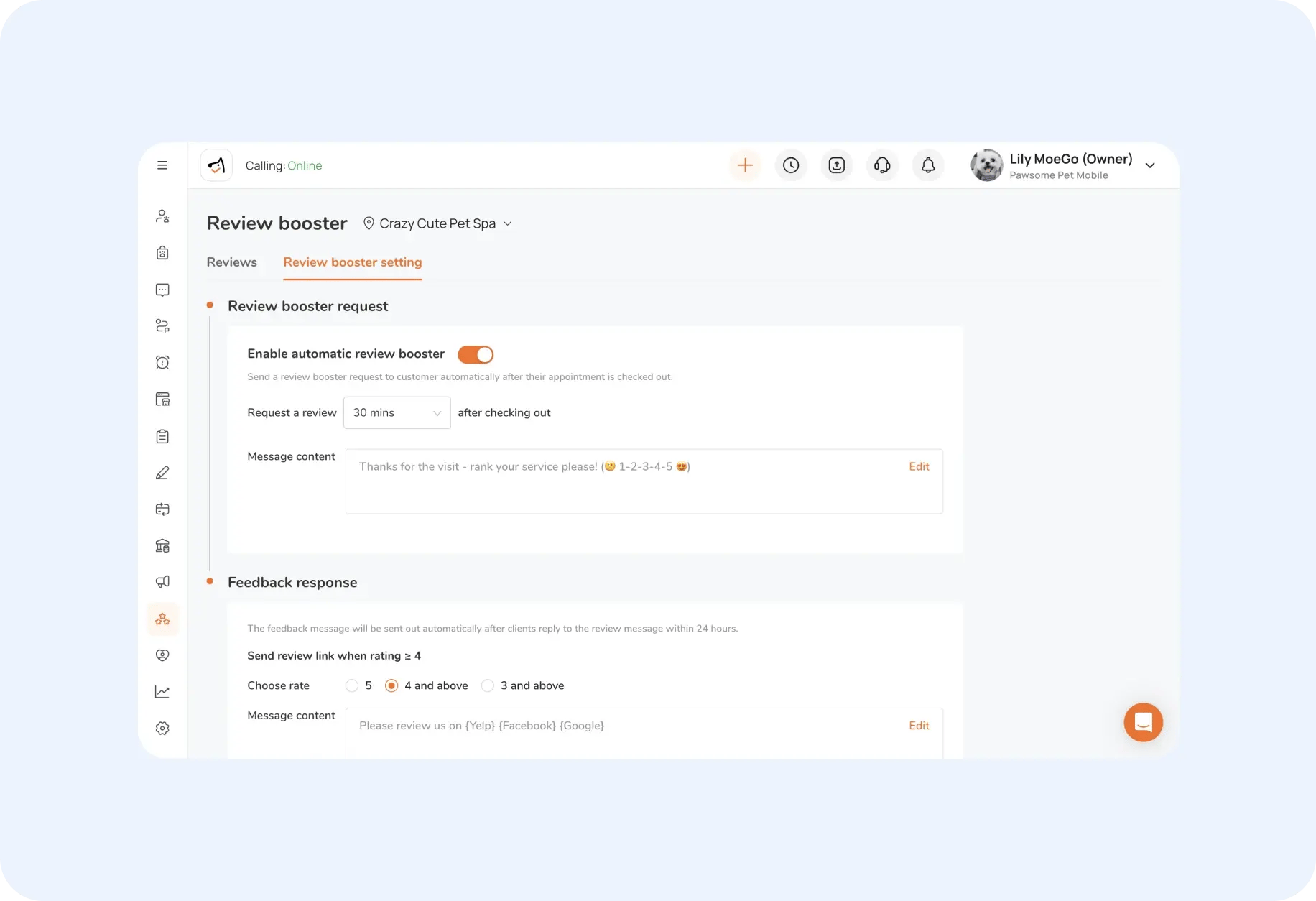
- Review Booster: automated post-appointment texts ask happy clients for a Google review, so your reputation builds without anyone remembering to ask
4. Delegate: For everything left, hand it off to a team member or virtual assistant, with a written process to follow.
This order matters. Most owners jump straight to "I need to hire someone" or "I just need to work faster," when the real fix is often a tool that removes the task altogether. If you're still confirming every appointment by hand or tracking payments in your head, automation is usually the fastest way out.
Once something is automated, don't just set it and forget it. Ronalyn recommended periodic "spot checks," like submitting a dummy booking or testing your web forms every so often, to make sure your automations are actually working the way you think they are.
How to Actually Delegate (Without It Backfiring)
A lot of owners try delegating once, it goes badly, and they conclude "it's just faster if I do it myself." Ronalyn's advice: The problem usually isn't the person you delegated to. It's the process.
Write SOPs that cover five things:
- Who is responsible for the task
- What needs to get done
- Where it happens (which tool, platform, or location)
- How to do it, step by step
- Why it matters — the context behind the task
Use the "Check & Revise" method: Have the person who'll actually do the task read the SOP and try it themselves, ask questions as they go, and help you update the document based on what's unclear. This catches gaps before they become problems.
Don't skip shadowing. Before handing a task off fully, have your team member watch you do it, then do it themselves while you watch and give feedback.
On why it's worth the upfront time investment, Ronalyn said: "Take the time in the beginning to write things down and then it'll take you probably twice the amount of time, but in the long run you will get your time back."
What Should You Delegate First?
Start small: with one task, not your entire to-do list. Ronalyn's suggestion:
"Start with one small task... An easy thing to delegate is something that you don't like to do, hand that off. Or something that you're like, 'This is just taking me so long.'"
Good starter tasks: bookkeeping, appointment confirmations, review requests, or social media replies.
Build a Daily CEO Habit
One of the most practical tips from the webinar: block one hour every morning, before client or service work begins, for CEO-level work only: writing SOPs, reviewing numbers, planning ahead.
Ronalyn admitted she used to do the opposite: "I used to do all my client work first and I would just say, 'Oh, I'll just do my own work later.' It never got done. So then I'm like, okay, I have got to switch it around. And what I do... is I work on my business first and then I work on my client work."
If growth work always comes "after everything else," it never actually happens. Protecting time for it first is what makes the shift possible.
Real Examples From the Webinar
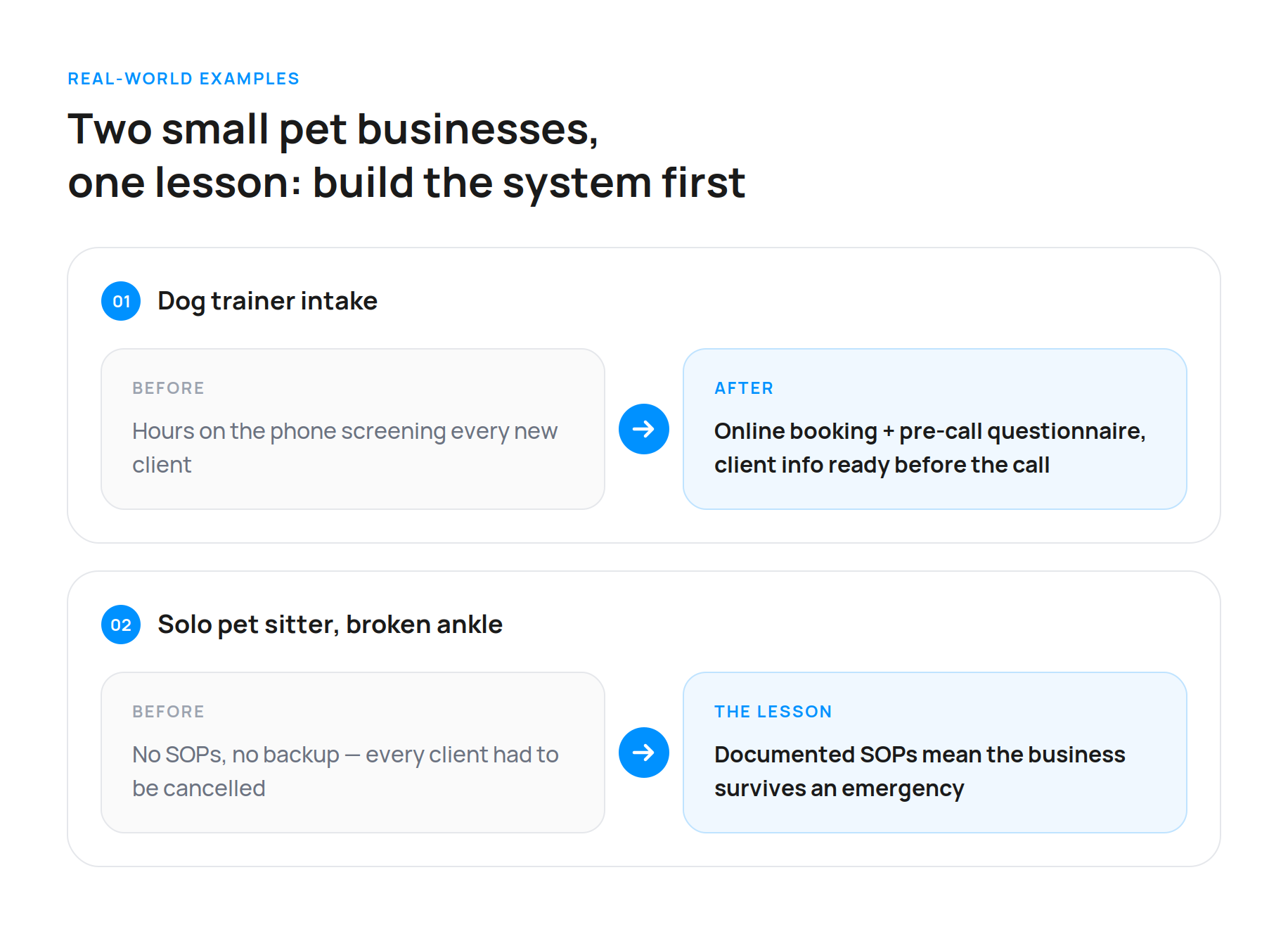
A dog trainer stuck on the phone. A trainer was losing hours every week manually calling potential clients to evaluate whether they were a good fit. Ronalyn helped set up online calendar booking paired with an automated pre-call questionnaire. By the time the call happened, the trainer already had the client's key details, cutting call time significantly and improving the quality of every intake.
A pet sitter with no backup plan. A solo pet sitter broke her ankle and had to cancel every single client because she had no SOPs and no one else who could step in. Ronalyn's takeaway: documented processes aren't just about saving time day-to-day. They protect your business if something goes wrong, and they add real value if you ever want to sell.
The Bigger Picture
Ronalyn summed up the goal of delegation itself: "The goal isn't to create another you... The goal is to actually getting the result that you want."
That's really the core idea behind moving from pet professional to CEO: it's not about doing everything yourself, and it's not about cloning yourself either. It's about building systems reliable enough that the result still happens, whether or not you're the one doing the task.
From the Q&A: More Questions Pet Business Owners Asked
Should I be worried about AI replacing my team?
Ronalyn's framing: think of AI as an efficiency tool or a business consultant, something that helps you work faster or think through decisions, not a replacement for your staff or the personal connection you have with clients.
How do I stop a contractor or employee from taking my clients if they leave?
Use formal contractor or employment agreements that include non-solicitation and non-compete clauses, drafted with an actual attorney rather than a generic template.
My team seems overwhelmed when I hand off new responsibilities. What am I doing wrong?
Break large projects into smaller steps instead of handing off the whole thing at once, make sure training actually happens (not just a quick explanation), and build in a feedback loop so staff can flag confusion early instead of struggling silently.
Where to Start If This Feels Overwhelming
If you read this and thought "I don't even have time to write an SOP," you're feeling exactly what Ronalyn described, and you don't need to fix everything at once.
The fastest relief usually comes from tackling the automate step first, since it doesn't require hiring anyone or handing off trust to a new team member. It just requires the right tool. Online booking, automated appointment reminders, and card-on-file deposits alone can eliminate a huge share of the daily back-and-forth that keeps owners glued to their phones. That's often the first real system a growing pet business puts in place, and it's usually what makes the next steps — writing SOPs, delegating, actually taking a day off — feel possible.
You don't have to overhaul your entire business this month. Start with the one task that's draining you the most, and work the framework from there.
FAQ: Moving From Pet Professional to CEO
How do I know if I'm the bottleneck in my pet business?
Common signs include team members routing simple questions to you, clients insisting on working only with you, decisions stalling when you're away, and feeling more exhausted as your business grows.
What should I delegate first in my grooming, boarding, or daycare business?
Start with one task you dislike or that takes up a disproportionate amount of your time — bookkeeping, appointment confirmations, and review requests are common starting points.
What is an SOP, and why does my pet business need one?
An SOP (standard operating procedure) is a written process that documents who does a task, what it involves, where it happens, how to do it step by step, and why it matters. SOPs let you delegate confidently and protect your business if you're ever unexpectedly unavailable.
How much time can automation and delegation actually save?
For Ronalyn Wentz, delegating bookkeeping alone freed up 5–10 hours a month, and a full system of SOPs plus virtual assistant support reduced one owner's daily working hours by roughly 80%.

Just starting or adding to your business?
We have flexible plans meant for all stages.

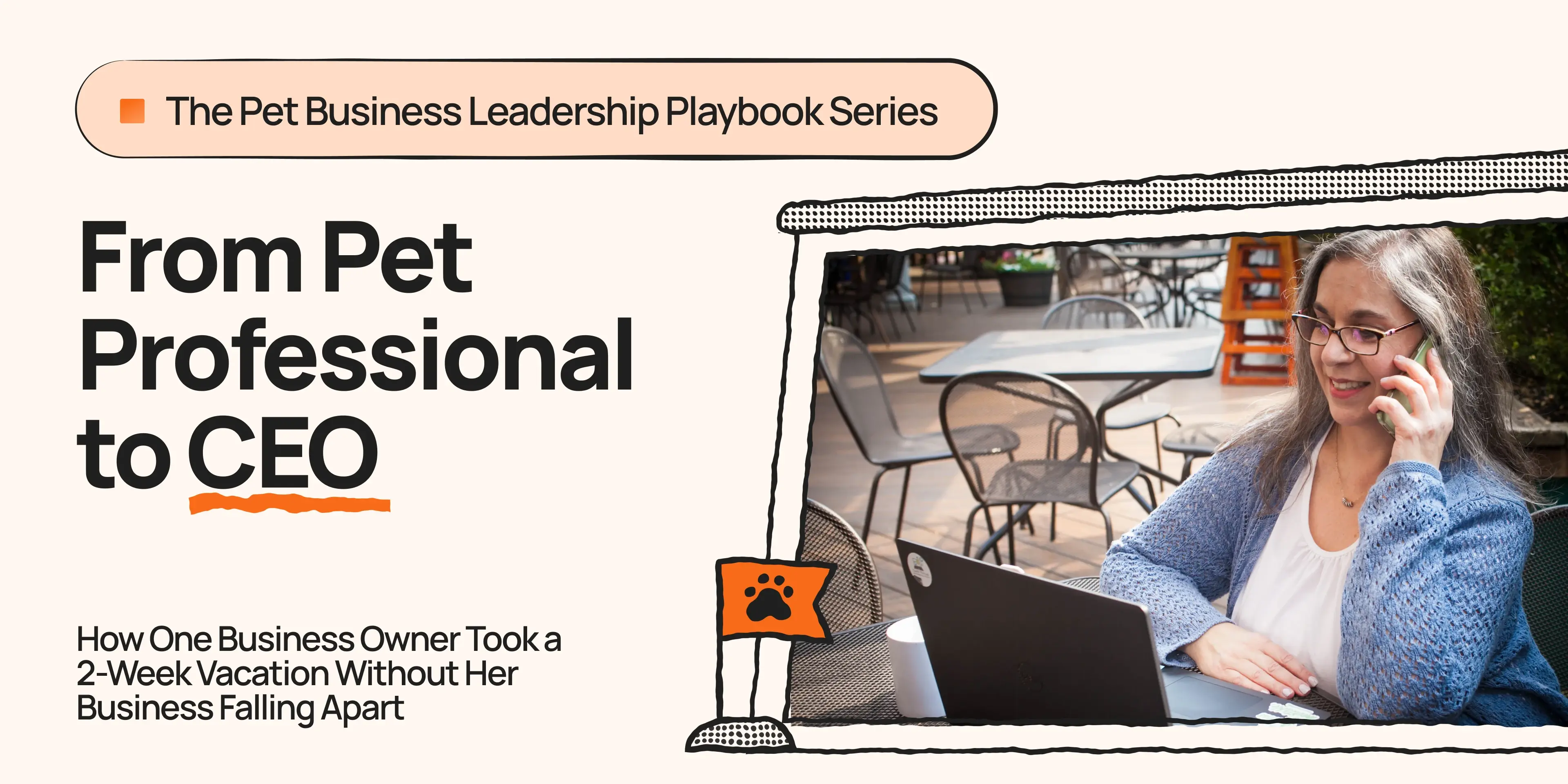
From Pet Professional to CEO: How One Business Owner Took a 2-Week Vacation Without Her Business Falling Apart

Holiday Grooming Add-Ons: How to Build a Seasonal Menu That Sells Itself