Share this
by MoeGo on Oct 15, 2026, 12:00:00 PM
The first time a dog peed on the new rubber floor, it landed right on a seam. Nobody noticed until the smell came up from underneath. By then, urine had spread under the entire floor, and the only fix was to rip all of it out. It was the most expensive floor that facility ever bought, and they never put it back.
That story comes from a daycare owner in the MoeGo Community, and it isn't unusual. Flooring is one of the biggest checks you'll write in a buildout, and one of the hardest to undo. Get it wrong and you pay twice: once to install, and again every day in cleaning time, odor complaints, and slipping dogs.
It's also a question that won't go away. We found 98 flooring discussions in the group, spread across four years, and the pace is picking up: 25 of them landed in August and September 2026 alone. So we read all 626 replies to find out what owners actually installed, what held up, and what they'd never do again.

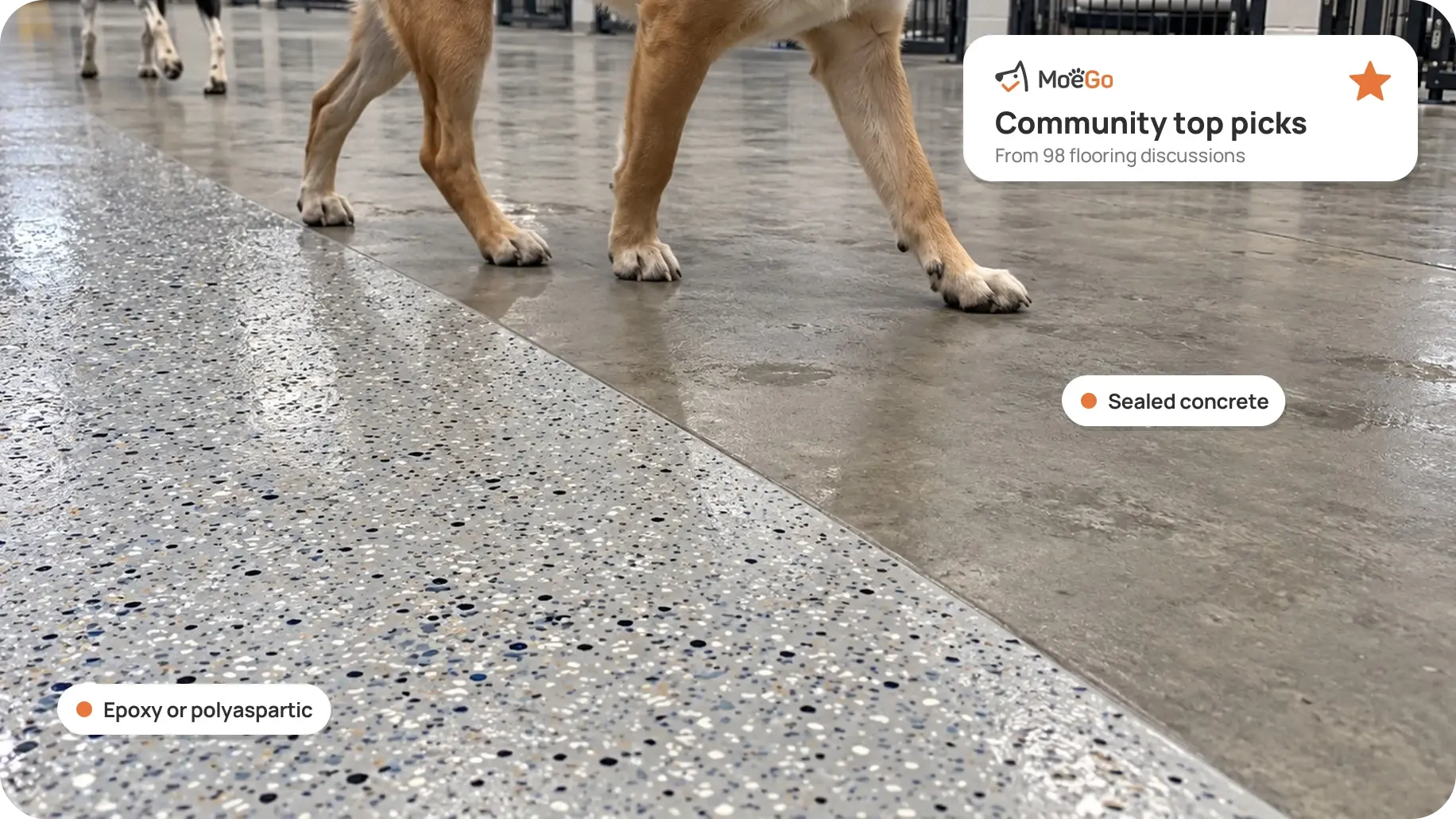
The best flooring for dog daycare: sealed concrete or epoxy
For most dog daycare and boarding facilities, the best flooring is a hard, non-porous, sealed surface: sealed concrete, epoxy or polyaspartic over concrete, or (for smaller and home-based spaces) waterproof luxury vinyl. Experienced operators repeatedly warn against indoor artificial turf and loose rubber mats because they absorb urine and hold odor. Rubber can work, but only when it's fully glued, seam-sealed, and resealed on a schedule. Whatever you pick, your drainage plan and cleaning routine matter as much as the surface itself.
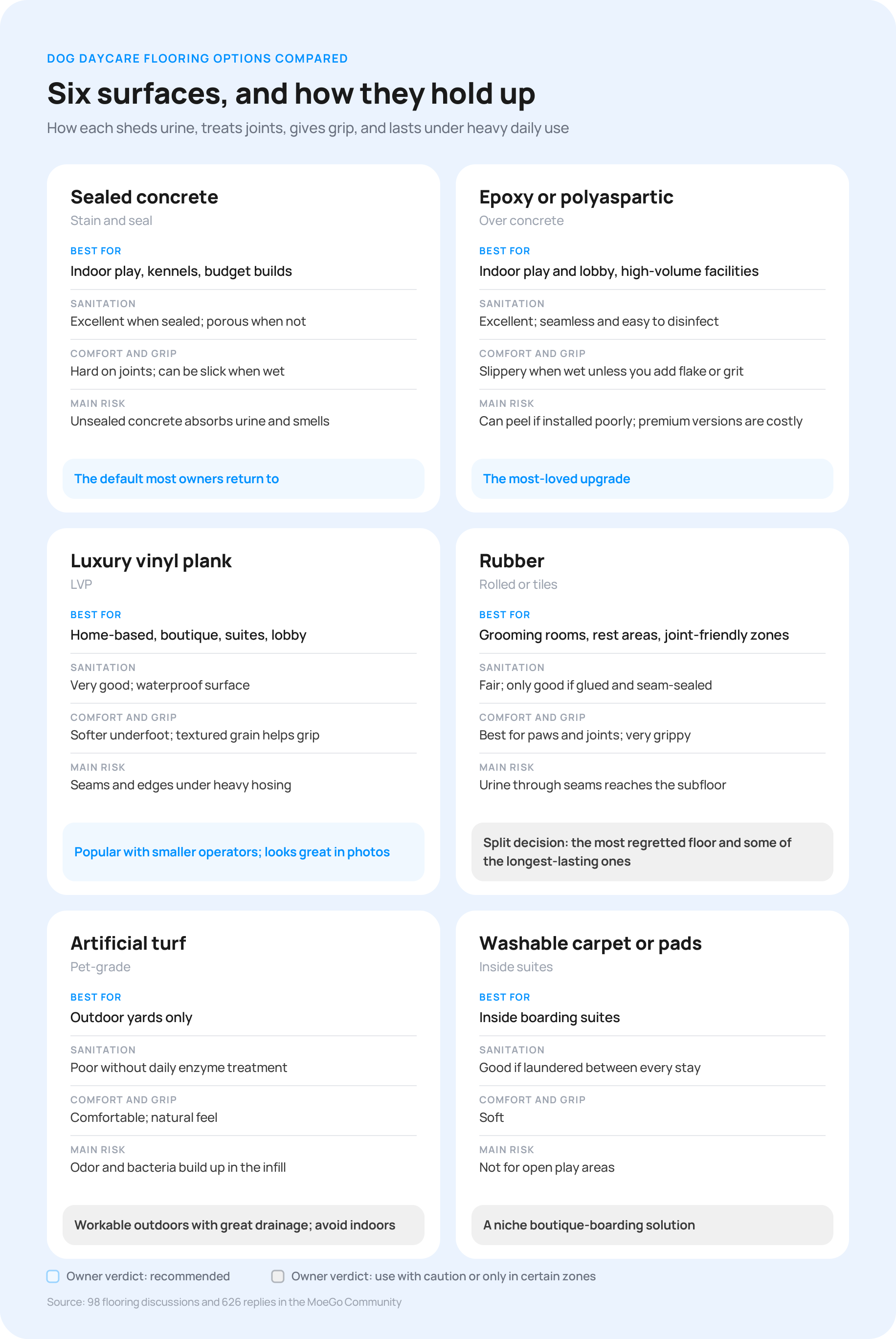
Dog daycare flooring options compared
Every surface trades off the same four things: how well it sheds urine, how kind it is to dogs' joints, how much grip it gives, and how long it lasts under heavy daily use. Here's how the six options owners discuss most stack up.
The big takeaway: porosity drives odor, not cleaning frequency. Owners who scrub constantly still fight smell when the floor absorbs urine. Owners with a sealed, non-porous floor rarely do.
What owners actually installed and what they'd change
The vendor brochures all say the same thing: durable, easy to clean, low maintenance. The owners living with these floors tell a more useful story.
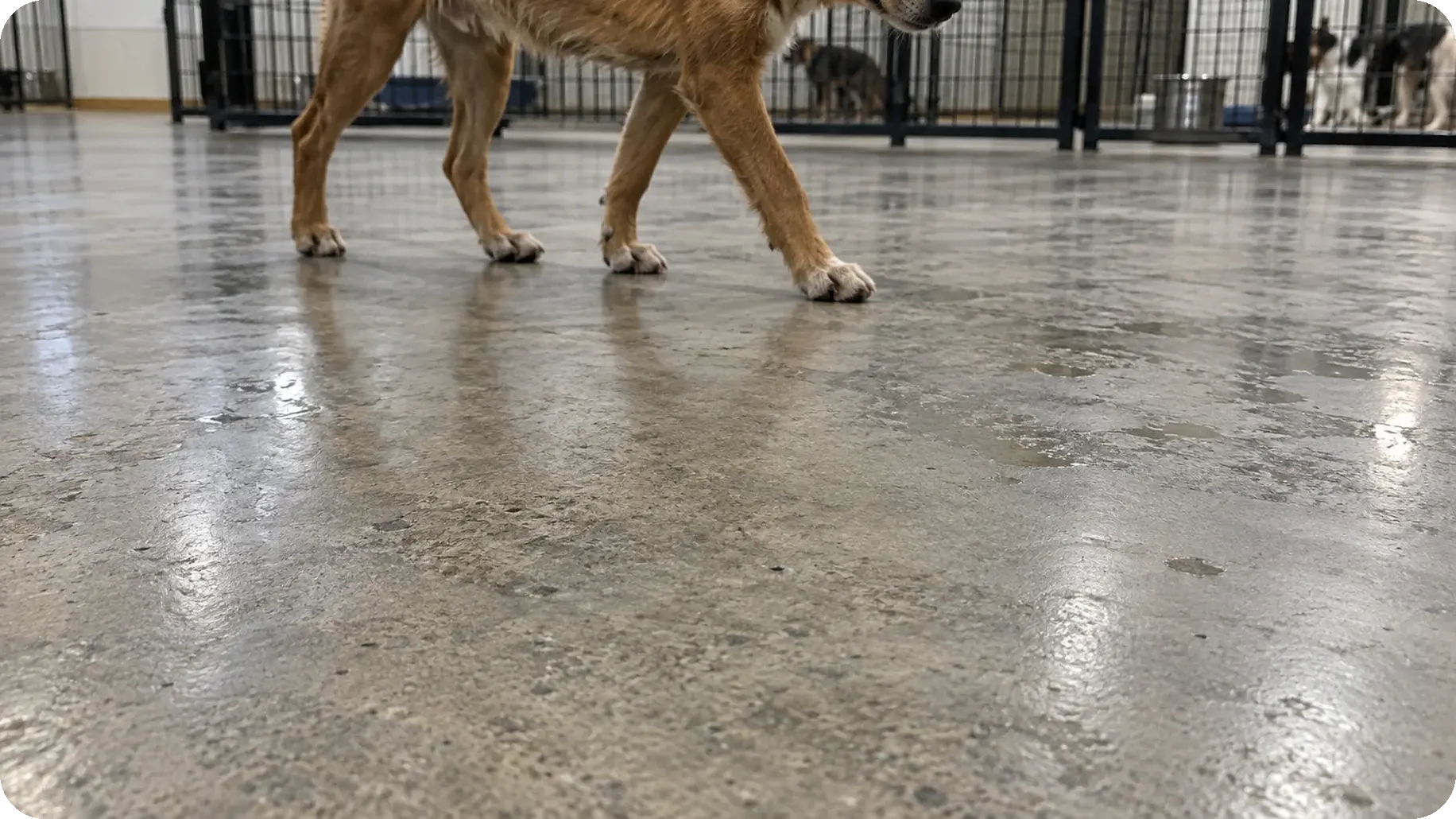
Concrete: the floor people come back to
The most-repeated verdict in the group came from an owner who had tried turf, rubber, and hardwood and still ended up back on concrete. It isn't glamorous, but it's cheap, tough, and easy to disinfect once it's sealed.
Owners also flag its downsides: it's hard on joints, and unsealed concrete soaks up urine. Several owners said that if they started over, they'd simply stain and seal it rather than pay for a premium coating.
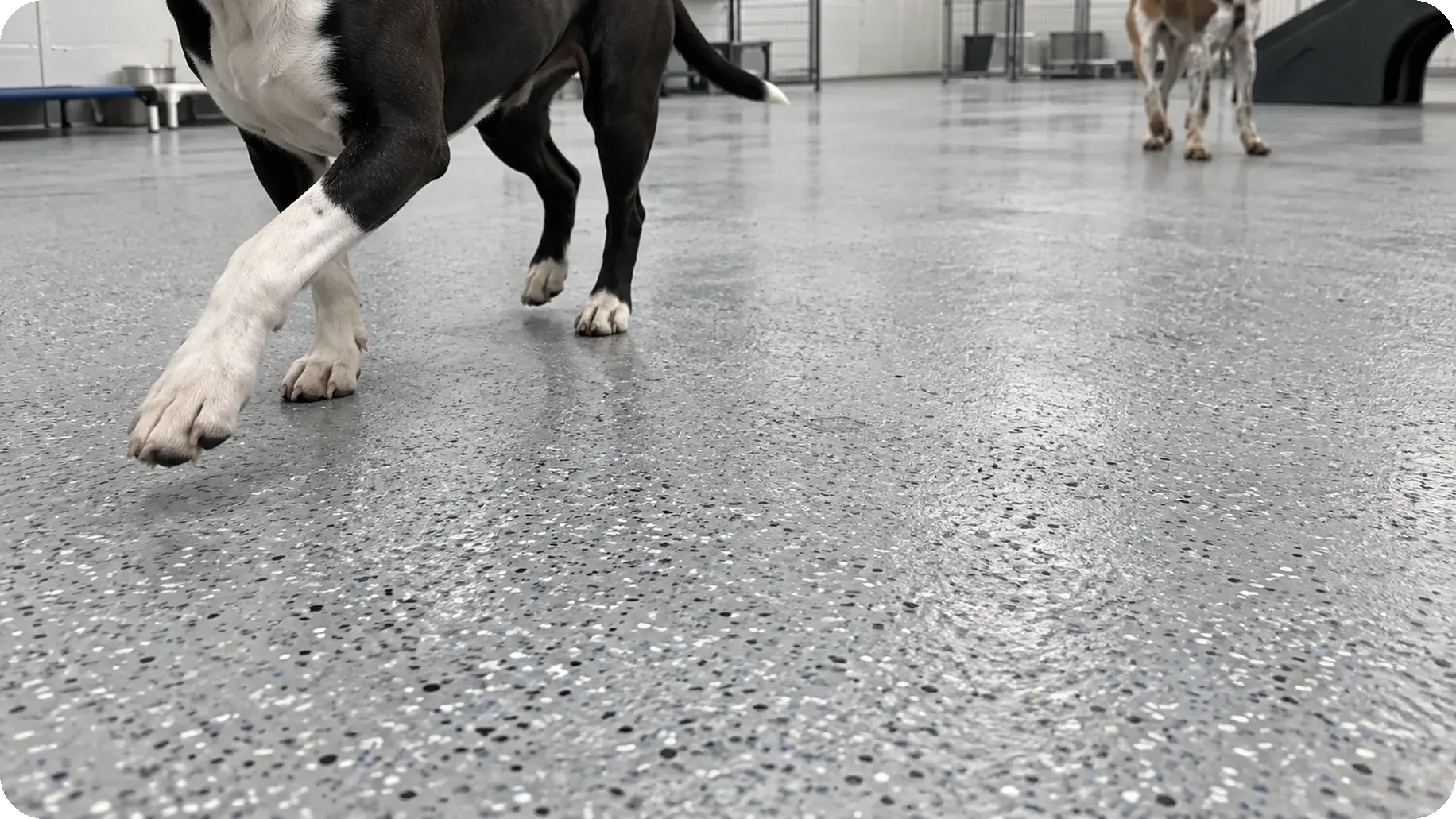
Epoxy and polyaspartic: loved, with one catch
Owners who switched to polyaspartic (a fast-curing cousin of epoxy) describe it as easy to clean and built to last. One said they had installed floor drains but hadn't needed them in eight months; a mop, a bucket, and a kennel disinfectant were enough.
The catch is traction: these floors get slick when wet. Ask your contractor for flake or grit samples and specify the grip level in writing. One owner's tip: add sand to resin for traction, but less than you think, so it still mops easily.
Rubber: the most divided opinion in the group
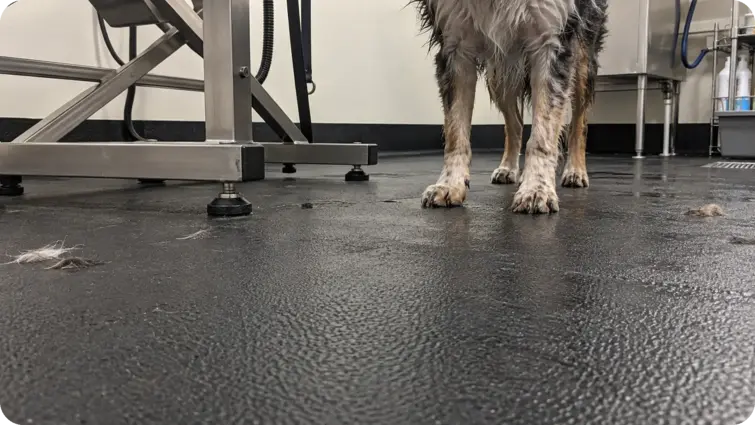
Rubber produced both the worst horror stories and some of the happiest long-term owners. One facility had to tear out an entire floor after urine leaked through a seam. Another said aging mats started to soak up "all dog pee and slobber" with no way to clean them. Yet other owners report rubber floors still going strong after 15 to 20 years.
The difference is installation. The success stories share a pattern: seal the concrete first, glue the rubber down, tape and seal every seam, glue the baseboard to the floor edge, and reseal the surface once or twice a year. Rubber is also the most joint-friendly option, which is why groomers love it under the table. Treat it as a system you maintain, not a mat you lay down.
Turf: an outdoor tool, not a floor
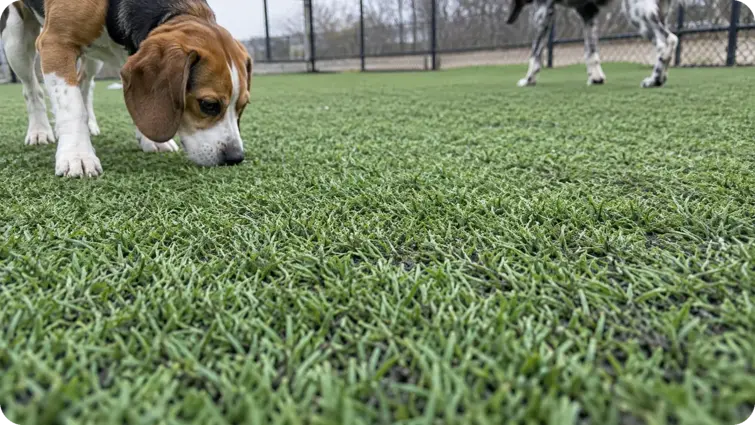
Turf is sold as low-maintenance, and owners describe the opposite. Indoors, the consensus is to avoid it. Outdoors, plenty of facilities run it well, including one with more than two acres who would "do it all over again," but only with serious drainage underneath.
Owners describe digging at least 4 inches and laying crushed rock or pea gravel, adding drain pipe under 6 inches of road base, brushing the turf every two weeks, and applying an enzyme cleaner or a sanitizing spray system daily. Budget for that as an ongoing cost, and vet your installer: a bad install was the most common turf regret.
Vinyl: the home-based favorite
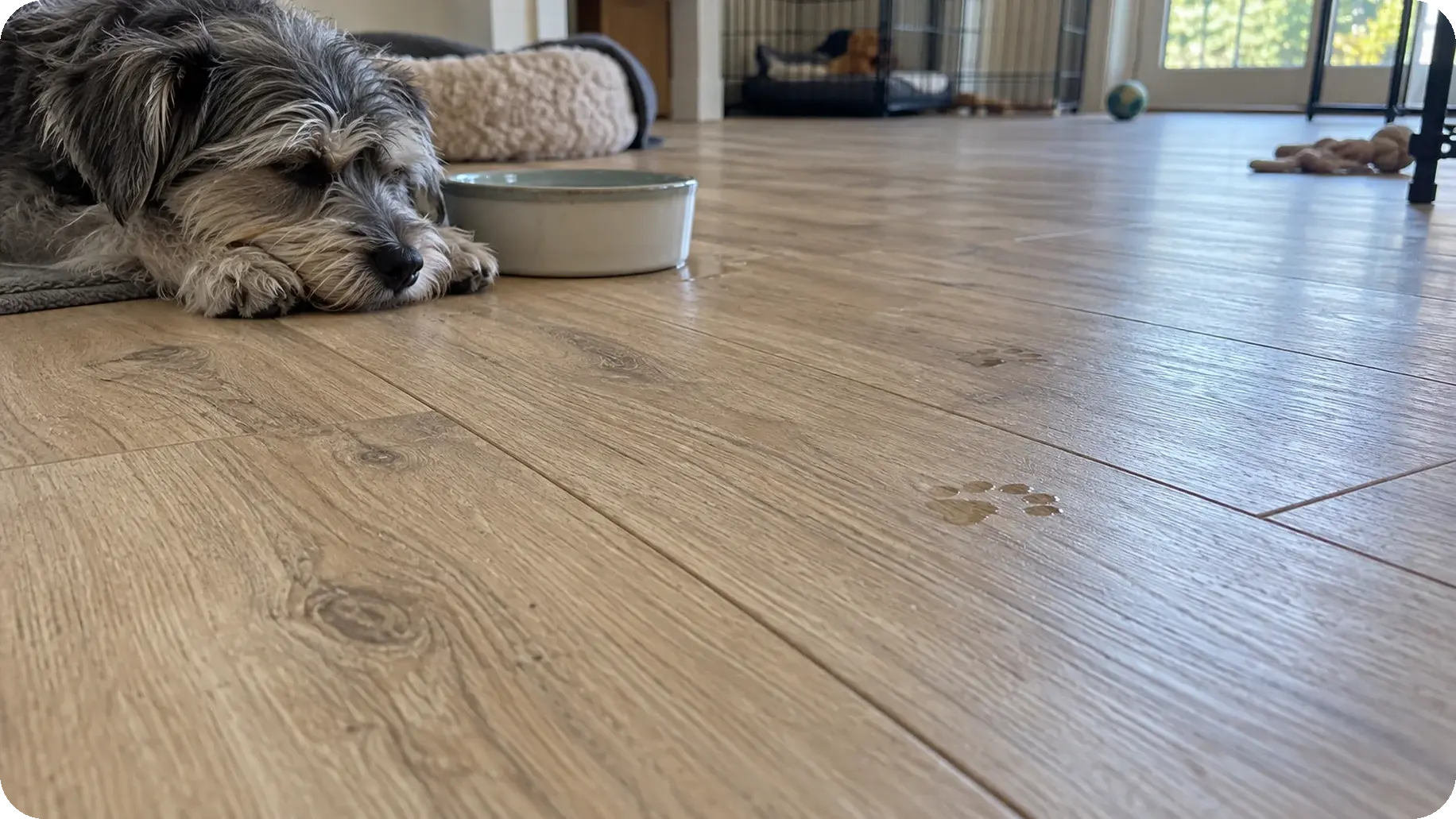
Smaller and home-based operators lean toward waterproof luxury vinyl. One owner who tested rubber preferred vinyl: textured enough that dogs don't slip, soft underfoot, easy to lay over an existing floor, and good-looking in photos for your social media. The trade-off is durability under very high dog volume and heavy hosing.
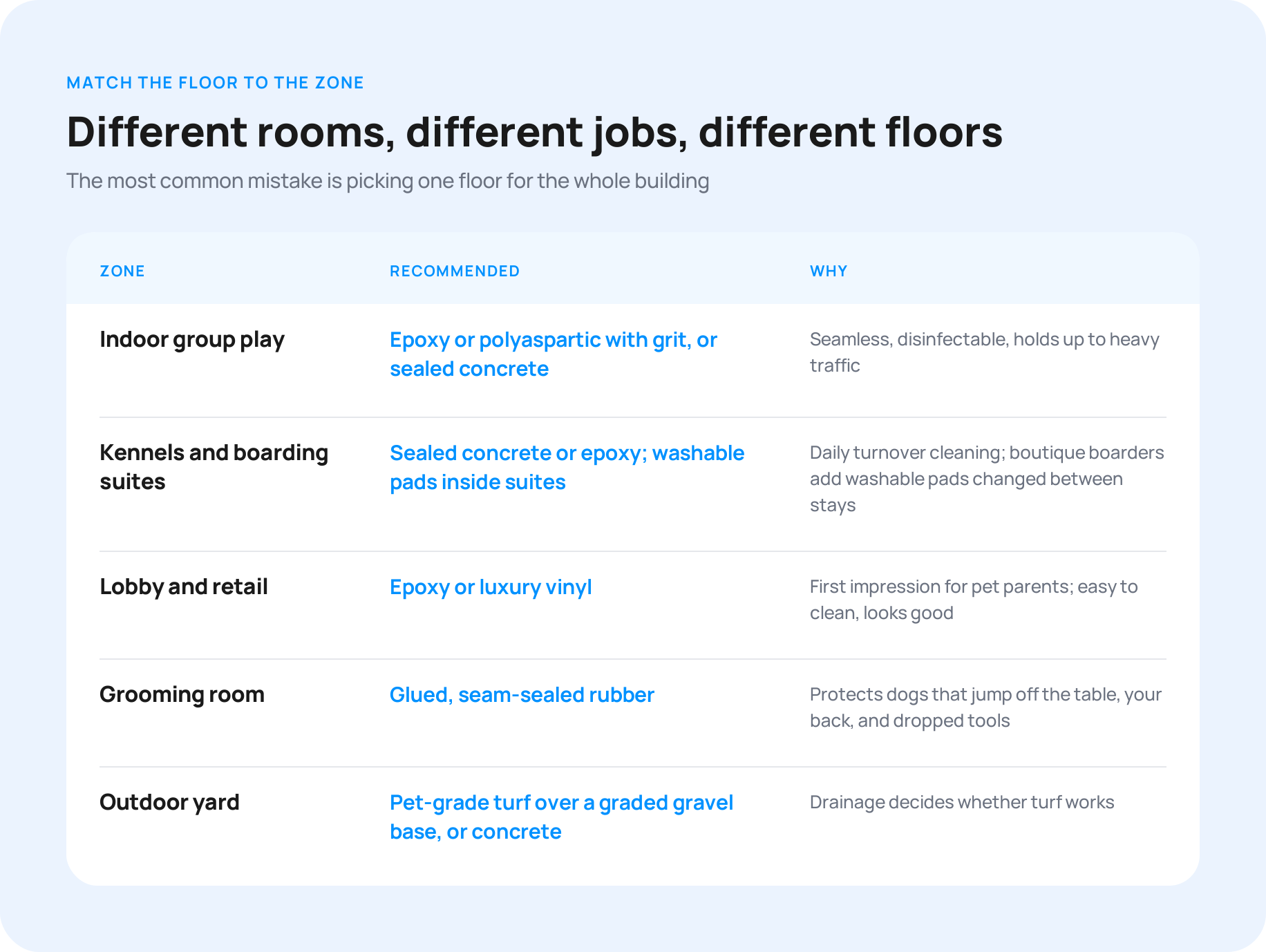
How to choose: match the floor to the zone
The most common mistake is picking one floor for the whole building. Your lobby, playroom, kennels, and yard have different jobs, and they can have different floors.
Do you need floor drains?
This is the most surprising split in the community. Many owners assume drains are essential, and some are glad they have them for full hose-downs. But a vocal group regrets them. One owner who put trench drains in new construction said ten months in, they wish they hadn't. Others say drains clog with hair, back up, smell, and send water into the next kennel during hose-downs. Drains in buildings on septic systems need regular hydro-jetting and pump-outs.
The owners skipping drains clean with a commercial ride-on or walk-behind floor scrubber instead: spray disinfectant, let it sit for the label's contact time, then scrub and vacuum it up in one pass. They report less odor and lower construction costs.
Our read: drains help in hose-down kennel runs and are less useful in open play areas cleaned with a scrubber. If you do install them, choose trench drains with grates you can lift and pressure-wash, and slope the concrete toward them.
Fix your cleaning process before you replace the floor
One experienced operator's advice to an owner unhappy with their floor: upgrade the cleaning procedure before spending on resurfacing. A good floor scrubber and a consistent disinfection routine can solve a smell problem for a fraction of the cost of a new floor.
That routine is easier to keep when it's built into your day. In MoeGo, staff can see who's checking out of which kennel or suite, so turnover cleaning gets done between every stay instead of whenever someone notices.
What regulations say about kennel and daycare floors
Where rules exist, they point the same way owners do: floors must be impervious to moisture and able to be disinfected. Check your state and local requirements before you buy anything.
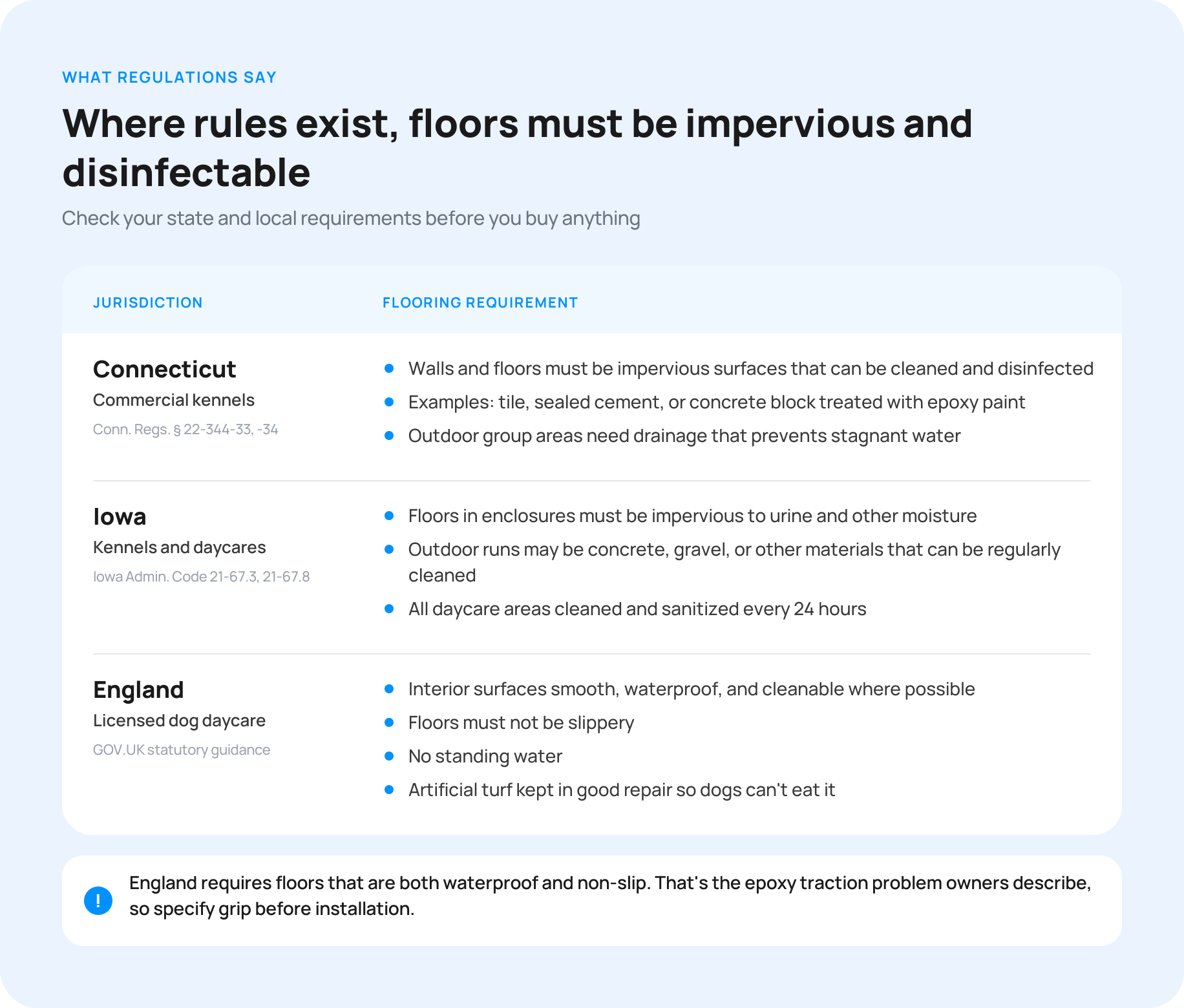
Notice that England requires floors that are both waterproof and non-slip. That's exactly the epoxy traction problem owners describe, and a good reason to specify grip before installation.
Frequently asked questions
What is the best flooring for a dog daycare?
A hard, non-porous, sealed surface. Sealed concrete and epoxy or polyaspartic coatings over concrete are the most common choices among experienced operators, because they don't absorb urine and are easy to disinfect. Add grit or flake to coatings so dogs don't slip.
Is artificial turf good for dog daycare?
Not indoors. Owners report that turf traps urine and bacteria and needs daily enzyme treatment. Outdoors, pet-grade turf can work well if it sits on a deep, graded gravel base with good drainage and gets regular brushing and sanitizing.
Is rubber flooring good for dogs?
Rubber is the most comfortable surface for dogs' joints and gives great traction. But urine can leak through seams and ruin the subfloor. It works when it's glued down, every seam is taped and sealed, and the surface is resealed once or twice a year.
Is epoxy flooring slippery for dogs?
It can be, especially when wet. Ask your installer to add flake or a sand or grit additive, and request samples so you can choose the texture. More grit means more traction but harder mopping.
Do dog daycares need floor drains?
Not always. Drains are useful for hose-down kennel runs, but many owners skip them and use commercial floor scrubbers instead. Drains can clog with hair, smell, and back up if they aren't maintained.
How do I get rid of urine smell in my dog daycare?
Start with the floor. Persistent odor usually means a porous surface is absorbing urine. Seal concrete, replace absorbent mats, and use an enzyme cleaner on turf. Then tighten your cleaning routine with a scrubber and a disinfectant left on for its full contact time.
Just starting or adding to your business?
We have flexible plans meant for all stages.

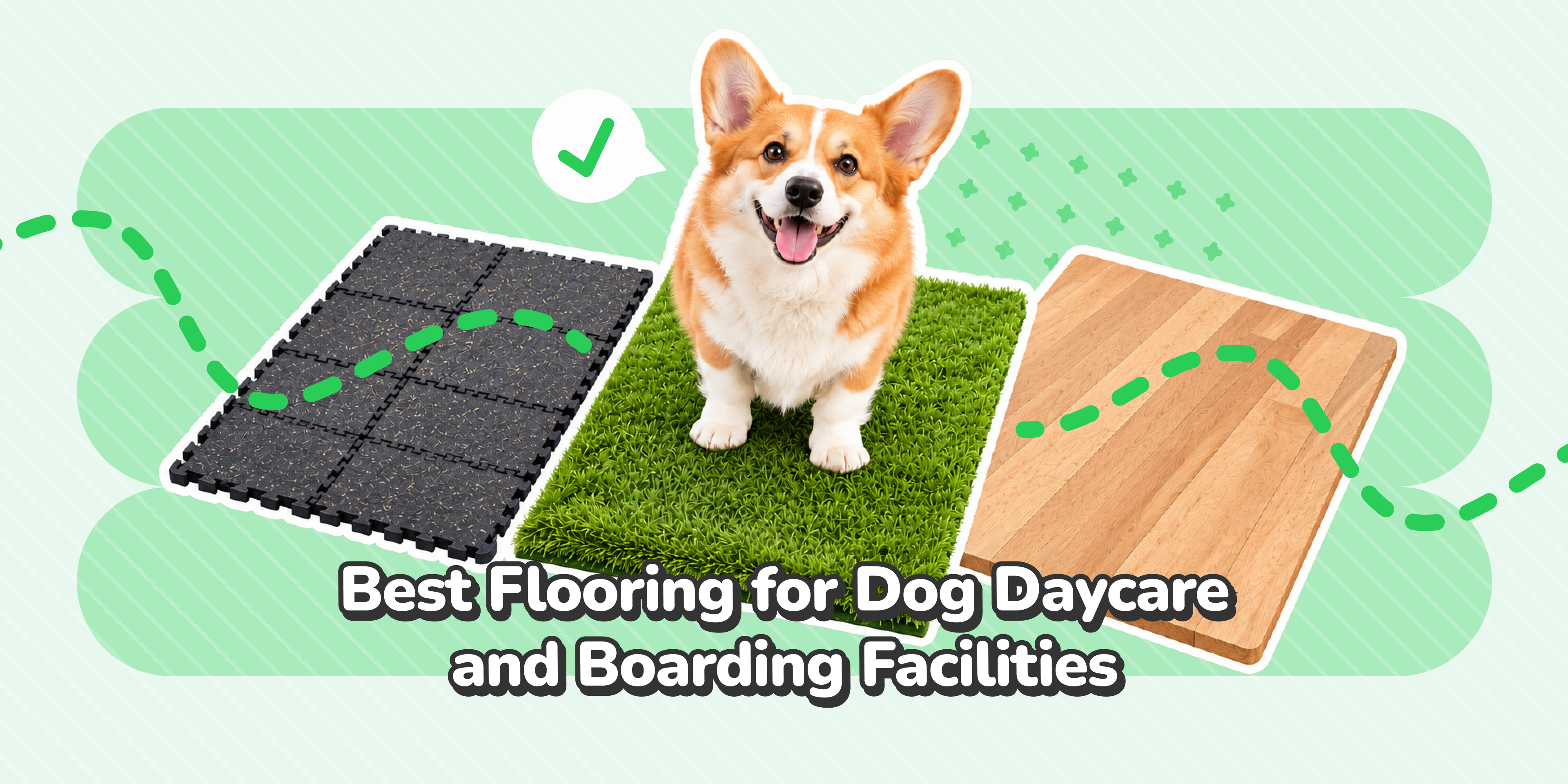
Best Flooring for Dog Daycare and Boarding Facilities: The 2027 Guide

How Many Dogs Per Staff Member? The Pet Daycare & Boarding Ratio Guide (2027)