Share this
by MoeGo on Mar 3, 2026, 7:33:03 PM
Starting a dog grooming business can absolutely be profitable — but only if you plan it correctly.
A real business plan isn’t just a document for a bank loan. It’s your roadmap for:
- How you’ll make money
- How you’ll control costs
- How you’ll attract and retain clients
- How you’ll scale without burning out
Whether you're opening your first salon, launching a mobile van, or building a home-based operation, this guide will walk you through how to build a practical, growth-ready dog grooming business plan.
What Type of Business Plan Do You Need?
There are two types of business plans:
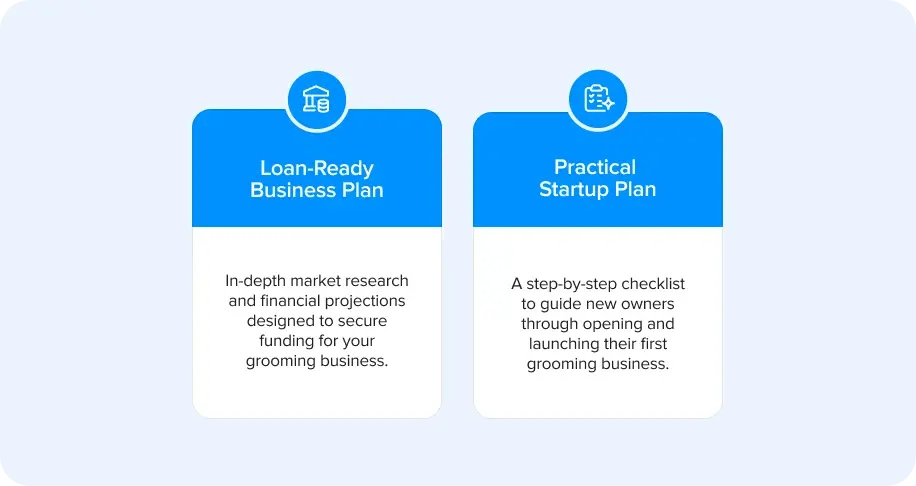
1. Loan-Focused Business Plan
Includes:
- Market research
- Financial projections
- Competitive analysis
- 3–5 year forecasts
This is required if you're applying for bank financing.
2. Operational Business Plan (What We’re Building Here)
This is your internal blueprint. It helps you answer:
- What model am I choosing?
- How will I price?
- How many dogs do I need per day?
- When do I hire?
- How do I avoid admin overwhelm?
This article focuses on the second type — the one that determines whether your business actually works.
What to Include in Your Dog Grooming Business Plan
Your plan should cover:
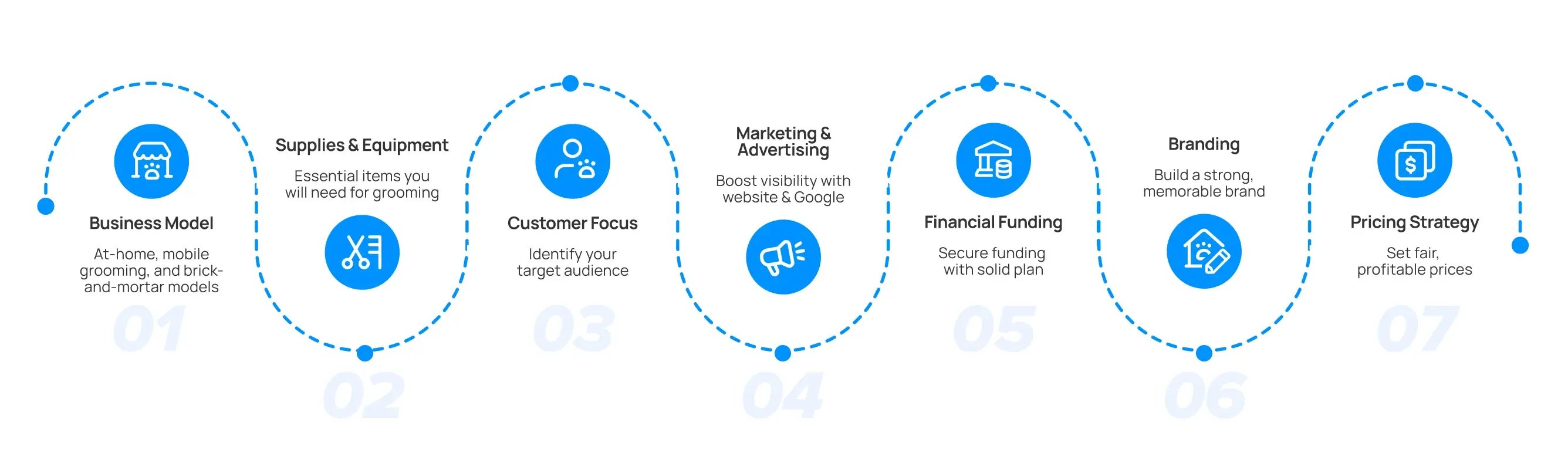
- Business Model
- Startup Costs & Equipment
- Target Customer
- Marketing Strategy
- Pricing Strategy
- Financial Plan
- Branding
- Operational Systems
Let’s break each one down.
1. Choosing the Right Business Model
There are three primary dog grooming business models:
- Home-Based Grooming
- Mobile Grooming
- Brick-and-Mortar Salon
Each model affects your overhead, income ceiling, and scalability.
Home-Based Grooming
- Lowest startup cost
- Limited scalability
- Zoning restrictions may apply
- Best for solo operators
Mobile Grooming
- Medium–high startup investment (van + buildout)
- Lower fixed overhead than salon
- Limited by daily route capacity
- Scales by adding vans
Brick-and-Mortar Salon
- Highest startup cost
- Higher monthly overhead
- Highest income ceiling
- Easier to scale through hiring
👉 Your model determines your growth path. Choose based on your long-term vision, not just startup affordability.


Salon vs. Mobile vs. At-Home
🐶 Check out our in-depth look at each grooming business model: Salon vs Mobile vs. At-Home
2. Startup Costs & Equipment
Your business plan should estimate:
- Lease or van purchase
- Renovation or van buildout
- Grooming equipment
- Licensing & insurance
- Marketing launch budget
- Working capital (3–6 months recommended)
Essential Grooming Equipment
Core equipment typically includes:
- Professional clippers + blades
- Scissors (straight, curved, thinning)
- Slicker brushes & combs
- Grooming table
- Tub or bathing system
- Professional dryer
- Nail clippers
- Cleaning supplies
- Sterilization equipment
- Towels, leads, safety restraints
Costs vary widely. Many new groomers start with mid-range tools and upgrade as revenue grows.
Important: Don’t forget working capital. Many new businesses fail because they underestimate the first 3–6 months of slower revenue.
3. Define Your Target Customer
Your business plan must clearly answer:
- Who are you serving?
- Where do they live?
- What are they willing to pay?
- What problem are you solving?
Examples:
- Busy professionals who value convenience (mobile)
- High-income neighborhoods wanting premium care
- Owners of specific breeds requiring specialty grooming
- Clients seeking one-on-one low-stress grooming
Clarity here determines your pricing, branding, and marketing strategy.
4. Build a Customer Acquisition Plan
Getting clients is one thing. Keeping them is what builds profitability.
Early Customer Growth Tactics
- Leave business cards at vets and daycares
- Partner with local shelters
- Offer referral incentives
- Encourage Google reviews
- Build social media presence
- Offer rebooking discounts
But long-term stability depends on retention:
- Automatic reminders reduce no-shows
- Easy rebooking increases lifetime value
- Review collection builds credibility
- Clear cancellation policies protect revenue
A strong business plan includes not just “how to get clients,” but how to turn one visit into five.
5. Marketing & Online Presence
Your Website
Your website should:
- Clearly list services and pricing
- Include service area
- Show before/after photos
- Display testimonials
- Be mobile-friendly
- Offer easy booking
Many new groomers underestimate how important booking convenience is. If clients can’t easily book, they’ll move to a competitor.
Some grooming software platforms offer booking pages and simple website landing pages built-in, reducing the need for expensive custom websites early on.
Google Business Profile
Setting up your Google Business Profile is critical. Look for software that supports Reserve with Google integration. It helps you appear in:
- Google Maps
- “Dog groomer near me” searches
- Local service results
Monitor and respond to reviews consistently. This builds trust quickly.
6. Pricing Strategy
Pricing determines whether you stay busy or profitable.
Avoid:
- Undervaluing to compete
- Copying competitors blindly
- Flat pricing that ignores breed size
Best practices:
- Weight-based pricing
- Add-on services clearly defined
- Clear cancellation policies
- Deposits for high-demand appointments
Remember: Lower prices don’t automatically mean more profit. Sustainable pricing protects margins and allows for reinvestment.
7. Funding Your Grooming Business
Common funding sources:
- Personal savings
- Credit cards
- Bank loans
- Small business loans
- Investors (less common)
If applying for financing, prepare:
- Revenue projections
- Expense breakdown
- Break-even analysis
- Cash flow forecast
Loan officers care about one thing: Can you repay with interest?
8. Operational Systems (Often Overlooked)
This is where many new groomers struggle.
As bookings increase, so does administrative work:
- Appointment scheduling
- Payment processing
- Reminder texting
- Client record tracking
- Staff coordination (if hiring)
Manual systems work at 5–10 appointments per week.
They break at 30–50.
Planning your operational systems early prevents burnout later?
How Profitable Can a Dog Grooming Business Be?
Profitability depends on:
- Daily booking capacity
- Pricing strategy
- Overhead
- Retention rate
- Staff productivity (if applicable)
Solo operators are limited by time.
Salon owners can multiply revenue through team production.
Mobile fleet owners can increase revenue per van, but must manage routing efficiency and downtime.
The difference between a busy groomer and a profitable grooming business usually comes down to:
- Pricing discipline
- Client retention
- Operational efficiency
The Growing Pet Industry
Pet care spending continues to grow year over year. With over two-thirds of U.S. households owning pets and billions spent annually on pet services, demand remains strong.
However, growth in the industry does not guarantee individual success. Your planning, positioning, and operational discipline determine whether you capture that opportunity.
Final Thoughts: Build for Where You Want to Go
A dog grooming business plan isn’t about paperwork — it’s about clarity.
- What are you building?
- How big do you want it to become?
- How much control do you want?
- How will you prevent burnout?
The right plan doesn’t just help you open your doors. It helps you grow with confidence.

Just starting or adding to your business?
We have flexible plans meant for all stages.

The Best Goldendoodle Haircuts in 2026
PetBusinessInsurance.com: Protecting Pet Businesses