Share this
by MoeGo on Apr 13, 2026, 9:00:00 AM

Your phone buzzes mid-groom:
“Can I reschedule Bella for tomorrow?”
You pause. Try to remember your schedule. Wonder if that slot is already taken.
That moment isn’t just a scheduling issue.
It’s a signal.
Because most pet care businesses don’t struggle from lack of demand—they struggle from operational friction that builds as they grow.
And choosing the right software isn’t about features.
It’s about solving the specific problem that’s already costing you time, revenue, or control.
Before You Compare Software, Identify the Real Bottleneck
Most blogs will tell you to compare features.
That’s the wrong starting point.
The better question is: What’s breaking in your business right now?
Because different systems solve different problems.
And if you choose based on features instead of friction, you’ll end up switching again in 6–12 months.
Here are the four most common growth bottlenecks, and how to recognize yours.
1. “We’re Busy, But Revenue Isn’t Growing” = Capacity & Booking Problem
You’re fully booked… but still feel like you’re leaving money on the table.
You see:
- Empty slots from no-shows or last-minute cancellations
- Uneven schedules across the day
- Staff idle time between appointments
What this actually means:
Your capacity isn’t being fully monetized.
Even small gaps compound quickly:
- 1–2 missed appointments per day = thousands in lost monthly revenue
What to look for in software:
- Smart scheduling that fills gaps automatically
- Automated reminders and deposits
- Waitlists and booking recovery tools
- Flexible time-slot management
👉 If this sounds like you, start here: Fill Empty Slots & Increase Bookings


CRM Success: Furry Land’s 387% SMS Appointment Surge
Learn how automated SMS workflows replaced manual communication, reduced admin load, and created a scalable system for consistent appointment growth.
2. “Clients Don’t Always Come Back” = Retention & Rebooking Problem
You’re getting new clients—but not all of them return.
You notice:
- Inconsistent rebooking
- Staff forgetting to follow up
- Clients slipping through the cracks
What this actually means:
You’re leaking lifetime value.
Most grooming clients should return 5–6 times per year. When they don’t:
- You lose hundreds per pet annually
What to look for in software:
- Automated rebooking reminders
- Client follow-up workflows
- Review and loyalty systems
- Centralized communication history
👉 If this feels familiar, go deeper here: Increase Rebookings & Returning Customers
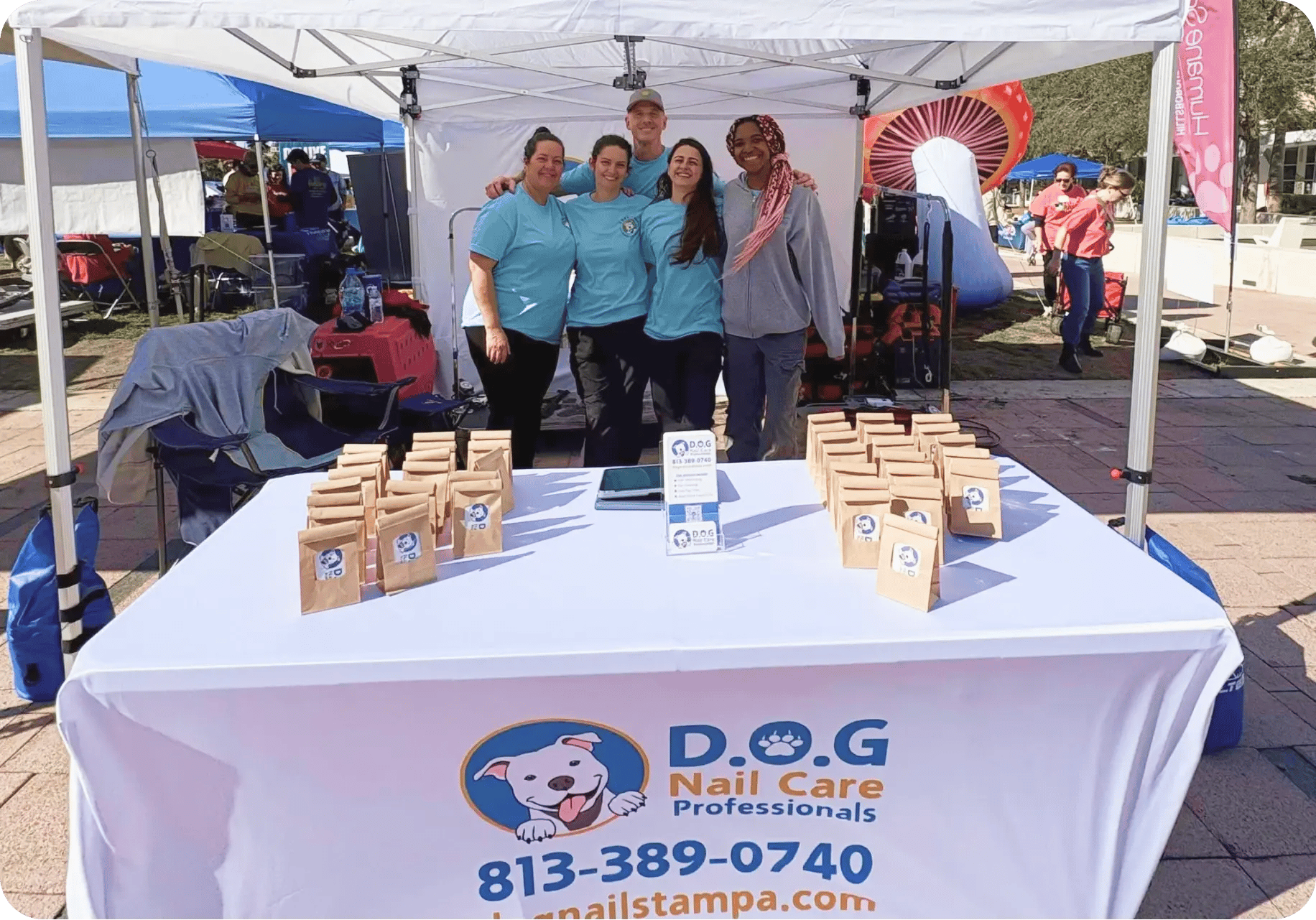

From 37 Clients to 4,219: How D.O.G. Nail Care Built a Rebooking Engine That Runs Itself
3. “My Team Is Busy, but Not Efficient” = Staff Management Problem
Your team is working hard—but the day still feels chaotic.
You see:
- Uneven workloads between groomers
- Overbooked periods followed by downtime
- Burnout or rushed work
What this actually means:
Your scheduling isn’t aligned with real capacity.
Even small inefficiencies matter:
- 1 lost hour per groomer per day can mean thousands in lost monthly revenue
What to look for in software:
- Workload balancing by groomer
- Role-based scheduling
- Productivity and utilization tracking
- Payroll and attendance integration
👉 Explore this path: Improve Staff Productivity & Workload Balance
4. “We’re Growing, but Losing Visibility” (Multi-Location Problem)
You’ve expanded, or are about to. And suddenly:
- Each location operates differently
- Reporting takes hours (or days)
- You rely on managers for updates
What this actually means:
Growth is outpacing your ability to control operations.
Without centralized visibility:
- Small inefficiencies multiply across locations
- Decision-making slows down
- Performance issues surface too late
What to look for in software:
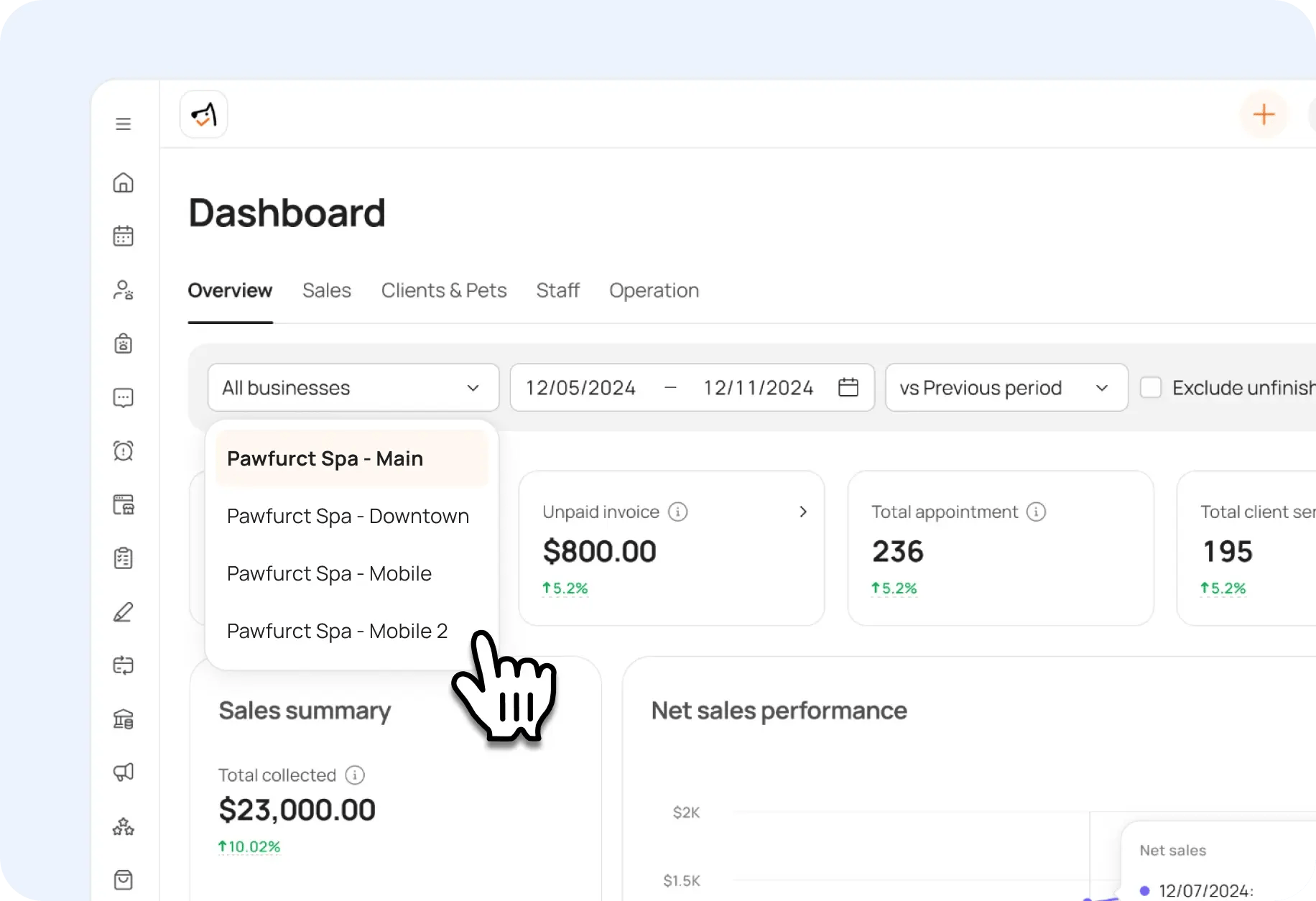
- Multi-location dashboards
- Centralized reporting
- Standardized workflows
- Unified client and pet records
👉 This is where to go next: Run Every Location Like One Business
Why Most Software Comparisons Fall Short
Most comparison lists focus on:
- Features
- Pricing
- UI
But they miss the real question: Does this system solve the specific friction slowing your business down today?
Because:
- A scheduling-heavy system won’t fix retention
- A CRM-heavy system won’t fix staff inefficiency
- A basic tool won’t support multi-location growth
Choosing the wrong system doesn’t just waste money. It delays progress.
What the Right System Actually Changes
When software matches your growth stage, the shift is operational, not just technical.
Instead of:
- Reacting to problems
- Manually coordinating everything
- Guessing performance
You move toward:
- Structured workflows
- Automated processes
- Real-time visibility
That’s when growth starts to feel controlled again.
A Simple Way to Decide
If you’re evaluating software right now, don’t start with demos.
Start with this:
Which of these is costing you the most right now?
- Empty slots / no-shows
- Weak rebooking / retention
- Staff inefficiency
- Lack of visibility across operations
Then go one level deeper into that problem. That’s where the right decision gets clearer.
All-in-One Platforms vs. Pieced-Together Solutions
Cost considerations often favor integrated solutions despite higher upfront pricing. Multiple software subscriptions accumulate quickly: scheduling software, payment processing, communication tools, and reporting systems can easily total $200-400 monthly for small businesses. Integrated platforms typically cost less than the sum of their component parts while providing superior functionality.
|
Feature |
All-in-One Platform |
Pieced-Together Solutions |
|---|---|---|
|
Setup Complexity |
Low - Single implementation |
High - Multiple integrations |
|
Monthly Costs |
$80-200 typically |
$200-400+ combined |
|
Data Consistency |
Automatic synchronization |
Manual updates required |
|
Training Time |
1-2 weeks total |
4-6 weeks across tools |
|
Support |
Single point of contact |
Multiple vendor relationships |
Final Thought
Pet care businesses don’t outgrow software all at once.
They outgrow it in specific ways:
- First in scheduling
- Then in retention
- Then in team coordination
- Then in visibility
The best system isn’t the one with the most features.
It’s the one that solves the constraint that’s holding your business back right now.
FAQs
What is the best pet business software?
The best software depends on your biggest operational challenge—whether that’s filling empty slots, improving client retention, managing staff, or scaling across locations.
How do I choose the right grooming software?
Start by identifying your primary bottleneck, then evaluate tools based on how well they solve that specific problem—not just feature lists.
Can software really increase revenue?
Yes—by reducing no-shows, improving rebooking rates, optimizing staff utilization, and increasing booking efficiency.
When should I upgrade my current system?
When manual workarounds, lack of visibility, or operational inefficiencies start limiting your growth or creating daily friction.

Just starting or adding to your business?
We have flexible plans meant for all stages.


Holiday Grooming Add-Ons: How to Build a Seasonal Menu That Sells Itself
How KLŌS Fine Pet Salon Turned Milton, Georgia's Most Discerning Zip Code Into Its Biggest Advantage