Share this
by MoeGo on Mar 9, 2026, 9:00:00 AM
If you’re asking “How do I start a dog daycare?” you’re really asking three things:
- Is there demand where I live?
- Can I operate legally and safely?
- Can I build a daycare that stays profitable when staffing and scheduling get messy?
This guide covers the steps that matter most in 2025—with a focus on operational durability, not just opening day.
Quick Answer: What do you need to start a dog daycare?
To start a dog daycare, you typically need:
- A permitted location (zoning + lease compliance)
- Business registration + local licenses (and often animal-related permits/inspections)
- Insurance (general liability + care/custody/control coverage)
- A safe facility layout (separation areas, sanitation, ventilation, secure exits)
- Hiring + training plan (supervision, safety protocols, emergency procedures)
- Written policies (vaccines, evaluations, late pickup, illness, incidents)
- A scheduling + payment system to control capacity, staffing, and cash flow
Why Start a Dog Daycare Business in 2026?
If you're researching how to start a dog daycare business, you're likely seeing two signals:
- Pet spending continues to grow.
- Owners are returning to in-office work.
According to recent industry data:
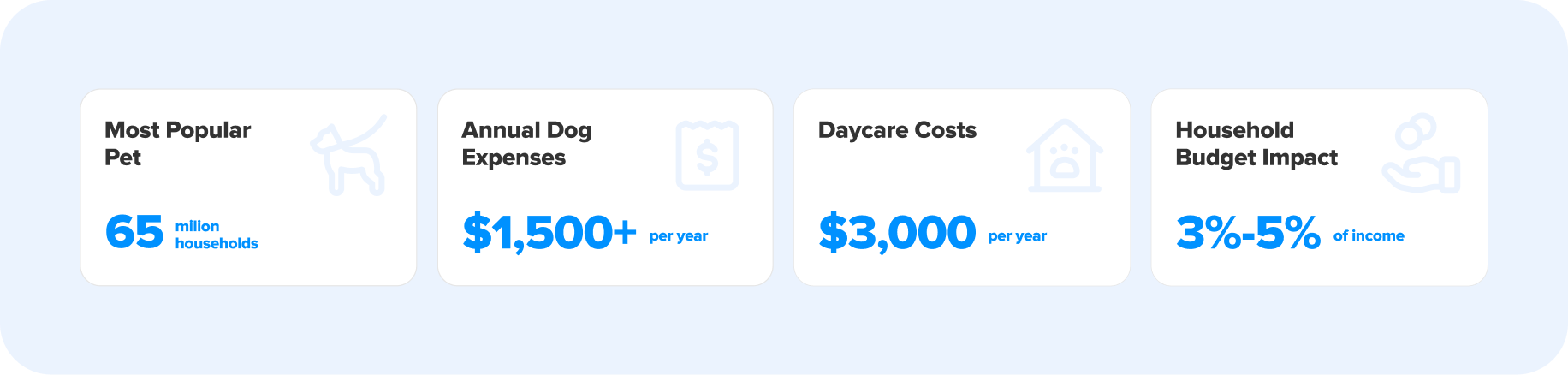
- 65+ million U.S. households own a dog
- Dog owners spend $1,500+ annually per dog (excluding daycare)
- Owners using daycare twice per week may spend $2,500–$3,000 annually
Dog daycare is not a hobby business. It’s an operational business. And success depends less on loving dogs — and more on building systems that protect margin, control capacity, and retain clients.
Step-by-Step: How to Start a Dog Daycare
Step 1: Validate Local Demand (not just “pet owners”)
Skip generic market research. Answer these operator questions:
Local demand checklist
- Are there enough dual-income households / in-office commuters nearby?
- Are competitors consistently full (waitlists, limited hours, “no new dogs”)?
- What do reviews complain about? (hours, communication, safety, cancellations)
- Are there nearby demand engines? (office parks, dense apartments, new housing)
Competitor mapping (fast)
Create a simple map of daycare competitors and note:
- Price per day / packages
- Hours + drop-off windows
- Capacity (estimate from reviews/photos + facility size)
- Strengths (why people love them)
- Gaps (why people leave)

Step 2: Build a Business Plan That Matches Daycare Economics
A dog daycare business plan should include:
Startup Costs
- Leasehold improvements
- Kennels & dividers
- Insurance
- Licensing
- Staff hiring & training
- Marketing launch
- Software system
Ongoing Monthly Costs
- Rent
- Payroll (largest cost)
- Utilities
- Cleaning supplies
- Insurance
- Marketing
- Software
Revenue Modeling
Calculate:
- Daily capacity (safe dog count)
- Average daily rate
- Monthly utilization target
- Break-even occupancy rate
Most daycare owners underestimate:
- Customer churn ("melt")
- No-show losses
- Labor inefficiencies
If you want durability, plan conservatively.
Step 3: Licensing, Zoning, and Regulatory Requirements
This varies by city/county/state, but most daycare businesses encounter:
- Business registration + local business license
- Zoning approval for “animal services” use
- Fire and building code compliance
- Sanitation, waste disposal, and inspection requirements (often through animal control or health-related departments)
➡️ Next action: Call your city/county and ask:
- “Is dog daycare allowed at this address under current zoning?”
- “Which department issues the permit/inspection for animal facilities?”
- “Are there occupancy limits or staffing requirements?”
Step 4: Choose a Location That Reduces Operational Friction
Location impacts capacity, compliance, and retention.
What to Look For:
- Easy drop-off access
- Adequate indoor square footage
- Proper drainage
- Separate areas for size/temperament
- Ventilation and climate control
- Outdoor relief/play space (if possible)
The average owner drives 5–6 miles for daycare. Visibility and convenience increase retention.
Step 5: Equipment & Software You Actually Need
Physical Equipment
- Kennels or crates
- Gates/dividers
- Rubberized flooring
- Cleaning & sanitation systems
- Cameras (strong liability protection)
Operational Infrastructure (Critical)
Modern daycare operations rely on:
- Online booking
- Automated reminders
- Vaccination tracking
- Capacity control
- Staff scheduling
- Integrated payments
- Client communication logs
- Reporting dashboards
Without software, owners often:
- Spend evenings confirming appointments
- Lose 10–25% revenue to no-shows
- Struggle with inconsistent pricing enforcement
- Operate reactively instead of proactively
If you plan to grow to multiple locations or expand services, centralized control becomes even more important.

Step 6: Hire & Train the Right Team
Labor is your largest expense and your largest risk.
Look for:
- Experience handling multiple dogs
- Behavioral awareness
- Conflict prevention skills
- Emotional stability under stress
- Reliability
Train on:
- Pack behavior observation
- Emergency protocols
- Safe separation techniques
- Customer communication
High turnover destroys consistency and margin. Hire slowly.
Step 7: Establish Clear Policies (Protect Margin Early)
Strong policies protect your business from chaos.
Client Policies
- Vaccination proof
- Temperament evaluations
- No-show fees
- Late pickup fees
- Cancellation policy
- Spay/neuter policy
Operational Policies
- Staff-to-dog ratio
- Grouping criteria
- Emergency response plan
- Incident documentation procedures
Written agreements reduce conflict and protect revenue predictability.
Step 8: Pricing Strategy for Profitability
Pricing should protect:
- Labor margin
- Capacity utilization
- Revenue predictability
Common Pricing Models
- Daily rate
- Half-day rate
- Package bundles (5 or 10-day)
- Monthly memberships
- Multi-dog discount
Be cautious with aggressive discounting. It attracts price-sensitive churn.
Instead, use:
- Memberships for predictable cash flow
- Auto-rebooking incentives
- Structured cancellation enforcement
Retention > constant new customer acquisition.
Step 9: Marketing Your Dog Daycare (Low-Bounce Strategy)
To reduce bounce and increase conversions:
1. Build a High-Converting Website
- Clear pricing
- Real photos (not stock)
- Safety standards page
- FAQ section
- Online booking CTA above the fold
2. Local SEO
- Optimize Google Business Profile
- Encourage reviews
- Add location-specific keywords:
- “Dog daycare in [City]”
- “Safe dog daycare near me”
3. Content That Ranks
Create pages targeting:
- “Dog daycare cost in [City]”
- “Is dog daycare safe?”
- “Dog daycare requirements”
4. Referral Engine
- Offer referral credits
- Partner with vets
- Partner with apartment complexes
Consistency beats one-time marketing bursts.
Step 10: Deliver an Experience That Drives Retention
Retention determines whether you survive year three.
High-retention operators:
- Know every dog by name
- Send photo updates
- Offer structured rebooking
- Track client lifetime value
- Monitor no-show trends
- Respond to reviews
Add-on revenue opportunities:
- Grooming
- Boarding
- Training
- Retail
But only expand once operations are stable.

How Much Does It Cost to Start a Dog Daycare?
Estimated startup range:
| Business Type | Estimated Startup Cost |
|---|---|
| Home-Based | $5,000–$25,000 |
| Small Facility | $50,000–$150,000 |
| Larger Commercial | $150,000–$500,000+ |
Primary cost drivers:
- Buildout requirements
- Lease terms
- Capacity size
- Staffing model
Always maintain 6–12 months of operating runway.
Is Dog Daycare Profitable?
Yes — if:
- Capacity utilization is controlled
- Labor efficiency is monitored
- No-shows are minimized
- Pricing protects margin
- Retention systems exist
Most struggling operators don’t fail due to demand. They fail due to operational leakage.
Frequently Asked Questions
Do I need a license to open a dog daycare?
Yes. Most states and municipalities require business licensing and animal facility permits. Always check local regulations.
How many dogs can I have per staff member?
This varies by state, but common ratios range from 1:10 to 1:15 depending on facility design and dog temperament.
How much space do dogs need in daycare?
Indoor space requirements vary, but many regulations require 50–75 sq ft per dog in group settings.
Can I start a dog daycare from home?
Yes, but zoning laws and capacity restrictions often limit growth potential.

Just starting or adding to your business?
We have flexible plans meant for all stages.

Dog Bite Protocol for Daycare and Boarding: The 2027 Guide
Best Flooring for Dog Daycare and Boarding Facilities: The 2027 Guide

How Many Dogs Per Staff Member? The Pet Daycare & Boarding Ratio Guide (2027)