Share this
by MoeGo on Oct 21, 2026, 9:00:00 AM
Your handler is stepping in to settle a scuffle between two dogs. She never sees the third one coming. It jumps up from behind and bites her arm, then tries again before a coworker catches it. She ends up needing stitches. The dog is expelled that afternoon.
That happened at a daycare from the MoeGo Community, and the business owner's post became the most-discussed incident thread in the group. One reply summed up the industry's reality: "I've never flipped a raft... yet." If you stay in this business long enough, a fight or bite will happen to you, no matter how good your team is.
What separates a bad day from a business-ending one is what happens in the next hour. We read 957 replies across 96 incident discussions, and the questions spiked hard this year. Here's what experienced owners do, step by step, and what the rules actually require.

After a dog fight or bite: separate, check, notify, document
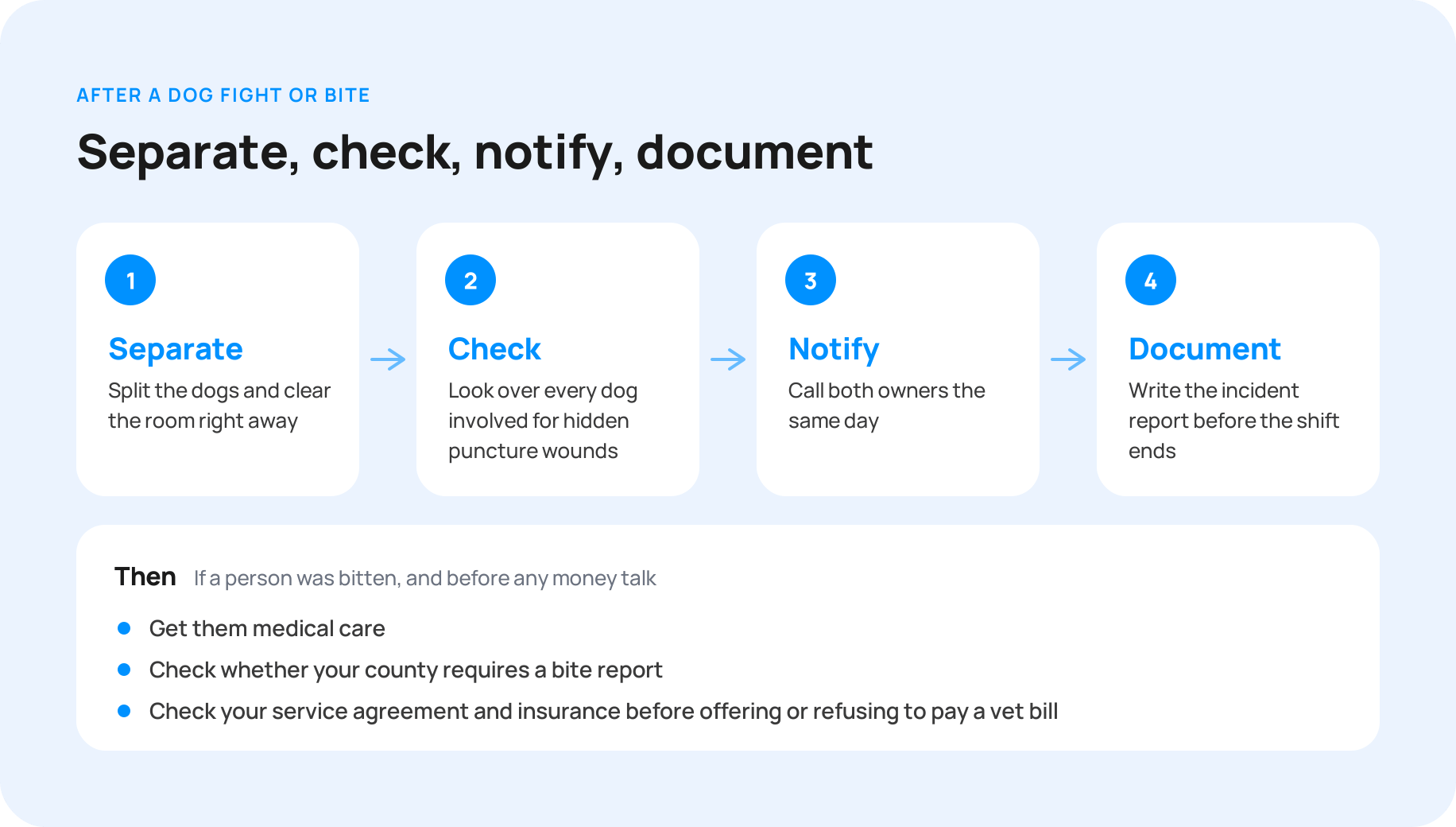
When a fight or bite happens at a dog daycare or boarding facility, separate the dogs immediately, check every dog involved for hidden puncture wounds, notify both owners the same day, and write an incident report before the end of the shift. If a person was bitten, get them medical care and check whether your county requires a bite report. Then check your service agreement and insurance before you offer, or refuse, to pay a vet bill.
The 7-step dog bite protocol
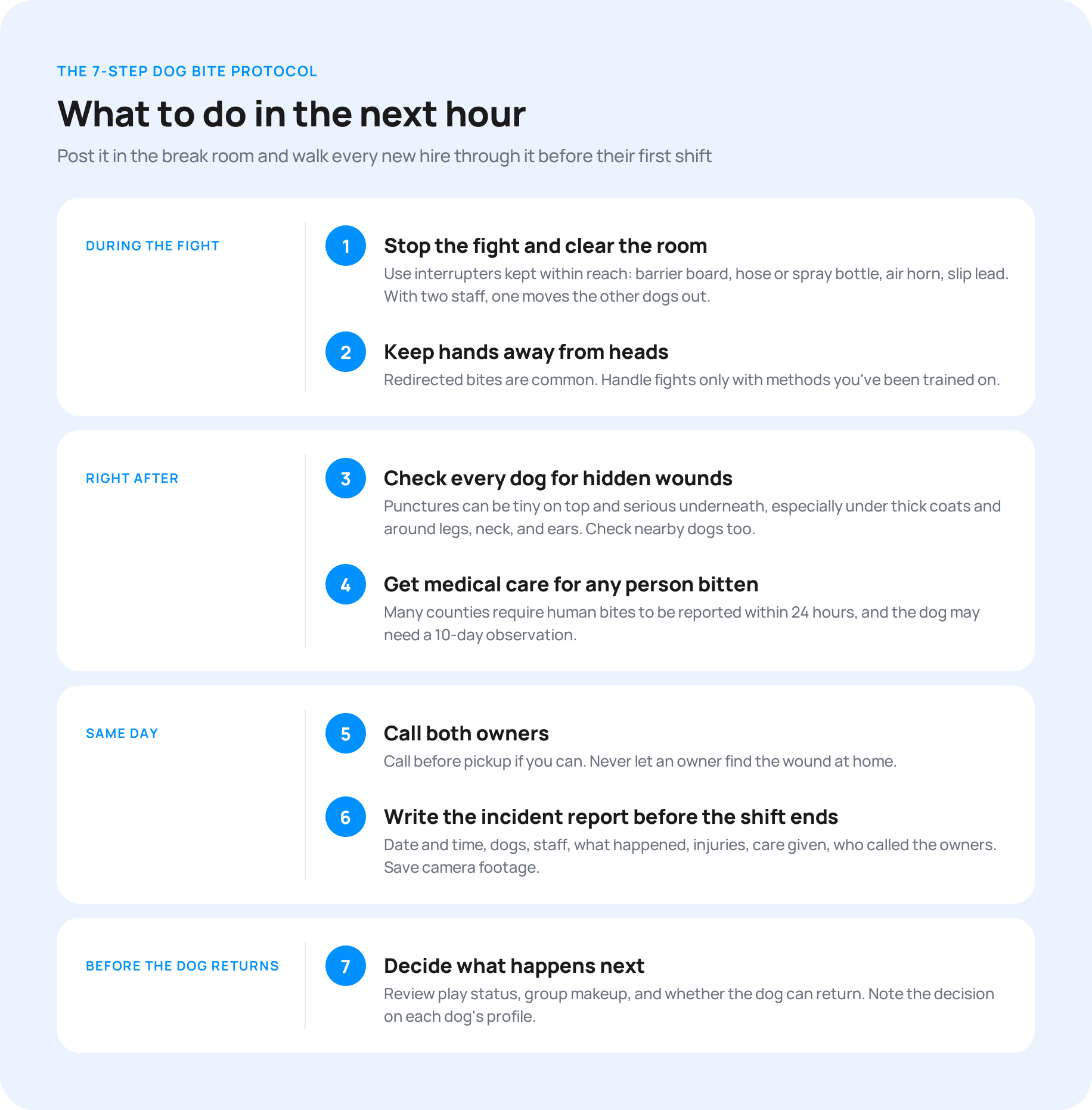
Print this, post it in the break room, and walk every new hire through it before their first shift on the floor.
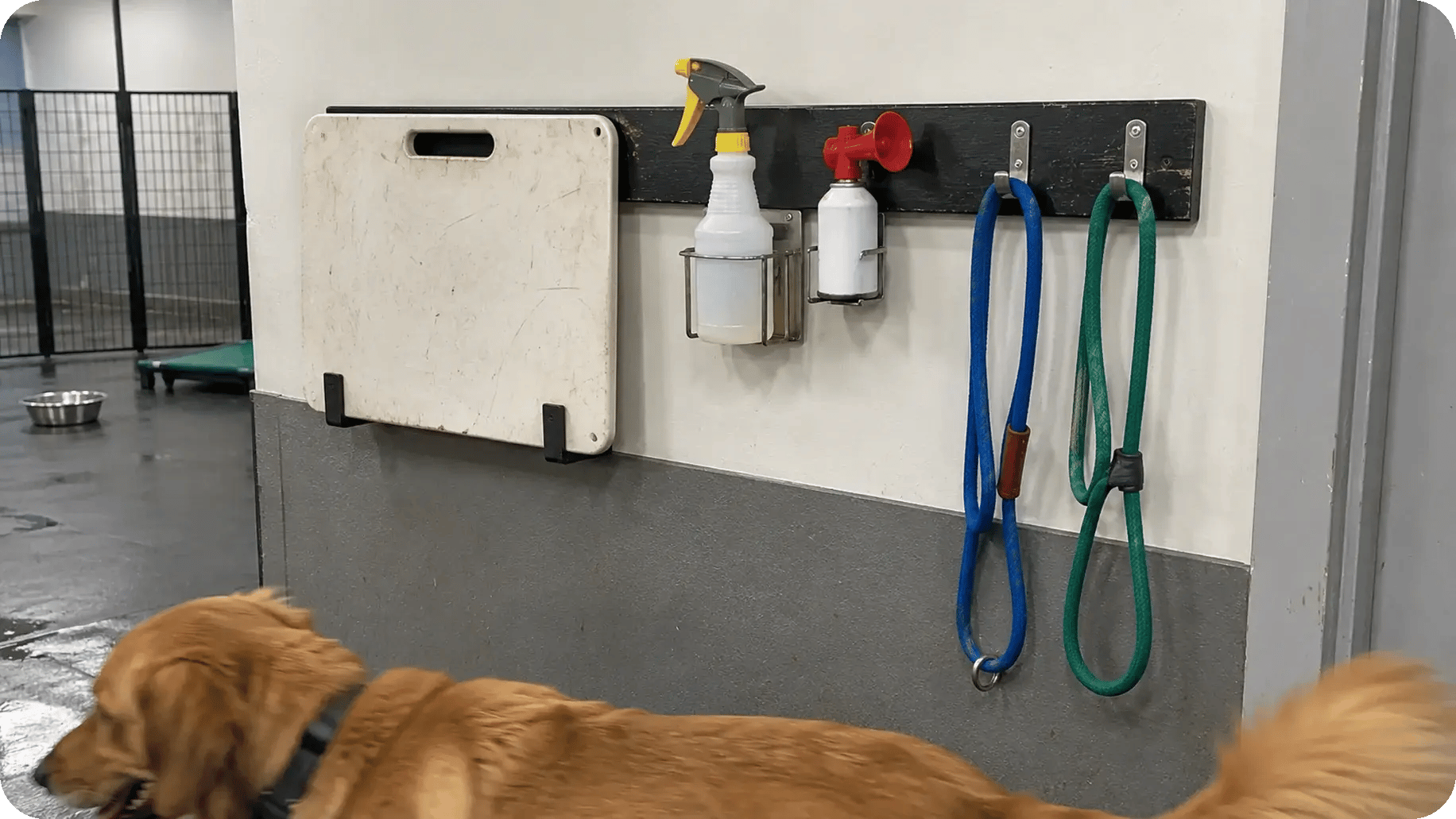
- Stop the fight and clear the room. Use the interrupters you keep within reach: a barrier board, a hose or spray bottle, an air horn, a slip lead. If two staff are present, one moves the other dogs out while the other handles the fight. Owners warn that you have seconds before other dogs pile in.
- Keep hands away from heads. The most-discussed bite in our community happened to a handler breaking up a fight, from a dog she didn't see. Redirected bites are common. Staff should handle fights only with methods they've been trained on.
- Check every dog for hidden wounds. Puncture wounds can be tiny on the surface and serious underneath, especially under thick coats and around legs, neck, and ears. Check the dogs that were near the fight, too. Contact your vet for anything beyond a surface scratch.
- Get medical care for any person bitten. Clean the wound and send them for medical care when in doubt. Many counties require dog bites on people to be reported within 24 hours, and the dog may need a 10-day observation period.
- Call both owners the same day. Call before pickup if you can, so nobody discovers an injury at home. Explain what happened, what you saw, and what care you've given. Never let an owner learn about it from a wound they found themselves.
- Write the incident report before the shift ends. Record the date and time, dogs involved, staff present, what happened, injuries, care given, and who called the owners. Save camera footage the same day.
- Decide what happens next. Review the dogs' play status, group makeup, and whether the dog can return. Experienced owners treat a bite deep enough to need a vet as aggression, not a play correction. Note the decision on each dog's profile.
The hard calls boarding & daycare owners argue about
Most of the protocol above is settled. Three questions aren't, and they drive the longest threads in the group.
Who pays the vet bill?
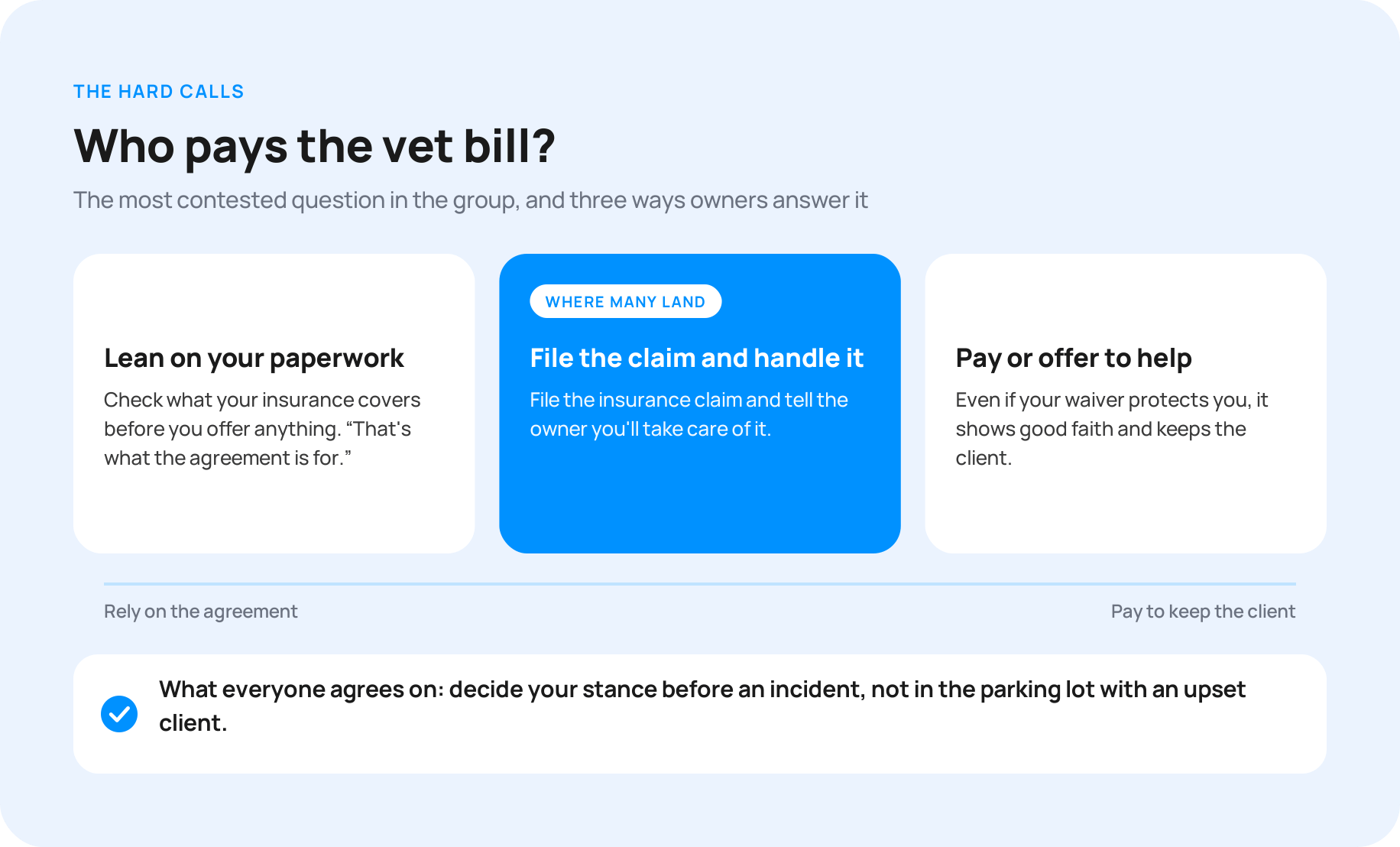
This is the most contested question in the topic. One camp says to lean on your paperwork: check what your insurance covers before you offer anything, because "that's what the agreement is for." The other camp says to pay, or at least offer to help, even if your waiver protects you, because it shows good faith and keeps the client.
Many experienced owners land in the middle: file the insurance claim and tell the owner you'll take care of it. The point the whole group agrees on is that you decide your stance before an incident, not in the parking lot with an upset client.
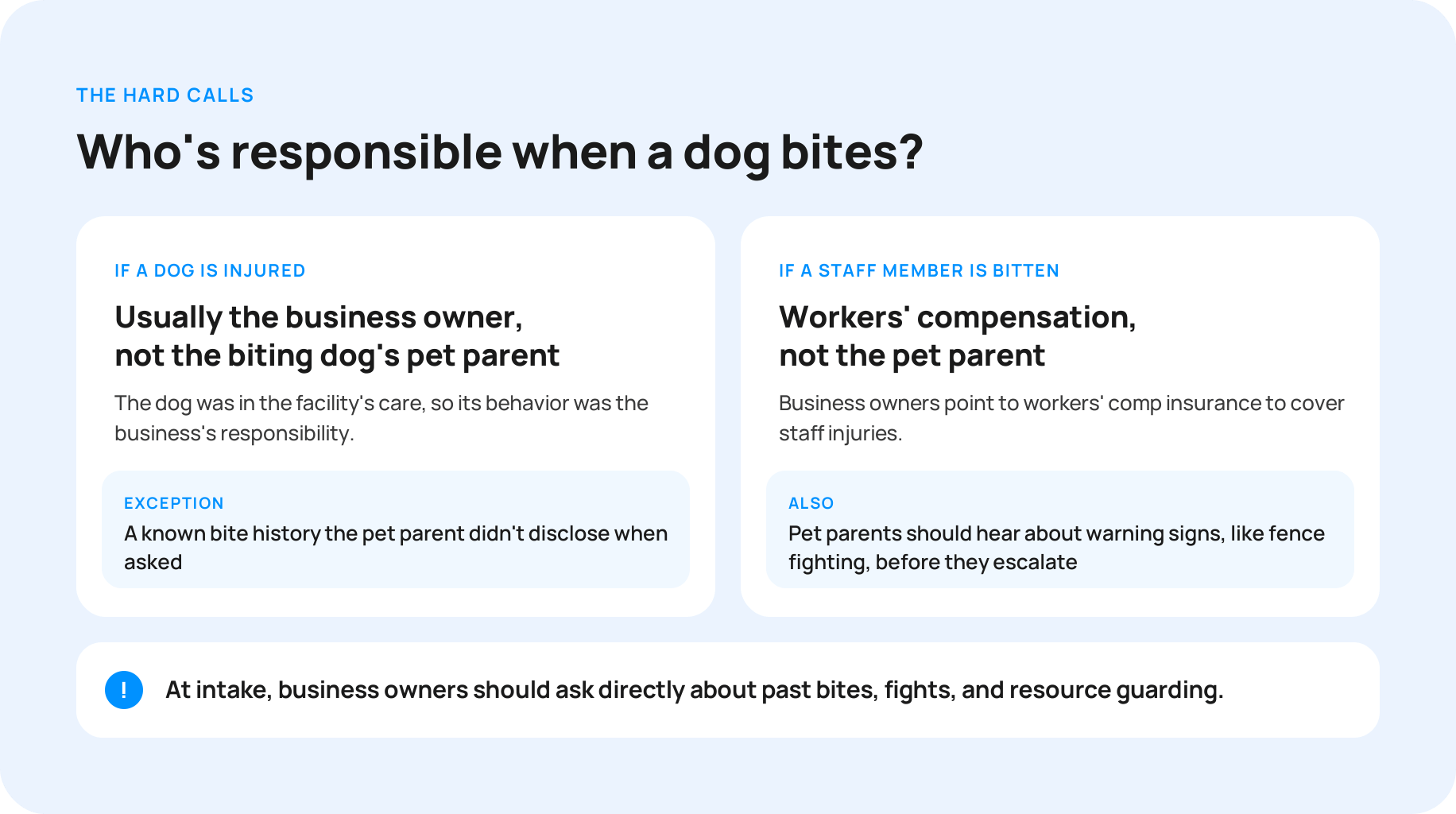
Is the biting dog's owner responsible?
Usually not. Most owners say the dog was in your care, so its behavior was your responsibility. The exception owners raise is when the dog had a known bite history and the owner didn't disclose it when asked. That's why your intake form should ask directly about past bites and fights.
If a staff member is bitten, owners point to workers' compensation insurance, not the pet parent. One owner whose own dog bit a handler at another daycare said she'd have wanted to hear earlier about the warning signs, like fence fighting and kennel aggression, that led up to it. Tell owners about escalating behavior before it becomes an incident.
How do you break up a fight?
This is the most heated thread of all. Some owners use loud noise, water, or barriers. Others pull dogs apart by the back legs. A vocal group argues that a slip lead technique is the only method that reliably works in a serious fight, and that running to grab tools wastes seconds.
The lesson is that your staff need a trained, practiced plan before the first fight. Bring in a professional trainer or behavior consultant to teach hands-on techniques, keep interrupters stationed in every play area, and make sure staff know which dogs are at risk of holding on.
Cameras end the argument
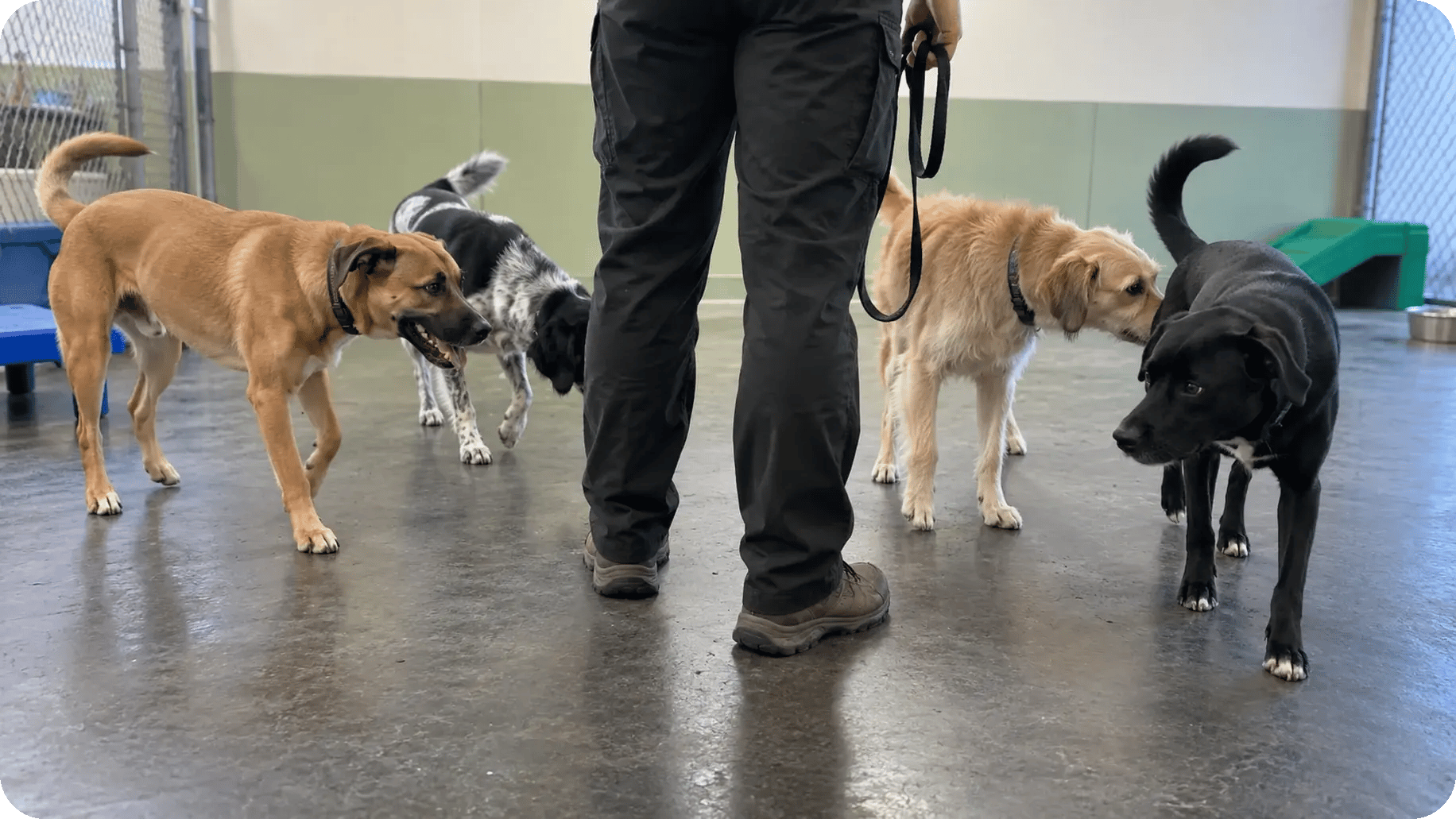
The single most repeated advice after an incident: put cameras in every room. One boarding owner runs four motion-activated cameras covering ten suites. When footage exists, the owner conversation shifts from accusation to review. It also helps you spot non-fight injuries, like a dog catching a leg in kennel panels.
Cameras also work better when they're part of your daily workflow, not a separate system. MoeGo now integrates with iDogCam and abcKam, so you can connect in-room and play-area cameras directly to your MoeGo account. Staff can watch live feeds from the dashboard. Pet parents can check in on their dog through their online profile while the dog is checked in, with suite cameras visible only to that suite's family. It builds trust with pet parents, opens the door to premium viewing services, and keeps your operations in one place. See how Hound HQ Doubled Client Base with iDogCam.

How Hound HQ Doubled Client Base with iDogCam
“In a lot of places, they just have a spotty camera or they say they have cameras but are broken,” Jake, owner of Hound HQ, said. “Clients talk about it. For us, having our cameras and booking portal always working together gives pet parents confidence, and that makes all the difference.”
What the rules require after an incident
Reporting rules depend on who was hurt and where you operate. A bite on a person usually triggers public health rules. An injury to a dog triggers your state's kennel rules, if it has any.
|
Rule |
Requirement |
Source |
|
Dog bites a person (common county rule) |
Report to the local health department or animal control, often within 24 hours; the dog is observed for 10 days, even if vaccinated |
|
|
Colorado (PACFA) |
Keep an incident file for any animal injury or illness that needs veterinary care, with date, pet, owner contact, description, and action taken; report deaths and escapes to PACFA in writing within 72 hours |
|
|
Massachusetts (Ollie's Law) |
Kennels must report injuries to animals or people on their premises to the licensing authority; the state sets the deadline in its regulations |
|
|
England (licensed daycare) |
Any dog showing aggression must be separated from all other dogs; behavior changes recorded and owners told; records kept 3 years |
Rules for human bites vary by state and county, so look up your local health department's requirements now and post them next to your protocol. This guide isn't legal advice. Review serious incidents with your insurer and, where needed, an attorney.
Build your protocol before you need it
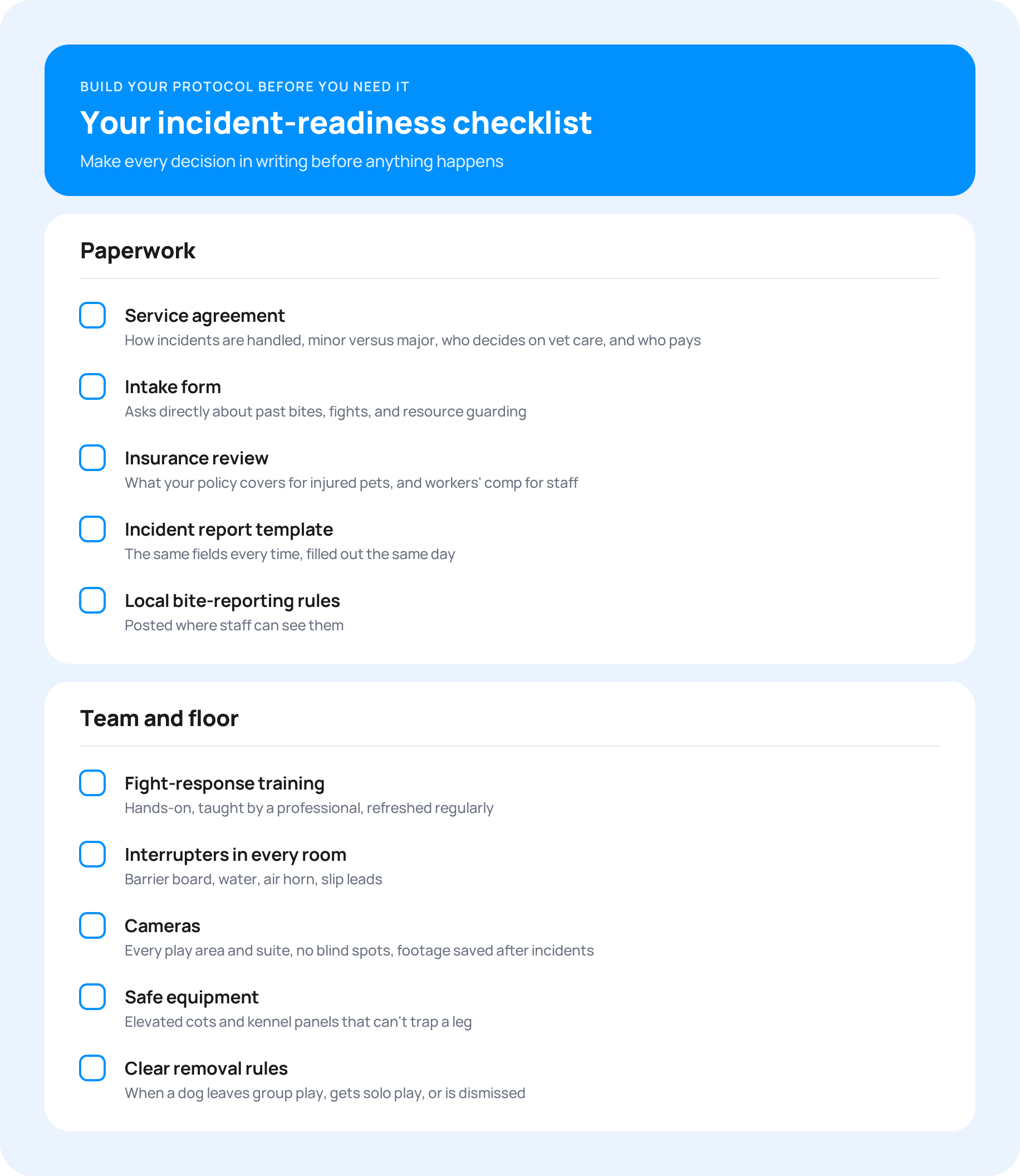
Owners who handle incidents calmly have one thing in common: the decisions were made in writing before anything happened. Use this checklist to build yours.
- Service agreement: spells out how incidents are handled, what counts as minor versus major, who decides on vet care, and who pays
- Intake form: asks directly about past bites, fights, and resource guarding
- Insurance review: confirm what your policy covers for injured pets, and that staff are covered by workers' compensation
- Incident report template: the same fields every time, filled out the same day
- Local bite-reporting rules: posted where staff can see them
- Fight-response training: hands-on, taught by a professional, refreshed regularly
- Interrupters in every room: barrier board, water, air horn, slip leads
- Cameras: every play area and boarding suite, no blind spots, footage saved after incidents
- Safe equipment: elevated cots and kennel panels that can't trap a leg
- Clear removal rules: when a dog leaves group play, gets solo play, or is dismissed
Underneath all of this sits supervision. Most fights start with small signals, like a stiff body, a hard stare, or one dog cornering another, and a handler watching too many dogs misses them. Staffing your playgroups at the right ratio is one of the most effective ways to stop a fight before it starts. Our dog daycare staff-to-dog ratio guide breaks down the ratios owners run, what state laws require, and how to set yours.

How Many Dogs Per Staff Member? The Pet Daycare & Boarding Ratio Guide
Most dog daycares run 1:10 to 1:15. See ratios by business model, what state and UK rules require, and how to set a ratio that's safe and profitable.
Two housing rules from owners in the group are worth adopting outright. For dogs from the same household that have scuffled: "If they can't eat together, they can't stay together." They board in separate suites and only get supervised potty breaks together. And remember that dogs change with age. A dog with years of perfect play can develop dog aggression later in life, so keep evaluating your regulars, not just new dogs.
Make incident history impossible to miss
An incident report only helps if the next shift sees it. Log every incident on the dog's profile with the date, details, and photos, so a warning shows up at check-in, not buried in a binder.
In MoeGo, staff can see each pet's notes and history right from the booking, so the handler on Monday knows what happened on Friday.

Frequently asked questions
What should a dog daycare do after a dog fight?
Separate the dogs, move other dogs out of the room, and check every dog involved for puncture wounds. Call both owners the same day, ideally before pickup. Write an incident report before the shift ends and save any camera footage.
Does a dog daycare have to tell the other dog's owner about a fight?
Yes, as a matter of practice. Experienced operators notify both owners the same day. An owner who discovers a wound at home without being told is far more likely to leave, post a bad review, or escalate.
Who pays the vet bill when a dog is injured at daycare?
It depends on your service agreement and insurance. Many facilities file an insurance claim, some pay out of pocket to keep the client, and some rely on their waiver. Decide your policy in advance and put it in your client agreement.
Do I need to report a dog bite at my daycare?
If a dog bites a person, many counties require a report to the health department or animal control, often within 24 hours, and the dog may need a 10-day observation period. Some states also require facilities to keep incident records for injuries that need vet care. Check your local rules.
What should a dog daycare incident report include?
The date and time, the dogs involved, staff present, what happened, injuries observed, care given, the vet used, when each owner was contacted, and any follow-up decisions. Attach photos and footage where you have them.
When should a dog be removed from daycare after a bite?
Many operators treat any bite that needs veterinary care as aggression rather than play, and remove or restrict that dog. A dog that bites a person is usually dismissed. Base the decision on the injury, the dog's history, and what your footage shows.

Just starting or adding to your business?
We have flexible plans meant for all stages.

Dog Bite Protocol for Daycare and Boarding: The 2027 Guide

Best Flooring for Dog Daycare and Boarding Facilities: The 2027 Guide