Share this
by MoeGo on Nov 23, 2026, 10:16:58 PM
In early 2024, a California boarding and daycare owner with 23 employees had a deadline. Fast-food chains nearby were about to start paying $20 an hour, and the high school students on their kennel team earned $16.50. So the owner gave two raises in a few months to reach $19.50 and raised their own prices to cover it. Wages now run about 37% of their gross revenue.
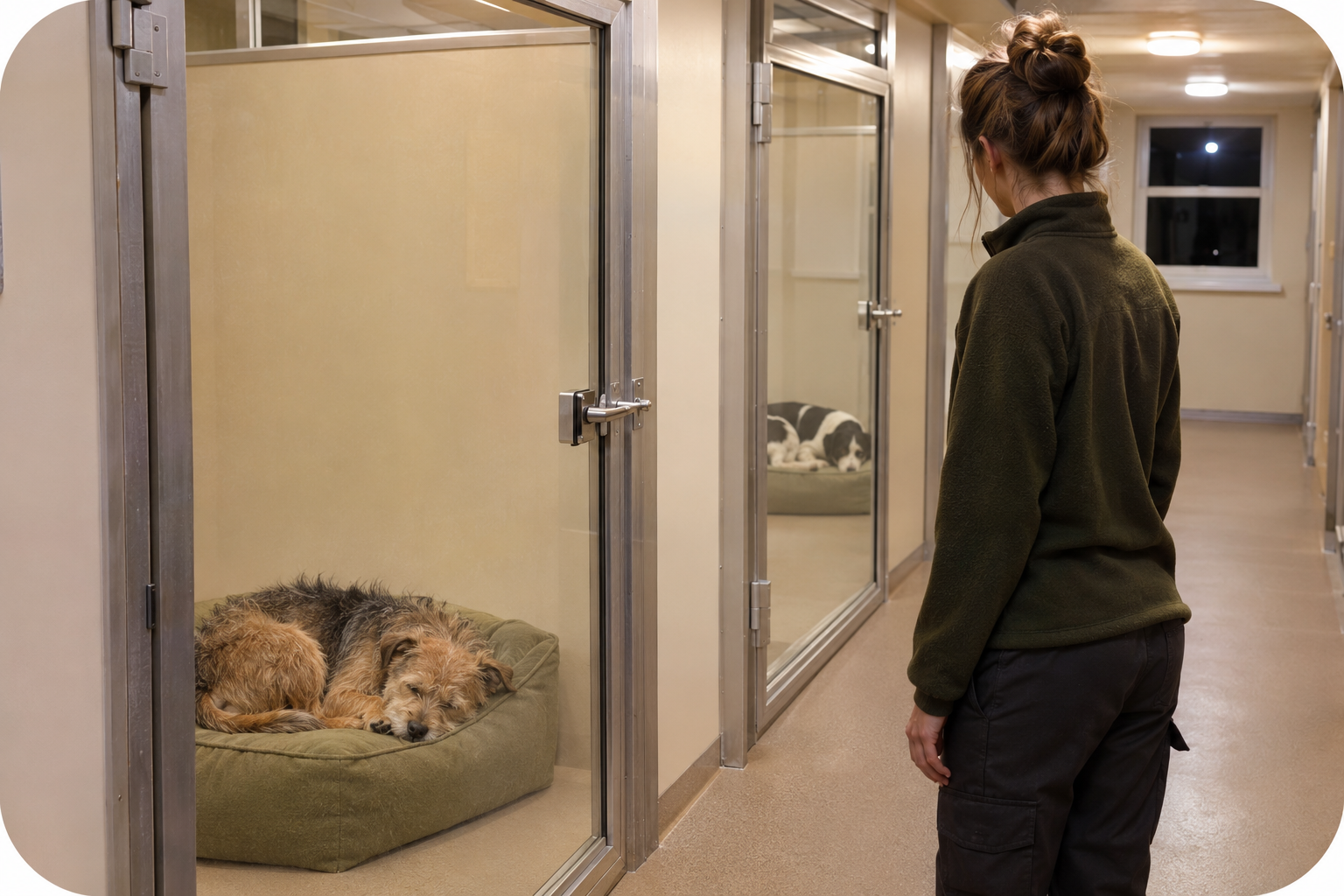
Every pet care business owner who hires feels the same squeeze. Pay too little, and good people leave for retail or the kennel down the road. Raise starting pay without raising everyone else, and your best people notice: one manager quit after learning new hires made just 50 cents less. Pay too much, and payroll eats the margin you need to stay open.
Pay is the question boarding and daycare owners ask most when they start hiring, and the one they revisit every time minimum wage goes up. We analyzed 120+ conversations among daycare and boarding owners and 700+ of their responses about wages, raises, manager pay, groomer commission, and live-in staff. Here's what facilities pay by role, how much of your revenue labor should take, and what keeps good staff without breaking your budget.
Most dog daycares pay staff $15 to $22 an hour and managers $25 to $30
Most dog daycare and boarding facilities pay kennel staff about $15 to $22 an hour, depending on the local minimum wage, and pay managers $25 to $30 an hour or a salary of $50,000 or more.
Total labor usually runs 35% to 50% of revenue. Benefits, bonuses, and a clear gap between new hires and experienced staff keep people longer than a higher starting wage alone.
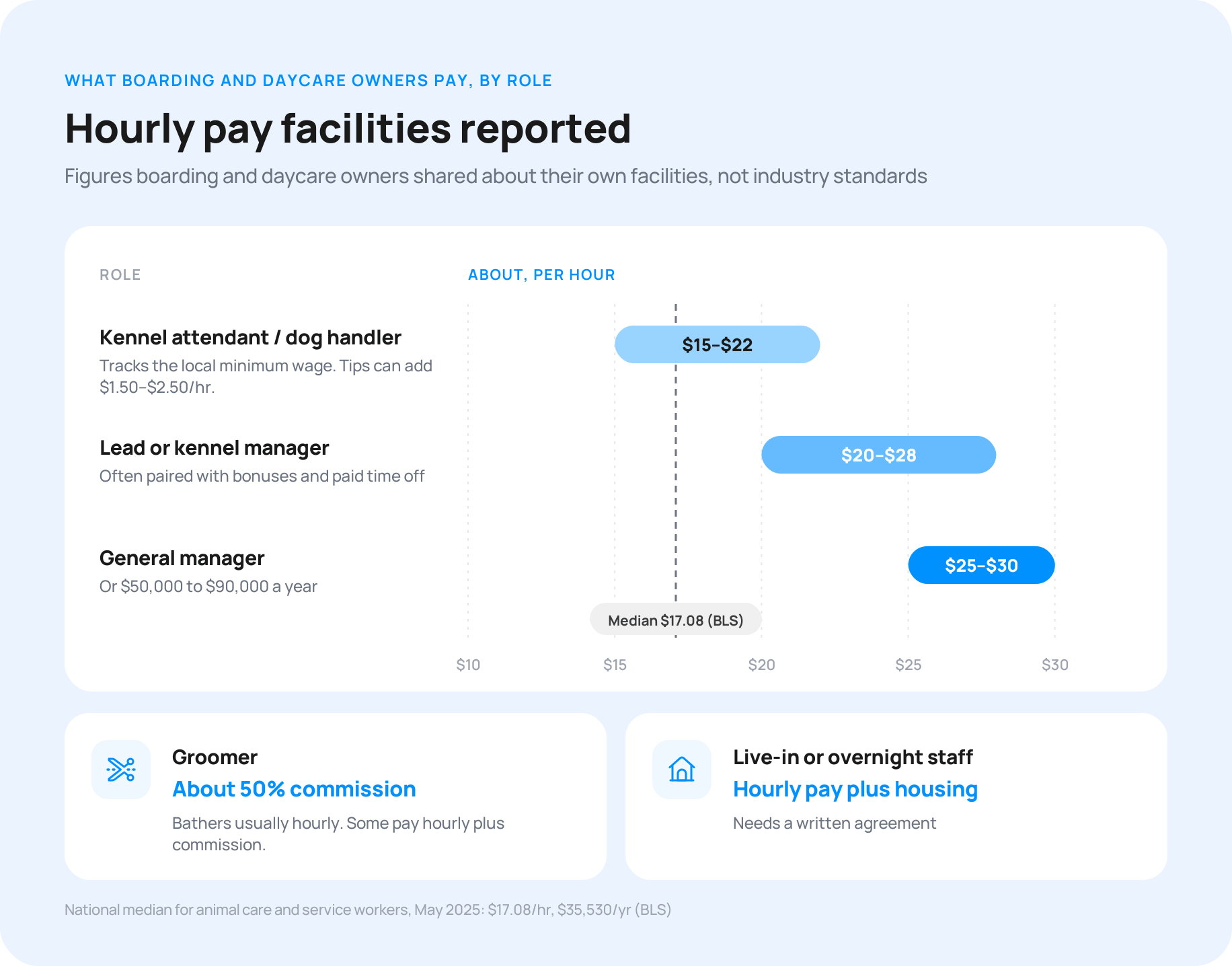
What boarding and daycare owners pay, by role
Pay depends heavily on your state and city. These are figures boarding and daycare owners shared about their own facilities, not industry standards.
|
Role |
What facilities report |
Notes |
|
Kennel attendant / dog handler |
About $15 to $22 an hour |
Tracks the local minimum wage. Tips can add $1.50 to $2.50 an hour where clients tip. |
|
Lead or kennel manager |
About $20 to $28 an hour |
Often paired with bonuses and paid time off |
|
General manager |
About $25 to $30 an hour, or $50,000 to $90,000 a year |
Some say they wouldn't take the title for less than a $50,000 base plus bonus |
|
Groomer |
About 50% commission |
Bathers are usually hourly. Some pay groomers hourly plus commission. |
|
Live-in or overnight staff |
Hourly pay plus housing |
Needs a written agreement; see the legal notes below |
For context, the median wage for animal care and service workers nationally was $17.08 an hour, or $35,530 a year, in May 2025 (BLS).
A few real examples from facility owners and managers:
- California facility, 23 employees: high school staff were raised from $16.50 to $19.50 an hour in two steps when the state's fast-food minimum went to $20. The 18 adults earn $20 to $28 an hour, plus about $1.50 to $2.50 an hour in tips.
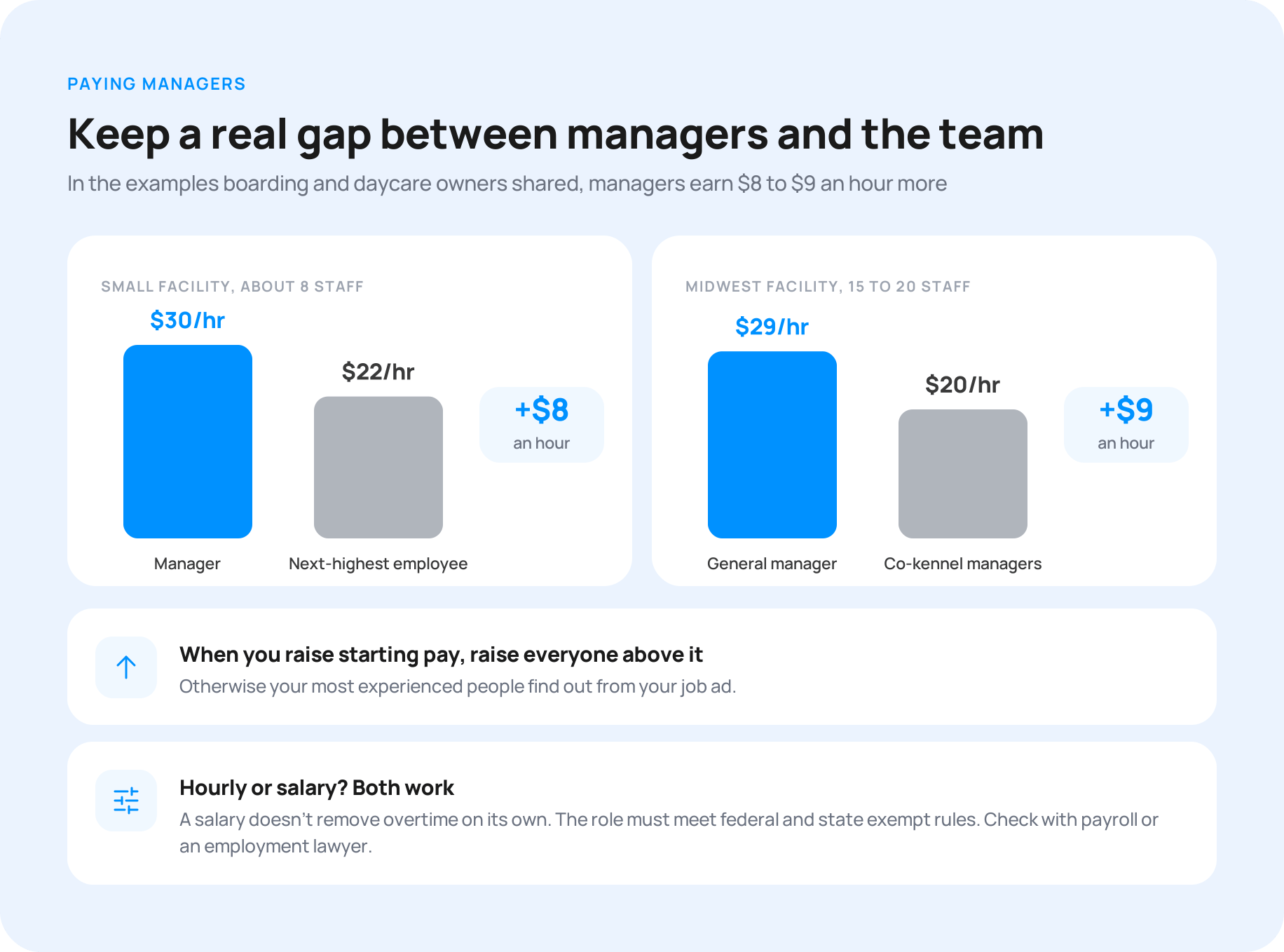
- Midwest facility, 15 to 20 staff, $11 state minimum: the general manager earns $29 an hour for at least 40 hours a week, three bonuses a year of about $1,000 each, a paid phone, and fully paid medical insurance. Two co-kennel managers earn $20 an hour plus tips, quarterly bonuses, and two weeks of paid vacation.
- Small facility, about 8 staff, minimum just under $17.50: the manager earns $30 an hour. The next-highest employee earns $22.
- Middle Tennessee: a small facility pays its manager $28 an hour.
- New York: one facility's manager earns $30 an hour.
- Illinois: a salaried manager worked out their pay at about $39 an hour.
Start from your minimum wage, then beat your local competition
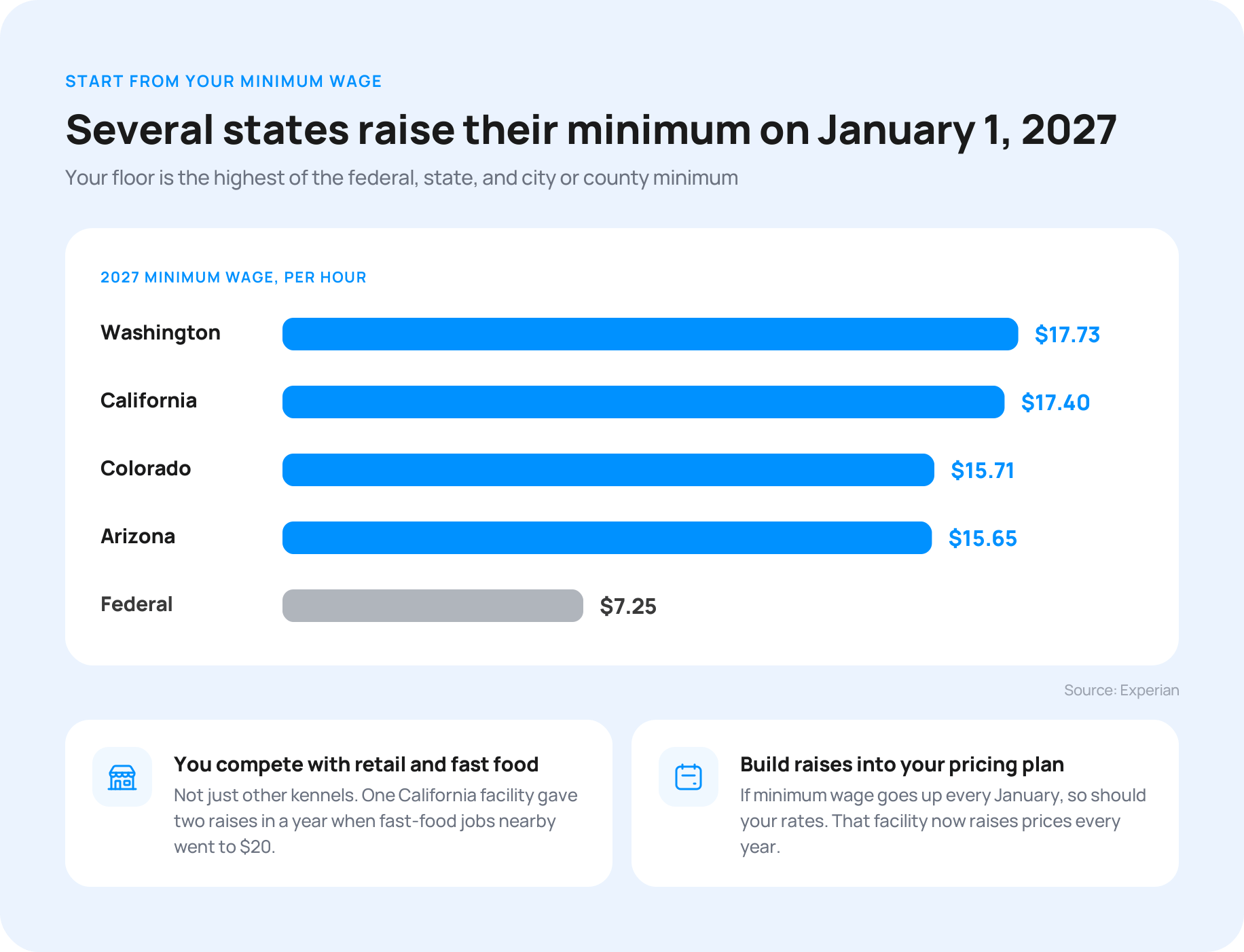
Your floor is the higher of the federal minimum ($7.25), your state minimum, and any city or county minimum. Several states raise their minimums on January 1, 2027, including California ($17.40), Washington ($17.73), Colorado ($15.71), and Arizona ($15.65) (Experian).
The minimum is rarely what you actually compete against. You compete with retail, fast food, and other kennels for the same people. That's why the California owner in the intro raised wages ahead of the fast-food increase, and why they now raise their own prices every year as wages rise.
Build wage increases into your pricing plan. If minimum wage goes up every January, so should your rates.
How much of your revenue should go to staff?
Total labor cost, meaning wages, employer payroll taxes, and benefits, usually runs 35% to 50% of revenue for a dog daycare or boarding business. That matches what we found when we looked at how much dog daycare owners make. The California facility above reported wages at about 37% of gross revenue, roughly $22,000 every two weeks across 23 employees.
Use it to check whether a raise or a new hire fits:
Labor % = (wages + employer payroll taxes + benefits) ÷ revenue × 100
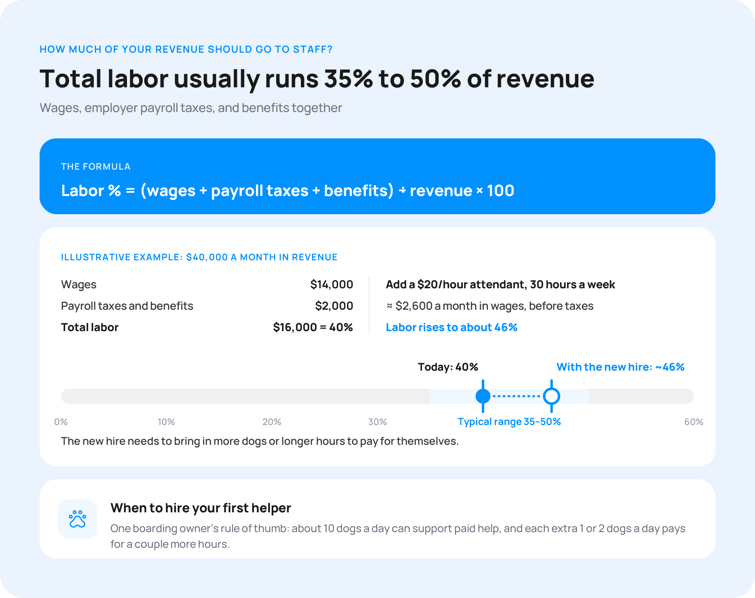
When should you hire your first helper? One boarding owner suggests that about 10 dogs a day can support paid help, and that each extra one or two dogs a day pays for a couple more hours of help. They started with someone 4 hours a day and 6 hours on Sundays and grew to 8 hours a day. If you can't afford any help at that volume, they argue, your overhead is too high or your prices are too low.
Paying managers: keep a real gap
The fastest way to lose a manager is to pay them barely more than a new hire. One manager earning $18 an hour quit after learning that new hires made just 50 cents less. Another general manager earning $17 an hour, with staff $1 to $2 behind, heard from peers earning $28 to $30 in similar roles.
- Keep managers clearly above the team. In the examples above, managers earn $8 to $9 an hour more than the next-highest staff member.
- When you raise starting pay, raise everyone above it. Otherwise your most experienced people find out from your job ad, as that manager did.
- Hourly or salary? Both work. One facility pays one manager a flat $90,000 salary and another manager hourly. A salary doesn't remove overtime on its own: the role must meet federal and state rules for exempt employees, including a minimum salary that is higher in some states. Check with your payroll provider or an employment lawyer.
What keeps staff besides pay
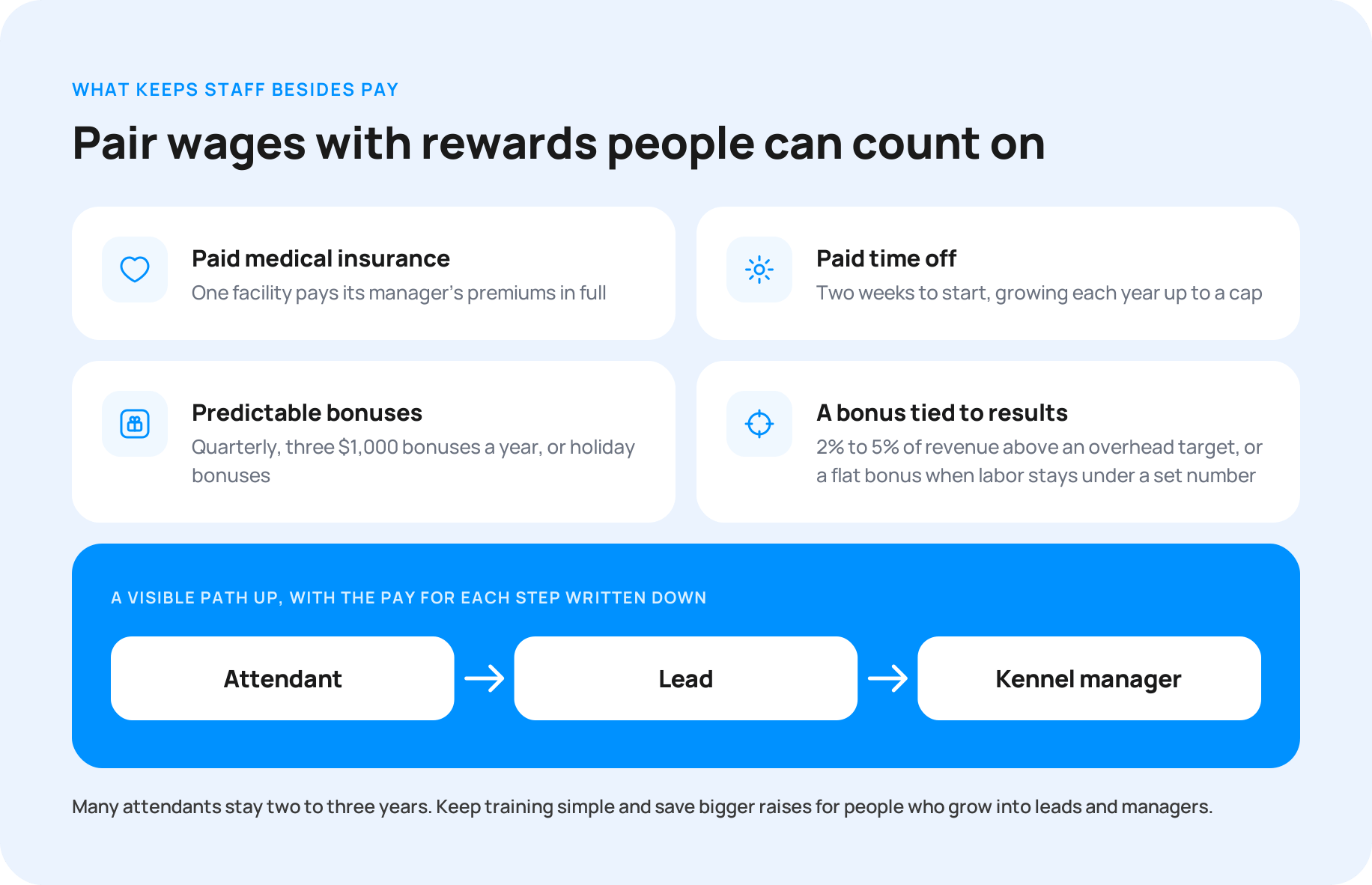
Boarding and daycare owners who keep people the longest pair wages with other rewards:
- Paid medical insurance. One facility pays its manager's premiums in full.
- Paid time off. Two weeks of paid vacation to start, growing each year up to a cap.
- Predictable bonuses. Quarterly bonuses, three $1,000 bonuses a year, or holiday bonuses.
- A bonus tied to results. One facility owner suggests paying 2% to 5% of revenue above an overhead target, or a flat bonus when labor cost stays under a set number.
- A visible path up. Attendant to lead to kennel manager, with the pay for each step written down.
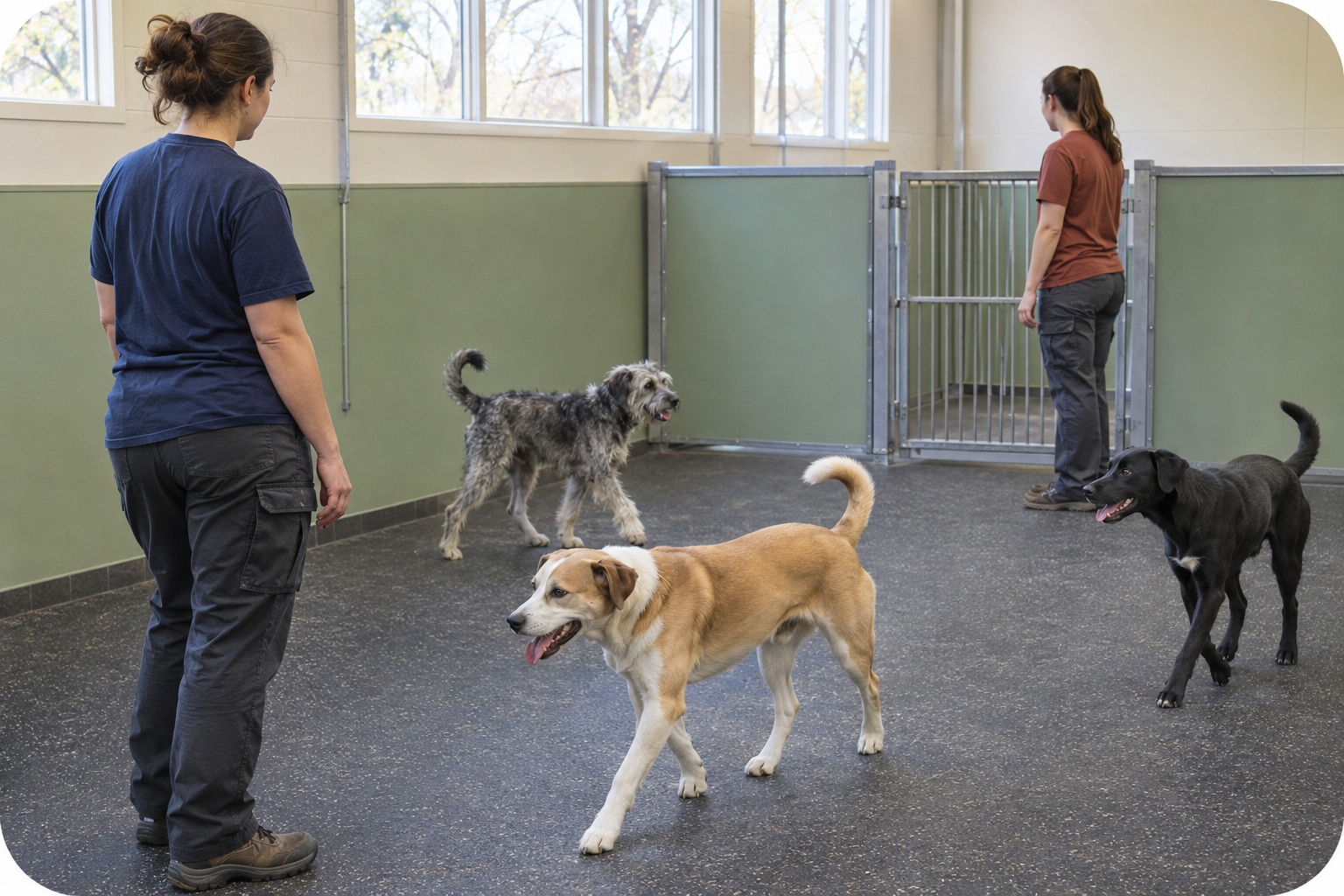
Be realistic about turnover. Many kennel attendants are high school or college students or working a second job. Some facilities expect most attendants to stay two to three years and design simple training around that, saving the bigger raises for the people who grow into leads and managers.
How to pay grooming staff
Grooming works on a different model. Most facilities pay groomers about 50% commission and pay bathers hourly. Some pay an hourly rate plus commission, especially while a groomer builds a clientele.
One common setup: hire groomers as W-2 employees and pay commission with PTO and health insurance. The facility buys the big equipment that stays (tables, tubs, dryers) and consumables like shampoo. Groomers bring their own shears, clippers, and brushes.
Commission pay still has to meet minimum wage for every hour worked. Track hours even for commission staff.
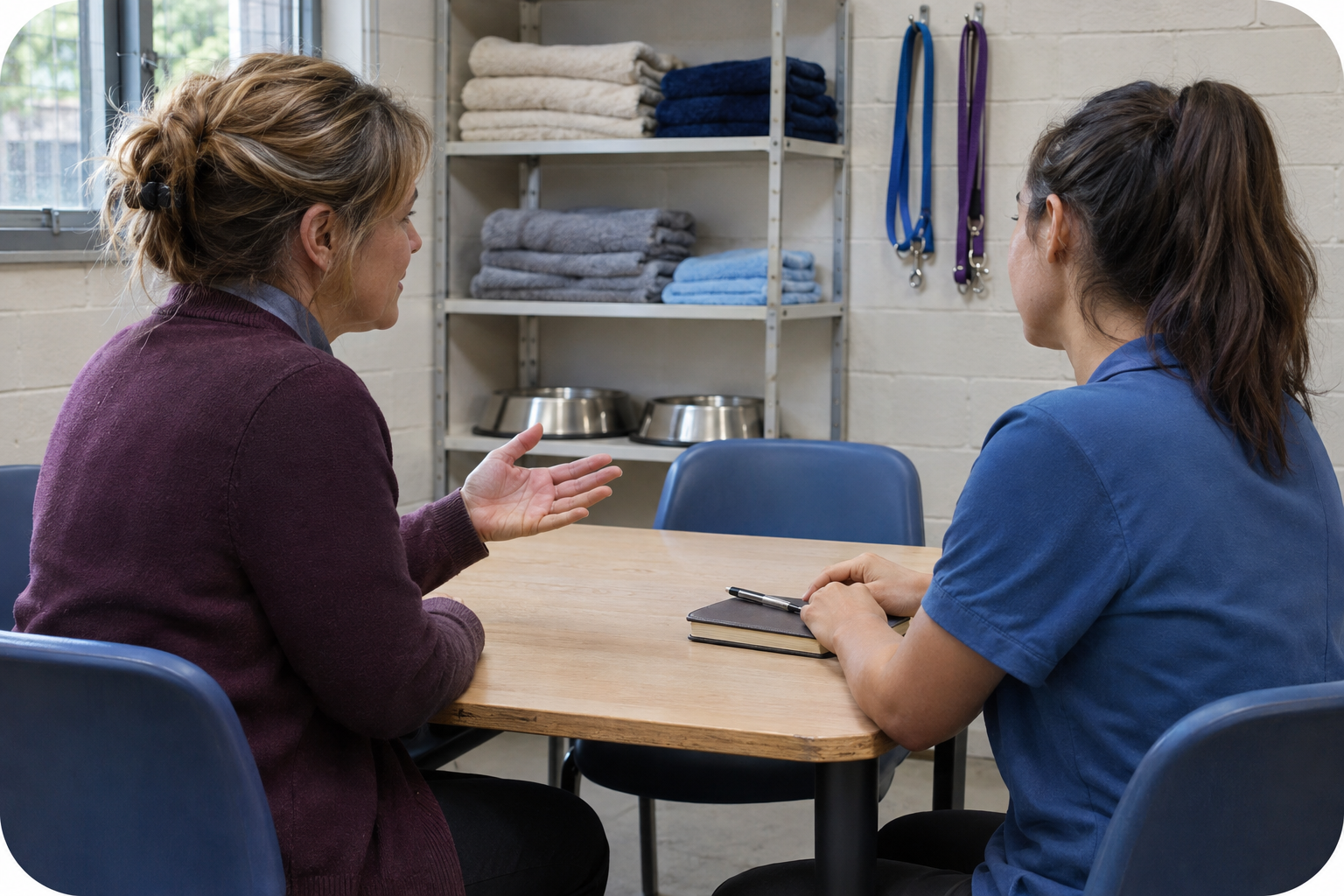
Live-in and overnight staff
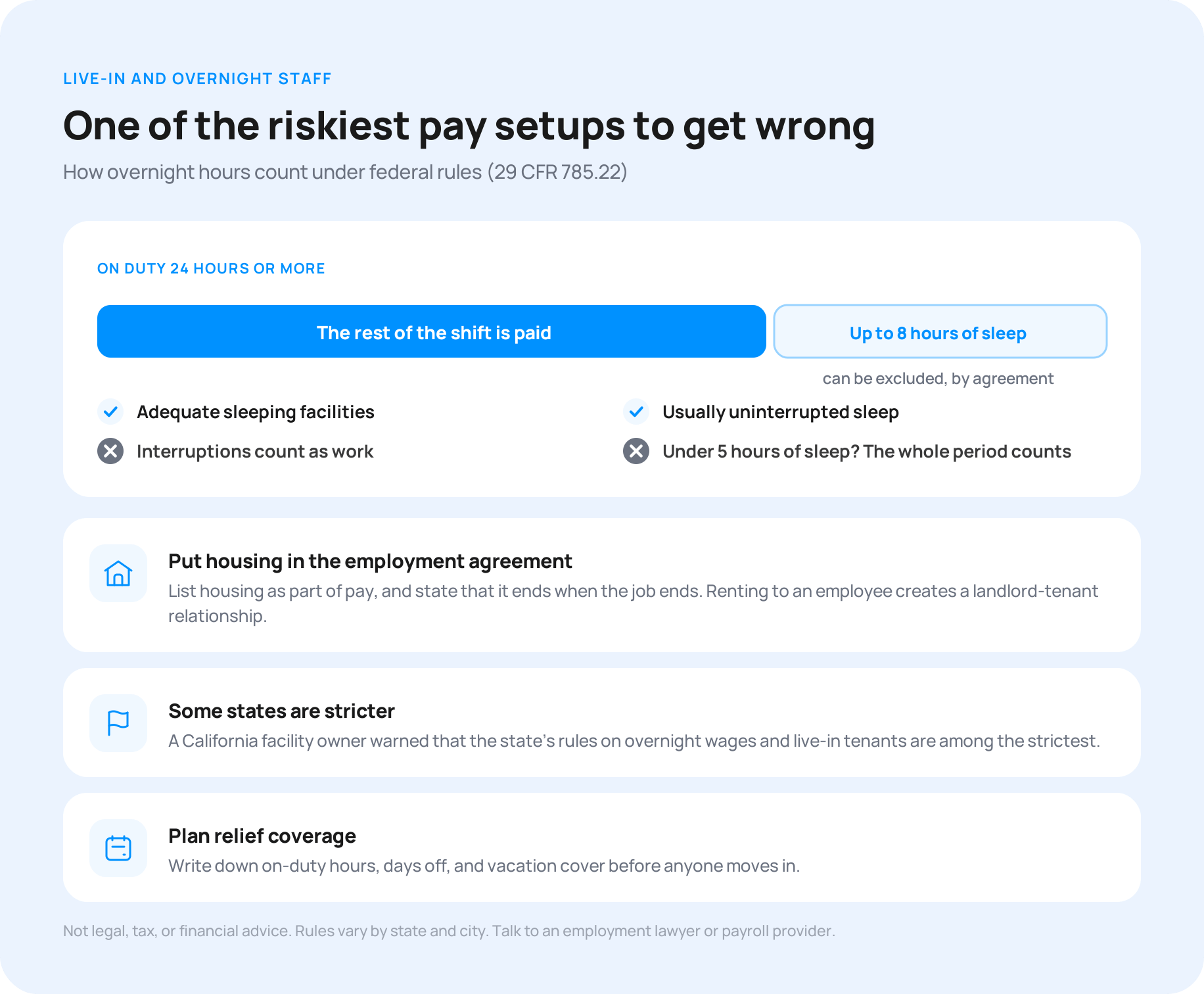
Boarding facilities often want someone on site overnight. It's one of the riskiest pay setups to get wrong.
- Put housing in the employment agreement. Boarding and daycare owners recommend listing housing as part of the compensation, with clear terms that housing ends when the job ends. Renting to your own employee creates a landlord-tenant relationship that can be hard to unwind.
- Know how overnight hours count. Under federal rules, an employee on duty for 24 hours or more can agree to exclude up to 8 hours of sleep from paid time, but only with adequate sleeping facilities and usually uninterrupted sleep. Interruptions count as work, and if they get less than 5 hours of sleep, the whole period counts (29 CFR 785.22).
- Some states are stricter. A California facility owner warned that state rules on overnight wages and on whether a live-in employee is a tenant are among the strictest in the country.
- Plan relief coverage. A live-in role can quietly become a 24/7 job. Write down on-duty hours, days off, and who covers vacations before anyone moves in.
This guide isn't legal, tax, or financial advice. Wage and hour rules vary by state and city. Talk to an employment lawyer or payroll provider before setting up commission, salary, or live-in pay.
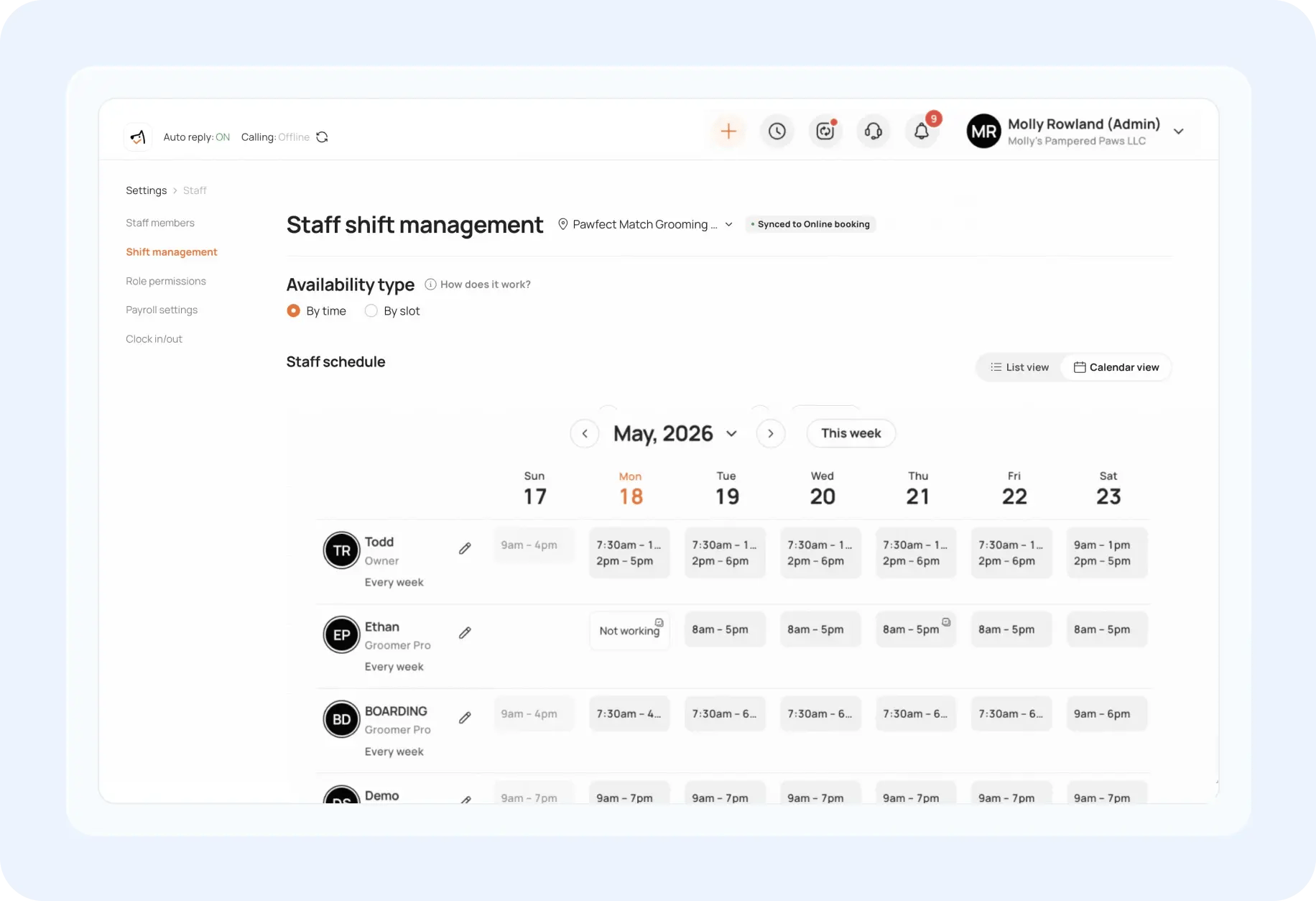
See your real labor cost every pay period
You can't keep labor at 35% to 50% of revenue if you only see the number at tax time.
In MoeGo, you set each staff member's pay as an hourly rate, a fixed or tiered commission, or custom rates for specific services and add-ons. Hours come from clock-in and clock-out. The payroll report then shows each person's hours, hourly wages, commission, tips, and total pay for any date range, ready to export.
Free download: Staff Pay Planner
Not sure what to pay your next hire, or whether you can afford one? Our free Staff Pay Planner gives you a fill-in pay ladder from attendant to general manager and a worksheet that shows what a new hire does to your labor costs before you commit. Print it, fill it in, and hire with confidence.
Frequently asked questions
How much do dog daycare workers make per hour?
Most dog daycare and boarding attendants earn about $15 to $22 an hour, depending on the local minimum wage and job market. The national median for animal care and service workers was $17.08 an hour in May 2025. Tips can add $1.50 to $2.50 an hour at some facilities.
How much should I pay a dog daycare manager?
Facilities commonly pay managers $25 to $30 an hour, or a salary of $50,000 to $90,000 for larger operations. Keep a clear gap between the manager and your highest-paid attendant, often $8 or more an hour, so a raise in starting pay doesn't erase it.
What percentage of revenue should payroll be for a dog daycare?
Total labor, including wages, employer payroll taxes, and benefits, usually runs 35% to 50% of revenue. Check it every pay period, and test any new hire or raise against it before committing.
Should groomers at a daycare be paid commission or hourly?
Most facilities pay groomers about 50% commission and pay bathers hourly. Some pay an hourly base plus commission. Commission pay must still meet minimum wage for every hour worked.
Do I have to pay live-in kennel staff for overnight hours?
Often, yes. Under federal rules, only employees on duty 24 hours or more can agree to exclude up to 8 hours of sleep, with adequate facilities and mostly uninterrupted sleep. Some states, such as California, are stricter. Get legal advice before setting up live-in pay.
What benefits help keep dog daycare staff?
Paid medical insurance, paid time off, predictable bonuses, and a written path from attendant to lead to manager. Facilities that only raise pay still report turnover.
Just starting or adding to your business?
We have flexible plans meant for all stages.

How Much to Pay Dog Daycare and Boarding Staff: The 2027 Guide
Dog Daycare and Boarding Add-Ons That Sell: 12 Upsells With Prices (2027)