Share this
by MoeGo on Apr 8, 2026, 1:55:55 PM
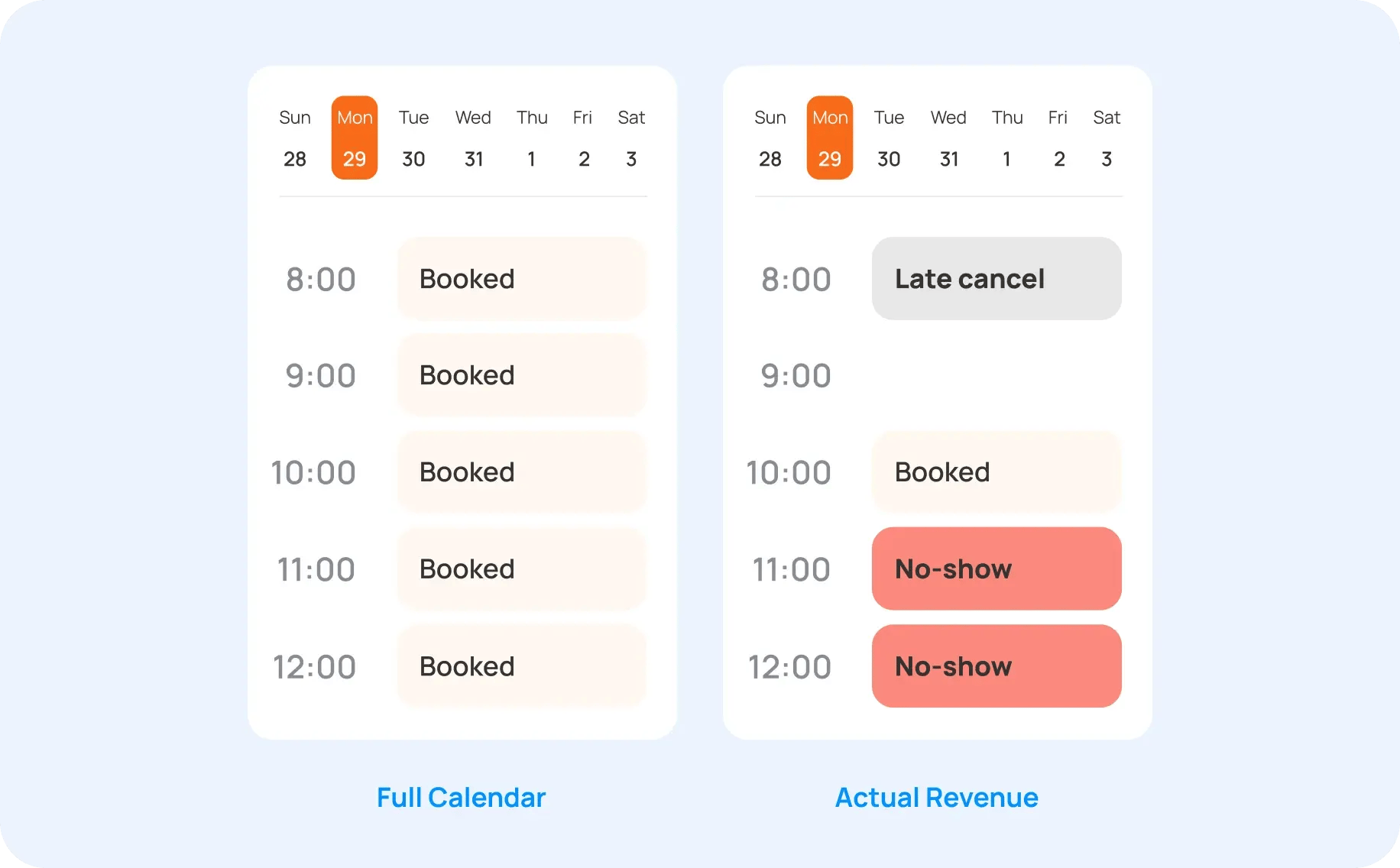
If your schedule is full, why does revenue still feel inconsistent? Many grooming businesses, including salons, mobile fleets, and multi-location operators, run into the same pattern:
- Your calendar looks fully booked
- Your team is busy all day
- But revenue feels unpredictable, and some days end with unexpected gaps
MoeGo operational research consistently identifies no-shows, weak rebooking workflows, and manual scheduling systems as major sources of hidden revenue leakage for grooming businesses.
In fact, MoeGo internal recovery initiatives have already identified more than $1.12 million in recoverable no-show revenue tied to operational inefficiencies across grooming business workflows.
For many operators, the issue is not demand.
It’s operational inconsistency quietly eroding revenue behind the scenes.
The Real Cost of No-Shows
A no-show is rarely just one missed appointment.
It creates a chain reaction across the business:
- Lost appointment revenue
- Idle staff time
- Schedule gaps that are difficult to refill
- Lost rebooking opportunities
- Client churn over time
For growing grooming businesses, these small operational gaps compound quickly.
This is especially true for:
- Multi-location operators trying to maintain visibility
- Mobile fleets managing route density
- High-volume salons balancing staffing efficiency and utilization
MoeGo’s research consistently shows that growing operators don’t just buy software for convenience. They buy predictability, visibility, operational control, and revenue stability.

What No-Shows Cost Different Grooming Businesses
1. Single-Location Grooming Salon
Typical Business Profile
- 3 groomers
- Average ticket: about $93
- Around 15 appointments per day
What No-Shows Can Cost
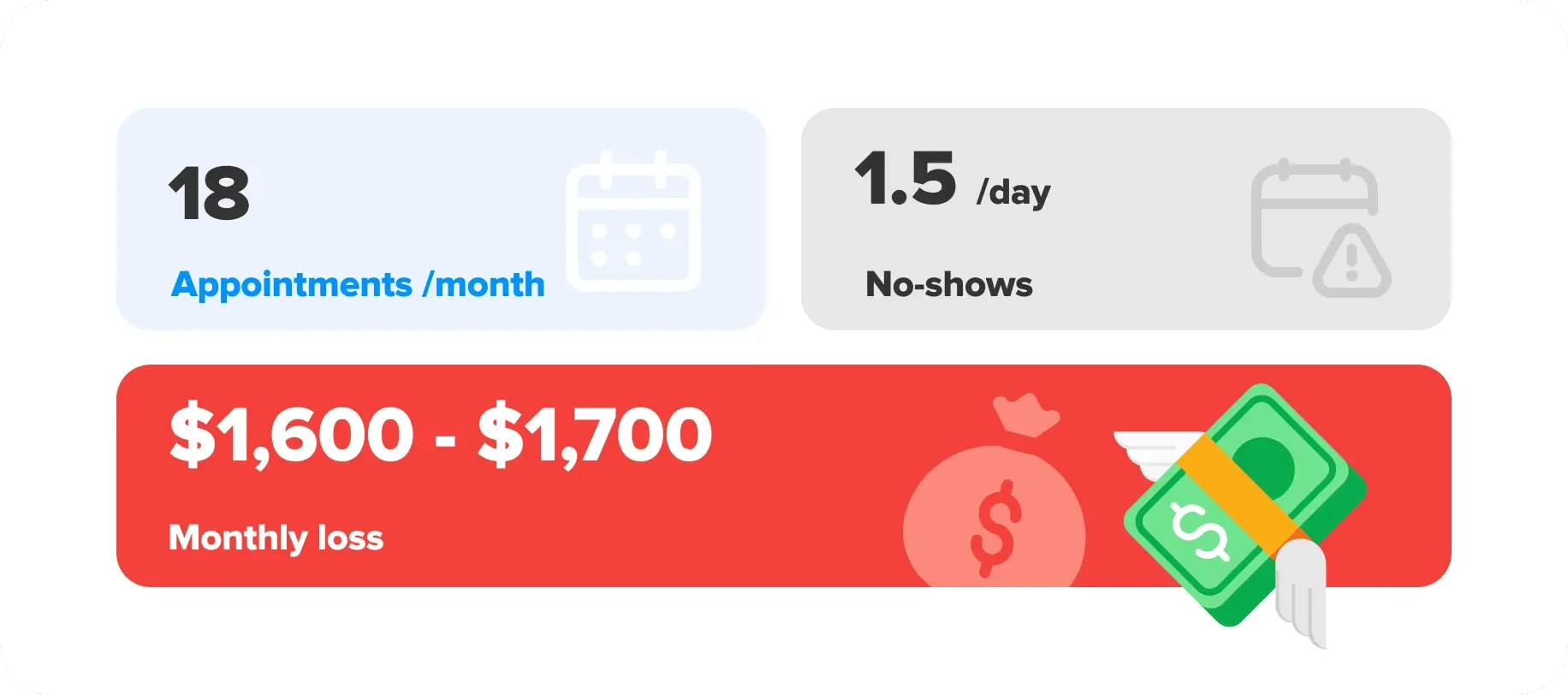
With a typical no-show rate, a salon this size may lose:
- About 18 appointments per month
- Roughly $1,600–$1,700 in monthly revenue
👉 For many independent salons, even one missed appointment here and there adds up quickly. Empty slots are hard to refill last minute, and the owner often absorbs the operational stress.
2. Multi-Location Grooming Business
Typical Business Profile
- 6 groomers across locations
- Average ticket: about $97
- Around 30 appointments per day
What No-Shows Can Cost
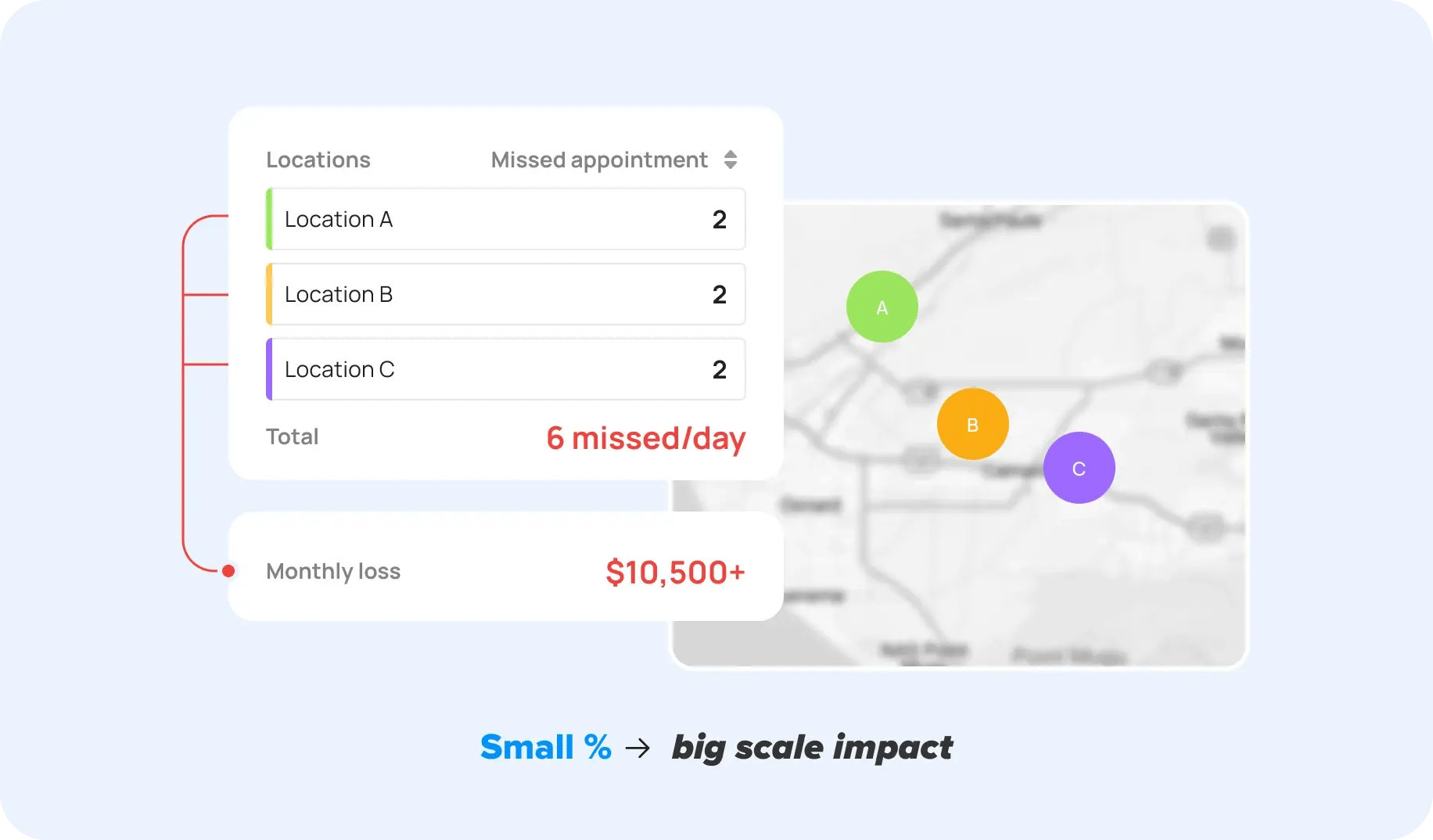
At scale, even small percentages become expensive.
A business like this may lose:
- Around 47 appointments per month
- Roughly $4,500+ in monthly revenue
👉 The challenge isn’t just lost revenue. As businesses grow, missed appointments become harder to track across locations, making operational gaps less visible until they start affecting profitability.
3. Mobile Grooming Business (Fleet or Solo)
Typical Business Profile
- 4 vans
- Average ticket: about $159
- Around 24 appointments per day
What No-Shows Can Cost
A multi-van mobile business may lose:
- Around 22 appointments per month
- Roughly $3,400–$3,500 in monthly revenue
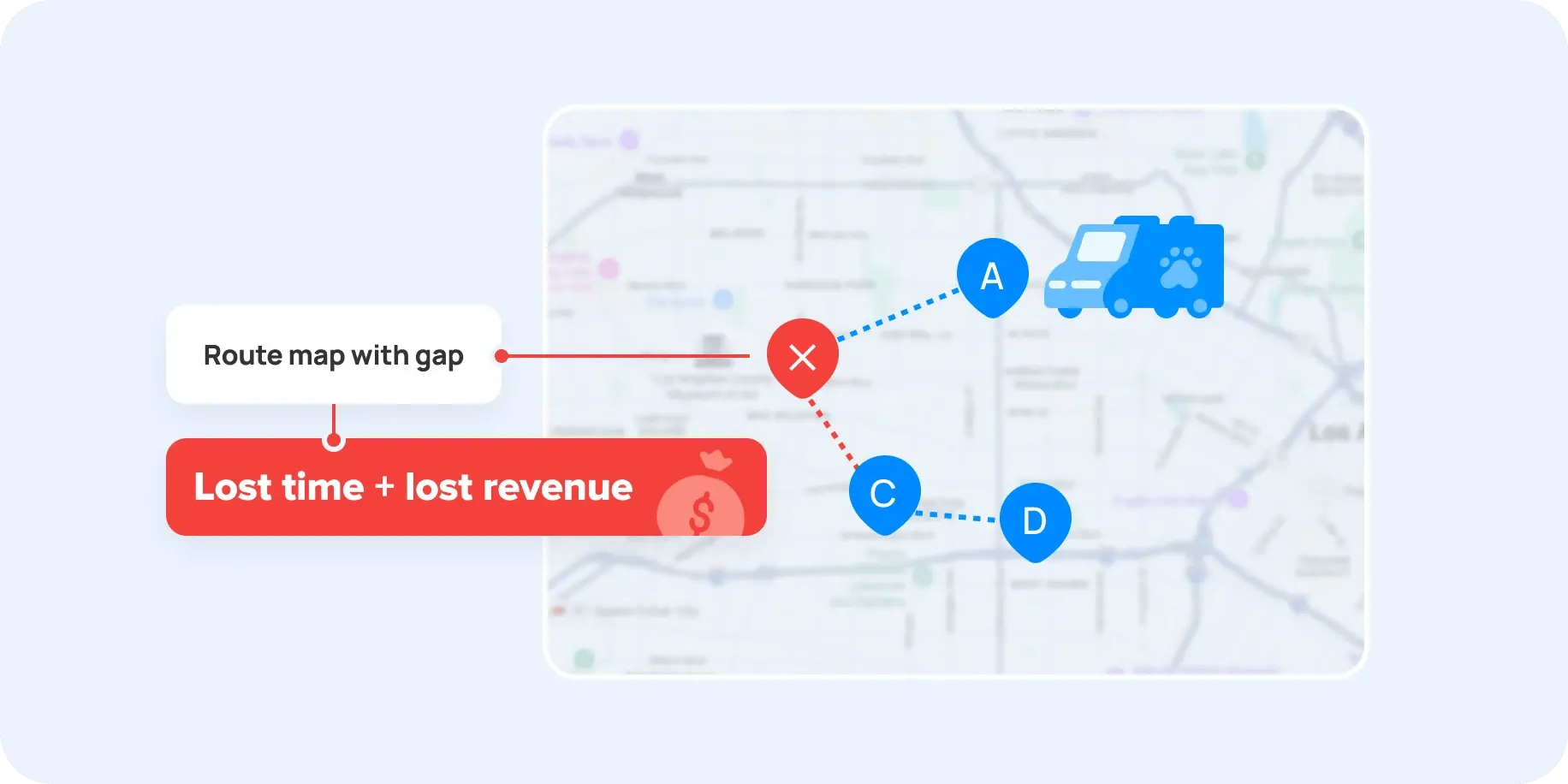
👉 For mobile grooming, the impact goes beyond the missed appointment itself. A cancellation can create route gaps, wasted drive time, and lower revenue per mile — especially when the schedule can’t be refilled quickly.
Now add retention loss (clients who never return), and the number increases significantly.
👉 This is why many operators feel: “We’re busy, but something isn’t adding up.”
Why No-Shows Happen in Pet Grooming Businesses
Most grooming businesses don’t have a demand problem. They have a system problem.
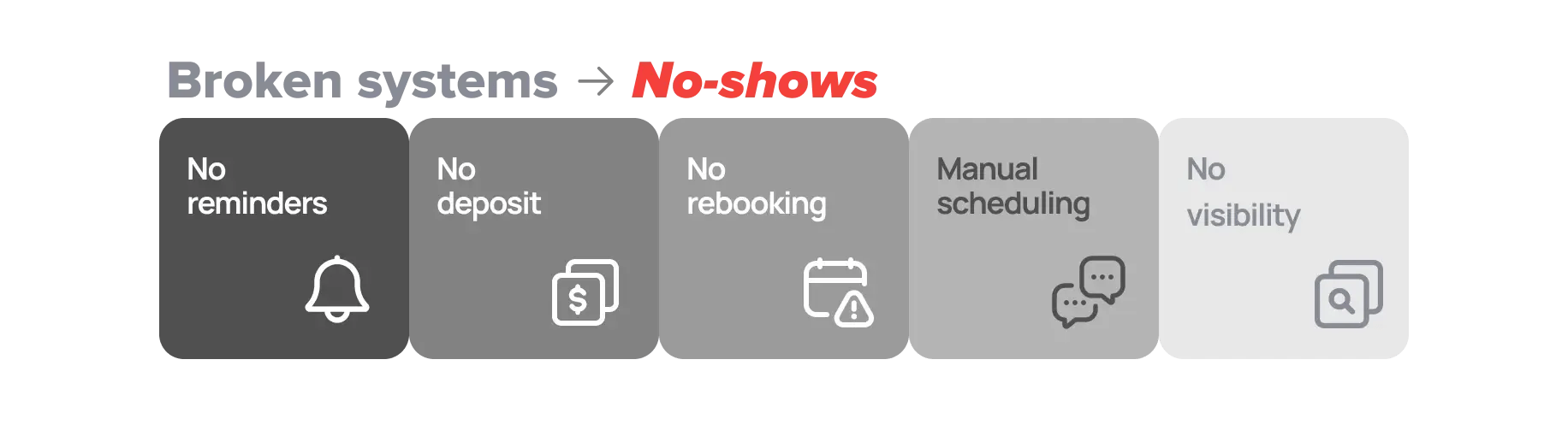
1. No Structured Reminder System
Clients forget. Especially repeat grooming (4–8 week cycles).
Manual reminders are inconsistent and time-consuming.
2. No Financial Commitment (Deposits / Policies)
Without deposits or enforcement:
- Clients cancel late
- Or don’t show up at all
There’s no consequence.
3. No Rebooking System
If rebooking isn’t built into the workflow:
- Clients leave without scheduling next visit
- You rely on them to come back
Many don’t.
4. Manual Scheduling Creates Gaps
Manual and back-and-forth booking process:
- Leads to errors
- Creates inefficient gaps
- Makes last-minute fills difficult
5. No Visibility Into Patterns
Most operators don’t track:
- No-show rates
- Repeat behavior
- Time-slot performance
So problems go unnoticed until revenue drops.
How High-Performing Grooming Businesses Solve No-Shows
Automated Reminders
How It Works
Clients receive SMS/email reminders automatically before appointments.
Operational Impact
Removes manual work and reduces forgotten bookings.
Business Outcome
Fewer no-shows and more predictable daily revenue.
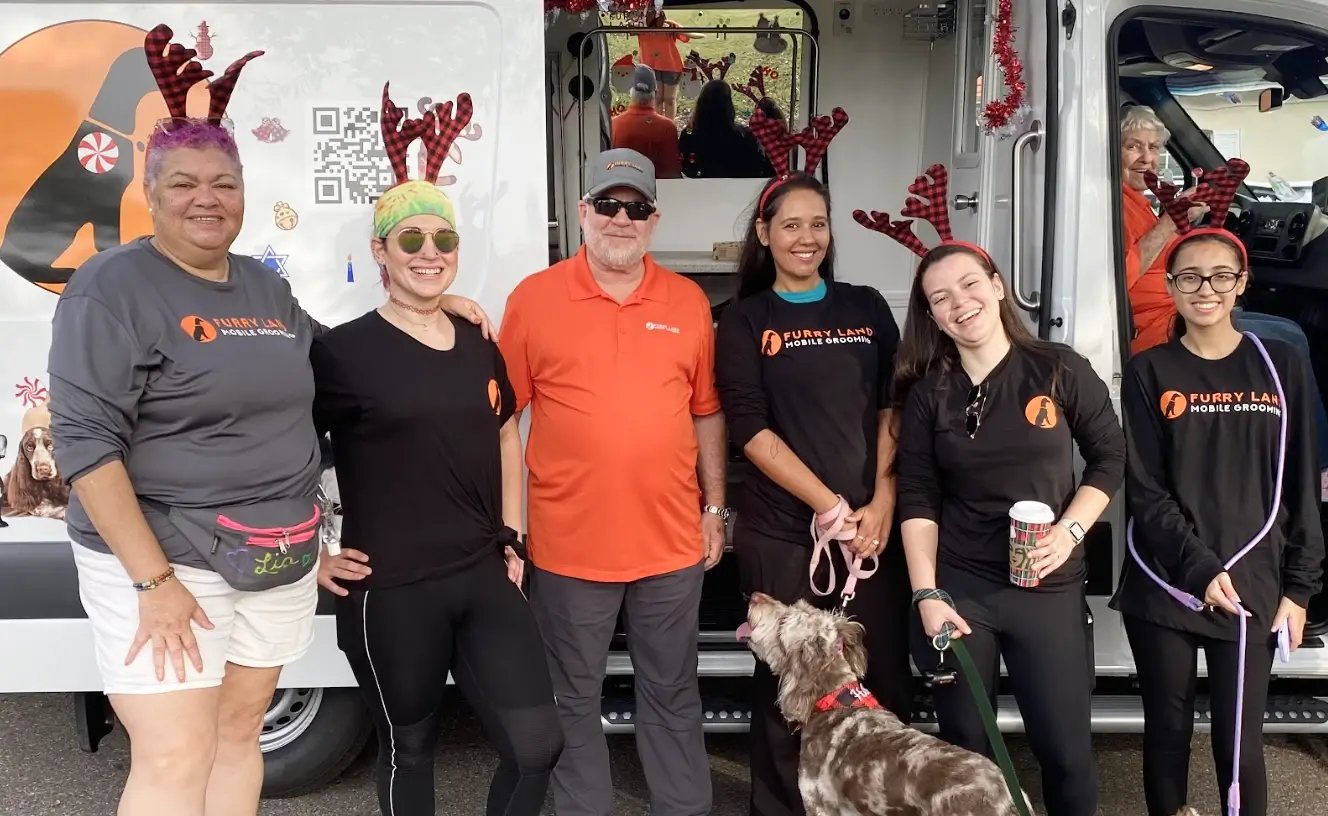

CRM Success: Furry Land’s 387% SMS Appointment Surge
Learn how automated SMS workflows replaced manual communication, reduced admin load, and created a scalable system for consistent appointment growth.
Client Rebooking Flows
How It Works
Clients are encouraged to schedule their next visit automatically.
Operational Impact
Reduces dependency on front-desk or staff follow-up.
Business Outcome
Higher repeat rate and more stable demand.
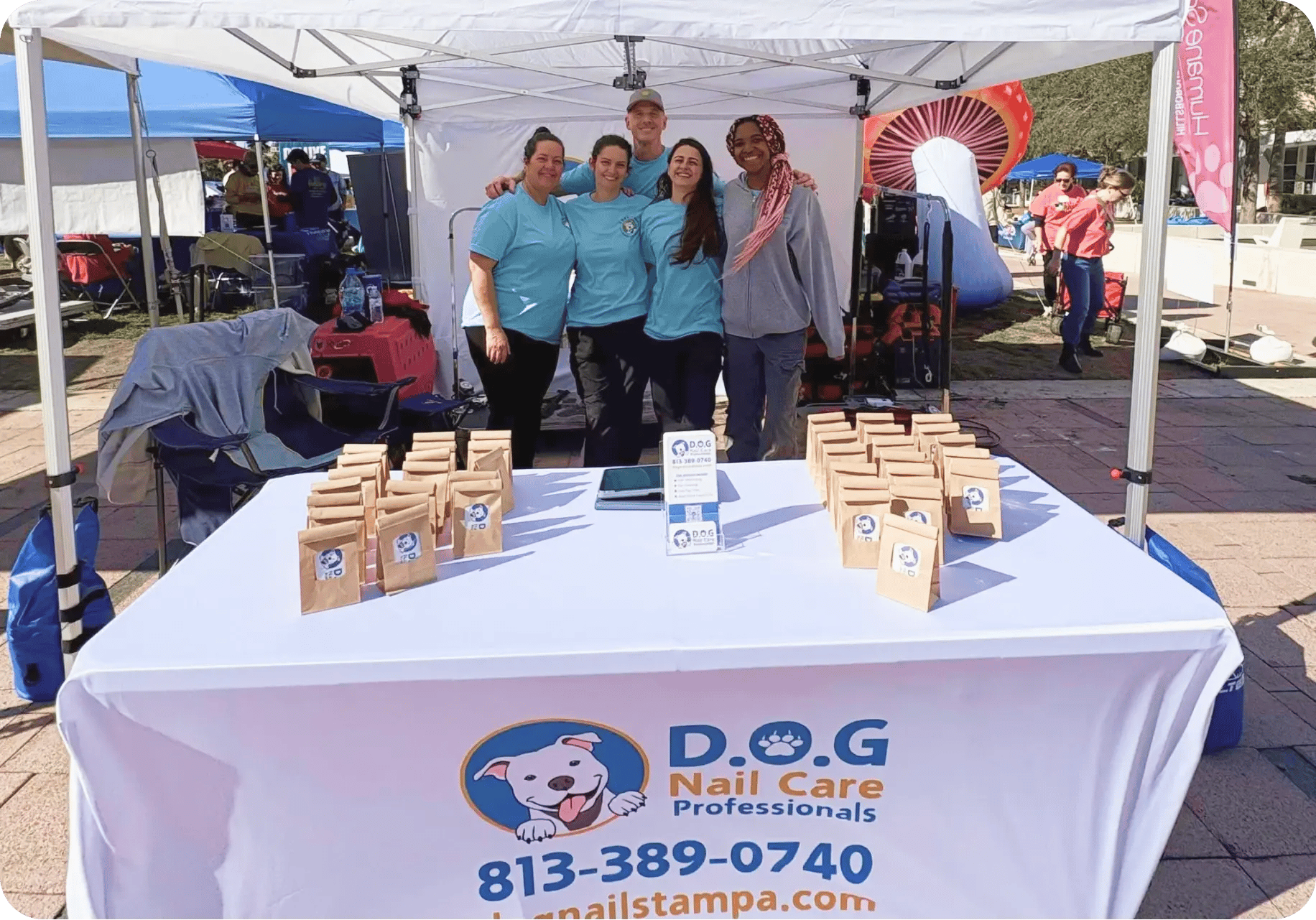

From 37 Clients to 4,219: How D.O.G. Nail Care Built a Rebooking Engine That Runs Itself
Smart Scheduling & Gap Filling
How It Works
Open slots are identified and filled through waitlists or automation.
Operational Impact
Reduces idle time and fragmented schedules.
Business Outcome
Higher booking density without increasing workload.
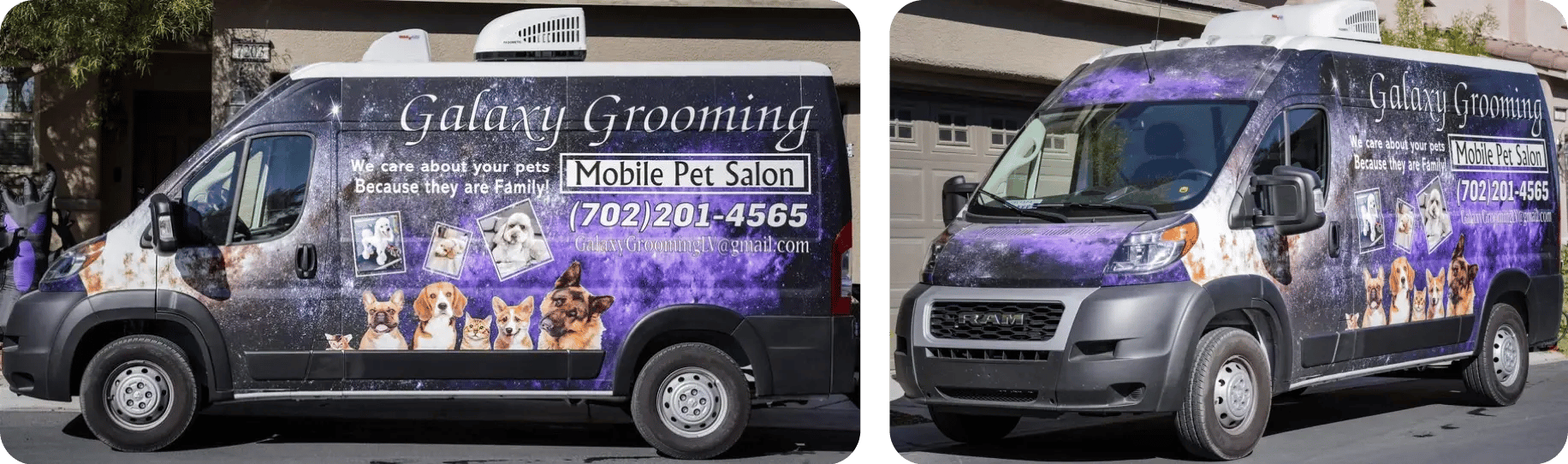
How Galaxy Grooming Reached 500+ Clients in 6 Months with One Van
Centralized Reporting
How It Works
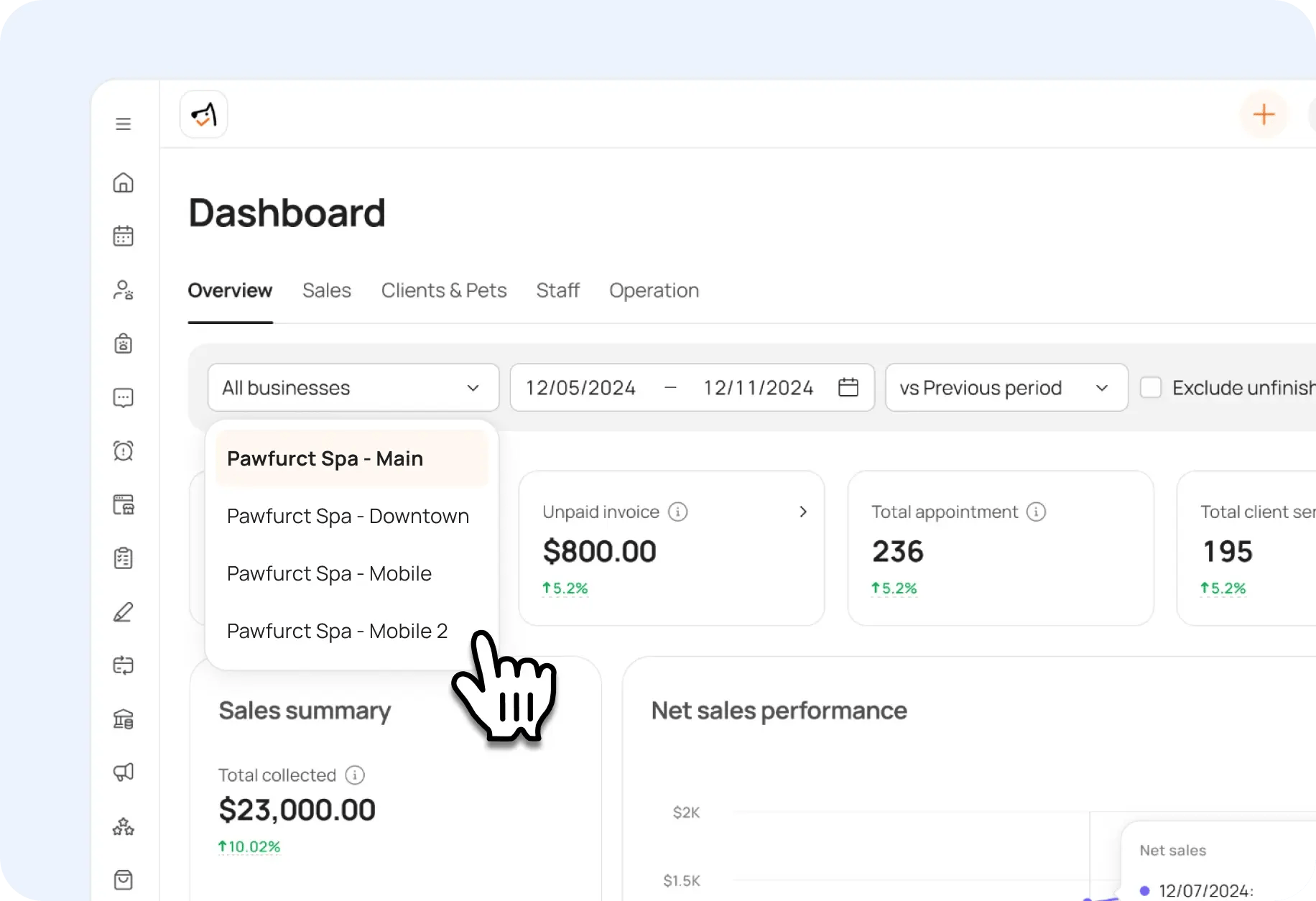
Track no-show rates, retention, and revenue across the business.
Operational Impact
Gives clear visibility into performance.
Business Outcome
Faster decisions and reduced revenue leakage.
FAQ
1. Why does my grooming business have so many no-shows?
High no-show rates are usually caused by missing systems, not client behavior.
Common reasons include:
- No automated reminders
- No deposits or cancellation enforcement
- No consistent rebooking process
Without these in place, even loyal clients will forget or deprioritize appointments.
2. What is a normal no-show rate for grooming businesses?
Most grooming businesses see:
- 8–15% no-show rate without systems
- Below 5% with automated reminders and policies in place
If you’re above 10%, it’s typically a sign of operational gaps rather than demand issues.
3. How do I reduce no-shows without hiring more staff?
Focus on automation and structure:
- Set up SMS/email reminders (24h + same day)
- Require deposits or keep cards on file
- Standardize rebooking before clients leave
These changes reduce no-shows without adding administrative workload.
4. How can I get more grooming clients to come back regularly?
Retention improves when rebooking is built into the workflow:
- Prompt clients to book their next visit immediately
- Send follow-up reminders after appointments
- Maintain consistent service experience
Strong grooming businesses often reach 80-90% repeat rates, which stabilizes revenue.
5. Is grooming software actually worth it for reducing no-shows?
For most growing grooming businesses, yes, because the impact is operational, not just convenience.
Software helps:
- Automate reminders and follow-ups
- Enforce policies consistently
- Track no-show and retention patterns
The value comes from:
- Recovered revenue
- Reduced admin time
- More predictable scheduling
Just starting or adding to your business?
We have flexible plans meant for all stages.


Holiday Grooming Add-Ons: How to Build a Seasonal Menu That Sells Itself
How KLŌS Fine Pet Salon Turned Milton, Georgia's Most Discerning Zip Code Into Its Biggest Advantage