Share this
by MoeGo on Feb 23, 2026, 9:00:03 AM

Starting a dog grooming business from home can feel simple: Buy a tub. Set up your clippers. Book your first client.
But before you do any of that, you need to answer one critical question:
Do I need a license to run a dog grooming business from home?
Short Answer: In most U.S. cities and counties, yes, you’ll need at least:
- A general business license
- A home-occupation permit or zoning approval
- Possibly a grooming establishment permit
- Business insurance (homeowners insurance is not enough)
The exact requirements depend on your city, county, and state. Some municipalities allow home-based grooming with restrictions. Others prohibit it entirely.
Launching without proper approval can result in fines, forced closure, or difficulty obtaining permits later.
This guide walks through what to check before opening your doors, and how to set up your business on solid legal ground.
Why Home-Based Groomers Usually Need a Business License
Local governments regulate businesses for two primary reasons:
- Public safety and zoning compliance
- Tax and revenue tracking
Even if you're operating from a spare room or converted garage, the moment you accept payment for grooming services, you are operating a commercial activity.
In most jurisdictions, that means:
- Registering your business entity (LLC, sole proprietorship, etc.)
- Obtaining a general business license (sometimes called a business tax certificate)
- Paying applicable local business taxes
Home-based does not mean exempt. Many cities specifically categorize home grooming as a home occupation, which requires additional approval beyond a standard business license.
What Legal Requirements Apply to Home-Based Dog Grooming?
Before taking your first booking, review these key areas.
1. General Business License & Registration
Most cities and counties require:
- Business name registration (if operating under a DBA)
- Local business license
- State-level registration (depending on state laws)
If you sell retail items such as:
- Shampoos
- Brushes
- Pet accessories
- Treats
You may also need:
- A state sales tax permit
- Vendor registration
Even small home businesses are expected to comply with local and state registration rules.
2. Zoning Laws & Home-Occupation Permits
Licensing answers “Who are you?”
Zoning answers “Where can you operate?”
This is where rules vary dramatically.
Some cities allow home grooming with restrictions:
- Limits on number of client visits per day
- Restrictions on signage
- Parking limitations
- Floor space usage caps
Some cities prohibit it entirely:
- Certain municipalities explicitly ban pet grooming as a home occupation.
Some require special review:
- Planning department approval
- Zoning clearance
- Conditional use permit
Before investing in equipment, call your city’s zoning office and ask: “Is pet grooming allowed as a home occupation in my zoning district?”
Get the response in writing if possible.
3. HOA & Neighborhood Restrictions
Even if your city allows home grooming, your HOA may not.
Common HOA restrictions include:
- Customer traffic limitations
- Noise complaints
- Prohibition of client-facing businesses
- Exterior signage bans
Your CC&Rs (Covenants, Conditions & Restrictions) determine what is allowed. Ignoring HOA rules can result in fines or legal disputes.
4. Grooming Facility or Health Permits (City-Specific)
Some cities go further and regulate grooming facilities specifically.
Examples in certain jurisdictions include:
- Small animal grooming establishment permits
- Animal care facility licensing
- Health inspections
- Sanitation standards for water drainage and ventilation
If pets are entering your home for commercial services, regulators may treat your space like a small commercial animal facility.
Requirements can include:
- Ventilation standards
- Waste disposal protocols
- Vaccination record verification
- Inspection compliance
Always confirm whether your city has a separate animal services department.
Do You Need a Grooming Certification?
In most U.S. states, individual groomer certification is not legally required.
However:
- Some states regulate grooming facilities
- Certain municipalities require inspections
- Professional certifications increase credibility and reduce liability risk
Even when not required by law, certification may:
- Improve insurance eligibility
- Reduce claims risk
- Strengthen client trust
Certification is usually voluntary, licensing is not.
Insurance Essentials for Home-Based Groomers
One of the most common mistakes new groomers make: Assuming homeowners insurance covers their business. It does not.
Most standard homeowners policies explicitly exclude commercial activity. If a client slips on your floor, or a dog is injured during grooming, your personal policy likely will not cover it.
Here’s what you actually need.
General Liability Insurance (GL)
Covers:
- Client injuries on your property
- Property damage claims
- Legal defense costs
If someone trips over a cord in your grooming space, GL protects you.
Professional Liability (Errors & Omissions)
Covers claims related to your grooming services.
Examples:
- Clipper burns
- Cuts or injuries
- Service disputes
Even unfounded claims can be expensive to defend.
Animal Bailee Coverage (Care, Custody & Control)
This is critical. General liability does not automatically cover animals in your care.
Animal bailee coverage protects you if:
- A pet is injured
- A pet escapes
- A pet dies while in your custody
For home-based groomers, this is essential.
Equipment & Property Coverage
Protects:
- Grooming tables
- Dryers
- Clippers
- Shears
- Supplies
Fire, theft, or weather damage can shut down operations without proper coverage.
Optional but Increasingly Important: Cyber Insurance
If you:
- Accept online payments
- Store client contact information
- Use booking software
You are handling sensitive data.
Cyber coverage protects against:
- Data breaches
- Payment fraud
- Platform hacks
As digital booking becomes standard, cyber risk increases.
Can a City Ban Home Dog Grooming Entirely?
Yes. Some municipalities prohibit pet grooming as a home occupation outright.
Others allow it with:
- Strict traffic limits
- Parking rules
- Appointment caps
This is why step one is always contacting your zoning office. Never assume that because another groomer does it, it’s allowed in your district.
How to Set Up Your Home Grooming Business the Right Way
Before opening:
- Confirm zoning allows home grooming.
- Apply for required business licenses.
- Secure insurance coverage.
- Clarify HOA restrictions (if applicable).
- Document vaccination requirements.
- Create service agreements and liability waivers.
- Compliance is not just about avoiding fines.
It builds credibility with clients and protects your long-term growth.
How MoeGo Helps Home-Based Groomers Stay Organized & Audit-Ready
Running a compliant business is not just about permits. It’s about documentation, structure, and visibility.
For home-based groomers, administrative chaos creates risk. Purpose-built grooming business systems help centralize operations and protect you legally.
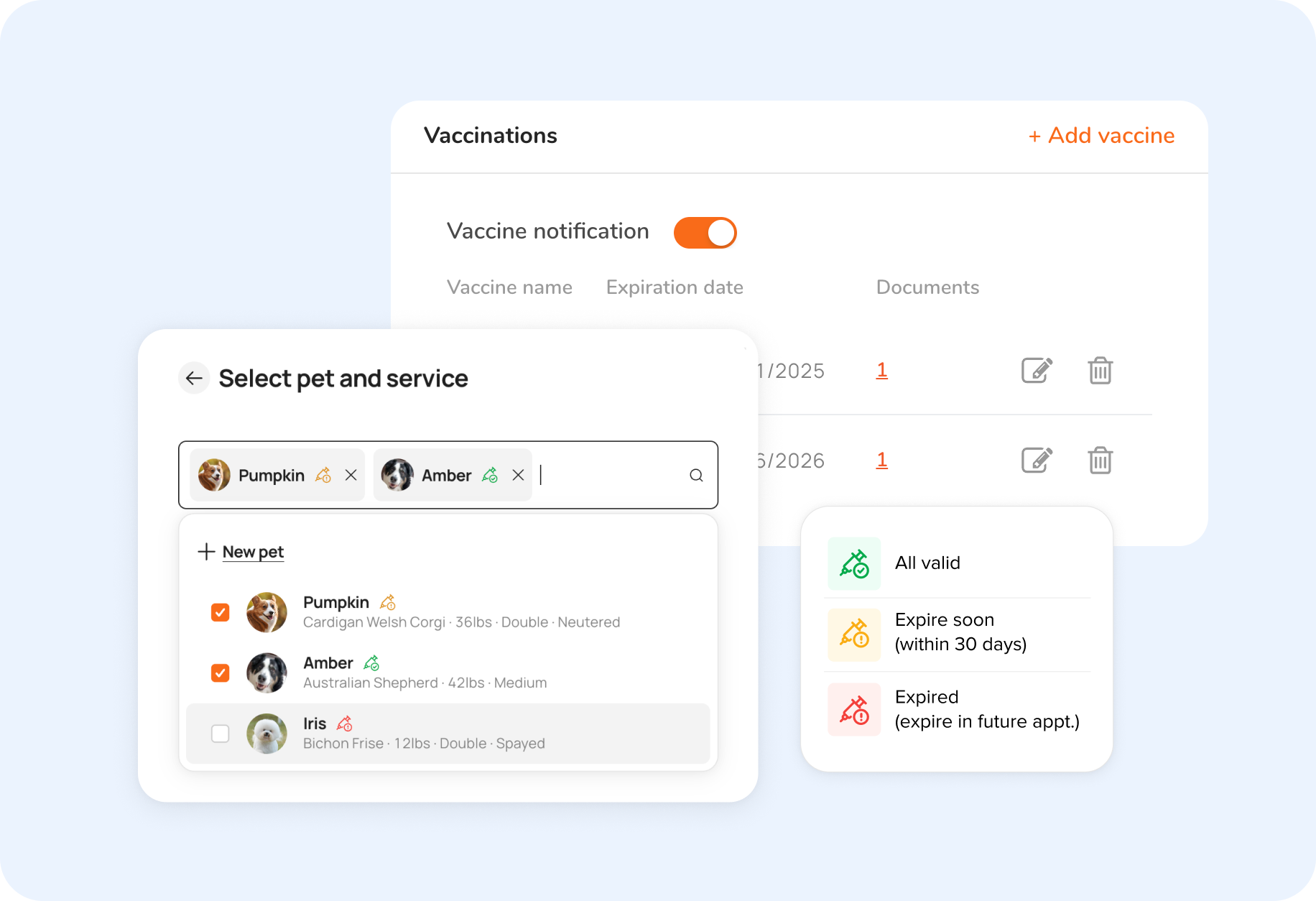
Centralized Client Records
How It Works
Store vaccination records, grooming notes, behavior flags, and service history inside each pet profile.
Operational Impact
Easy retrieval during inspections or insurance claims.
Business Outcome
Reduced liability risk and professional credibility.
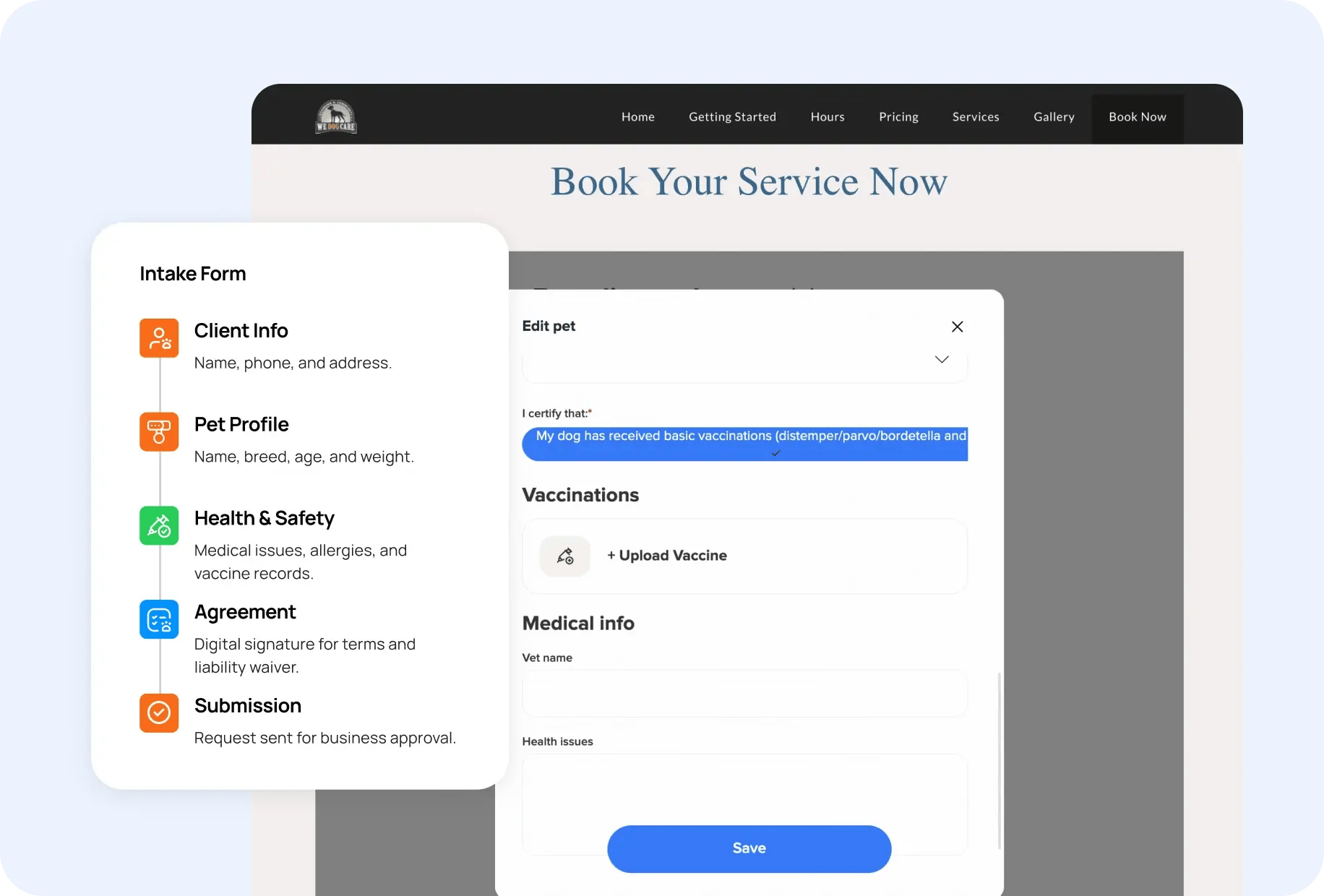
Digital Agreements & Waivers
How It Works
Require digital signatures during booking. Track unsigned agreements.
Operational Impact
Clear documentation for every client interaction.
Business Outcome
Stronger legal protection and audit readiness.
Appointment Limits & Flow Control
How It Works
Control booking volume, manage waitlists, and track appointment approvals.
Operational Impact
Demonstrates compliance with zoning or client-count limits.
Business Outcome
Reduced neighborhood conflict and smoother operations.

Build It Right From Day One
A home grooming studio can be:
- Flexible
- Profitable
- Community-centered
- Scalable
But only if you respect the legal framework first. At minimum, expect to need:
- Business license
- Zoning or home-occupation approval
- Proper insurance coverage
- Before buying equipment, confirm compliance.
- Before scaling, build structure.
The most successful home-based groomers treat their operation as a real business from day one, not a side hustle hoping to stay unnoticed. When you build on solid legal and operational foundations, growth becomes far easier, and far less stressful.
FAQs
Do I always need a business license if I’m grooming from home?
In most jurisdictions, yes. You’ll typically need a general business license and, separately, a home‑occupation permit or zoning clearance. Requirements vary by city/county, so confirm with your local licensing office. The SBA’s guide is a good starting point.
Are grooming certifications legally required?
Generally, no at the national level, but facility licensing can apply. For example, Colorado’s PACFA program licenses grooming facilities and sets inspection standards; New York City requires a Small Animal Grooming Establishment Permit for any facility offering grooming for a fee. Check your state/city for facility‑level rules.
My zoning allows home businesses; can my HOA still say no?
Yes. Many HOAs restrict customer‑facing home businesses to protect parking, noise, and neighborhood character. Whether they can prohibit yours depends on state law and the association’s governing documents. Get written approval where required.
What insurance do I actually need?
At minimum: general liability for client injuries/property damage and animal bailee for pets in your care. Add professional liability for service‑related claims and insure your equipment. Homeowners policies generally exclude business activities, so don’t rely on them.
Can my city flat‑out ban home grooming?
Yes, some do. Sacramento and Hanford, CA, publish rules that prohibit pet grooming as a home occupation. Others (Denver, some Virginia counties) allow it with limits on parking, traffic, or client count. That’s why a quick call to your planning department is step one.
Just starting or adding to your business?
We have flexible plans meant for all stages.


Holiday Grooming Add-Ons: How to Build a Seasonal Menu That Sells Itself

How KLŌS Fine Pet Salon Turned Milton, Georgia's Most Discerning Zip Code Into Its Biggest Advantage